

Nutrition14 min read · Updated
How Much Protein You Need, With Singapore Foods
- Trial 10% off
- No membership
- WhatsApp reply, usually within the hour
The short answer
HPB recommends 0.8 g of protein per kg of body weight a day at ages 18 to 49 and 1.2 g/kg from age 50: about 48 g for a 60 kg adult under 50, and 96 g for an 80 kg adult over 50.
- If you strength train, the ACSM joint position puts the range at 1.2-2.0 g/kg and the ISSN at 1.4-2.0 g/kg, best eaten as 20-40 g portions spread over the day.
- If you have chronic kidney disease, do not raise protein without your doctor: KDIGO 2024 suggests 0.8 g/kg for stages 3 to 5.
Written by the Fit Titans coaching team. Edited by Theon. How we write guides
On this page (11)
- 1. How much protein do you need per day in Singapore?
- 2. How much more protein do you need if you lift or train?
- 3. How much protein do adults over 50 need?
- 4. How much protein do you need when losing weight or on a GLP-1 drug?
- 5. Does it matter how you spread protein across the day?
- 6. How much protein is in everyday Singapore foods?
- 7. How much protein is in a hawker meal?
- 8. What does a day of protein look like at 60 kg and 80 kg?
- 9. Who should be careful about eating more protein?
- 10. Do you need protein powder?
- 11. Where does a personal trainer fit in?
Key facts
- HPB recommends 0.8 g of protein per kg of body weight a day at ages 18 to 49 and 1.2 g/kg from age 50 (MOH, 3 Oct 2026).
- In HPB's National Nutrition Survey 2025, 79% of residents met their protein recommendation, but 55% of adults aged 50 to 69 fell short.
- The ACSM, Academy of Nutrition and Dietetics and Dietitians of Canada put athletes' needs at 1.2-2.0 g/kg a day. The ISSN says 1.4-2.0 g/kg for most people who exercise.
- PROT-AGE and ESPEN recommend at least 1.0-1.2 g/kg a day for healthy adults over 65, and 1.2-1.5 g/kg for those with an acute or chronic illness.
How much protein do you need per day in Singapore?
The Health Promotion Board recommends 0.8 g of protein per kilogram of body weight a day for adults aged 18 to 49, and 1.2 g/kg from age 50.
Both figures are in MOH's release of the National Nutrition Survey 2025 and in HPB's protein guide on HealthHub, which works the example through: a 65 kg adult under 50 needs about 0.8 x 65 = 52 g a day, and the typical adult aged 18 to 49 needs 50-60 g.
The 2025 joint advisory on GLP-1 drugs uses the same 0.8 g/kg as the recommended daily allowance for adults and notes that the US National Academies are reviewing it.
Treat 0.8 g/kg as the floor for a healthy adult who does not train hard, not as a target for building muscle. The number moves with age, training, weight loss and kidney health. The table puts each guideline into grams for a 60 kg and an 80 kg person.
| Situation | Guideline | Per kg a day | 60 kg person | 80 kg person |
|---|---|---|---|---|
| Adult 18 to 49, not training hard | HPB | 0.8 g | 48 g | 64 g |
| Adult 50 and over | HPB | 1.2 g | 72 g | 96 g |
| Healthy adult over 65 | PROT-AGE, ESPEN | At least 1.0-1.2 g | 60-72 g | 80-96 g |
| Adult over 65 who exercises | PROT-AGE | 1.2 g or more | 72 g or more | 96 g or more |
| Adult over 65 with an acute or chronic illness | PROT-AGE, ESPEN | 1.2-1.5 g | 72-90 g | 96-120 g |
| Regular hard training | ACSM, Academy of Nutrition and Dietetics, Dietitians of Canada | 1.2-2.0 g | 72-120 g | 96-160 g |
| Building or keeping muscle with exercise | ISSN | 1.4-2.0 g | 84-120 g | 112-160 g |
| Losing weight, including on a GLP-1 drug | GLP-1 joint advisory, 2025 | 1.2-1.6 g, or 80-120 g a day | 72-96 g | 96-128 g |
| Resistance-trained and dieting | ISSN | 2.3-3.1 g | 138-186 g | 184-248 g |
| Chronic kidney disease, stages 3 to 5 | KDIGO 2024 | 0.8 g. Avoid more than 1.3 g if it may progress | 48 g | 64 g |
If you carry a lot of excess fat, multiplying your current weight overstates what you need. The GLP-1 joint advisory says basing targets on actual weight can significantly overestimate protein needs in people with obesity, and offers two workarounds: 1.5 g per kg of fat-free mass if you have a body composition reading, or a flat 80-120 g a day.
How much more protein do you need if you lift or train?
Roughly one and a half to two and a half times the baseline. The joint position of the American College of Sports Medicine, the Academy of Nutrition and Dietetics and Dietitians of Canada puts the protein needed to support adaptation, repair and remodelling at 1.2-2.0 g/kg a day, with higher intakes for short periods when training intensifies or when you eat less to lose weight.
The International Society of Sports Nutrition position stand says 1.4-2.0 g/kg a day is sufficient for most exercising people to build and keep muscle.
For someone lifting two to four times a week, the middle of those ranges, about 1.4-1.6 g/kg, is an easy number to plan around: 84-96 g at 60 kg, 112-128 g at 80 kg. Protein supplies the material.
The training is what tells the body to build. The programming side, progressive overload, sets and recovery, is in how to build muscle in Singapore, and coached muscle gain training covers what a coach adds.
How much protein do adults over 50 need?
More than younger adults, and many do not get it. HPB raises the recommendation to 1.2 g/kg from age 50 because sarcopenia, the gradual loss of muscle mass and strength, may start as early as 40, and more protein helps limit that loss and the falls and fractures that follow, according to HPB's protein guide.
In the National Nutrition Survey 2025, 55% of residents aged 50 to 69 fell short of their recommended intake, while 79% of all residents met theirs. Changi General Hospital's dietitians, writing on HealthXchange, turn HPB's guidance into about 75 g a day from 50, or about 25 g a meal, against 60 g (about 20 g a meal) under 50.
International geriatric groups agree. The PROT-AGE study group recommends at least 1.0-1.2 g/kg a day for people over 65, 1.2 g/kg or more for those who exercise, and 1.2-1.5 g/kg for most older adults with an acute or chronic disease.
The ESPEN expert group gives the same ranges, with even more for severe illness or injury, and says every older person should do daily physical activity, including resistance training, for as long as possible.
PROT-AGE makes one exception: older people with severe kidney disease who are not on dialysis may need to limit protein. If a parent is losing strength, training for sarcopenia explains how strength work and protein fit together.
How much protein do you need when losing weight or on a GLP-1 drug?
More than usual, but protein is not a weight-loss trick in itself. HPB counts the belief that a high-protein diet solves weight loss as a myth: protein carries 4 kcal per gram, the same as carbohydrate, and your weight still follows total intake against expenditure. What protein does in a calorie deficit is help you keep muscle while the fat comes off.
The ACSM joint position says higher intakes are needed when energy intake is cut, and that intakes as high as 2.0 g/kg or more, spread over the day, may help prevent the loss of lean mass. It cites a two-week trial in which athletes on 2.3 g/kg kept muscle better than those on 1 g/kg. The ISSN puts the figure for resistance-trained people in a deficit at 2.3-3.1 g/kg.
For people on GLP-1 drugs, the 2025 joint advisory from the American College of Lifestyle Medicine, the American Society for Nutrition, the Obesity Medicine Association and The Obesity Society notes targets of 1.2-1.6 g/kg proposed during active weight reduction, or 80-120 g a day as a simpler goal.
It also sets limits on both sides: protein should not fall below 0.4-0.5 g/kg, and staying at or above 2 g/kg for long should be avoided.
Because these drugs blunt appetite, it suggests eating the protein part of a meal first and leaning on compact foods such as fish, eggs, yoghurt and nuts. It is also blunt that extra protein alone is unlikely to preserve muscle without structured strength training.
That training side is in training to keep muscle on a GLP-1, and losing fat while holding or adding muscle is covered in body recomposition. Your doctor manages the drug and its dose.
Does it matter how you spread protein across the day?
It helps, and it is the easiest way to reach a daily number. The ISSN recommends about 0.25 g of high-quality protein per kg per serving, or 20-40 g, spread evenly every 3 to 4 hours.
The ACSM joint position suggests 0.3 g/kg after key sessions and every 3 to 5 hours across meals, and notes that doses above 40 g have not been shown to raise muscle protein synthesis further, except perhaps for the largest athletes or during weight loss.
In grams, 0.25-0.3 g/kg is 15-18 g a meal at 60 kg and 20-24 g at 80 kg. HPB's version is simpler: about 20 g at each of three meals for adults under 50. For older adults, PROT-AGE says the evidence on timing is not yet strong enough for specific rules, so the daily total comes first.
HPB's own suggestions for adding protein to Singapore meals, from its HealthHub guide:
- 01BreakfastHave eggs with your toast, or make oats with low-fat milk or less-sugar soya milk instead of water or condensed milk.
- 02Economy rice or nasi padangMake sure at least one dish is fish, chicken, tofu or egg.
- 03NoodlesChoose sliced fish bee hoon or bee hoon soto with chicken breast over fried noodles.
- 04SnacksSwap chocolate or chips for low-fat yoghurt or unsalted roasted nuts.
- 05Home cookingAdd an egg to fried rice, and use low-fat milk or yoghurt instead of coconut milk in curries.
How much protein is in everyday Singapore foods?
HPB lists approximate protein per serving for the foods most people already eat. A palm-sized portion of cooked fish, chicken or beef is the quickest 20-25 g. Eggs, milk, soya milk and tofu fill the gaps between.
| Food | Serving | Protein |
|---|---|---|
| Egg | 1 egg (50 g) | 7 g |
| Low-fat milk | 1 glass (250 ml) | 9 g |
| Soybean milk | 1 glass (250 ml) | 9 g |
| Low-fat plain yoghurt | Half a cup (125 g) | 5 g |
| Soyabean curd | 1 bowl (300 g) | 7 g |
| Pan-fried taukwa | 1 square piece (200 g) | 20 g |
| Tempeh | 1 small piece (30 g) | 6 g |
| Dhal curry | 1 small bowl (200 g) | 12-13 g |
| Fried fish, such as kembong or batang | 1 fish (about 100 g) | 20-25 g |
| Canned tuna in brine | Two-thirds of a can (100 g) | 20-25 g |
| Canned sardines | 3 pieces (150 g) | 20-25 g |
| Cooked salmon | Palm-sized (90 g) | 20-25 g |
| Cooked chicken breast | Palm-sized (90 g) | 20-25 g |
| Peanut butter | 1 tablespoon (25 g) | 6 g |
HPB also advises mixing animal and plant proteins and choosing fresh, lean meat over processed meat, which it describes as low in protein and high in saturated fat and sodium. For anything in a packet, HPB points you to the nutrition information panel, where there is one, for the protein figure.
How much protein is in a hawker meal?
Between about 11 g and 30 g for most single dishes, depending on the dish and the portion. SingHealth's HealthXchange publishes nutrient figures for common hawker dishes, developed with KK Women's and Children's Hospital's Department of Nutrition and Dietetics (rice and fishball noodles, wonton mee and soups, ban mian, Malay breakfasts, Indian meat dishes). Their figures, per serving:
| Dish | Serving weight | Protein | Energy |
|---|---|---|---|
| Fishball noodle soup | 798 g | 30 g | 551 kcal |
| Mee siam | 655 g | 28 g | 694 kcal |
| Roasted chicken rice | 382 g | 25 g | 607 kcal |
| Duck rice, skin removed | 350 g | 24 g | 530 kcal |
| Char siew rice | 327 g | 24 g | 605 kcal |
| Chicken soup with Chinese herbs | 534 g | 24 g | 145 kcal |
| Fish tikka | 99 g | 23 g | 128 kcal |
| Sliced fish bee hoon soup | 686 g | 22 g | 349 kcal |
| Ban mian | 528 g | 22 g | 475 kcal |
| Wonton mee, dry | 330 g | 19 g | 411 kcal |
| Chicken tandoori | 112 g | 19 g | 156 kcal |
| Nasi lemak with fried egg and ikan bilis | 210 g | 13 g | 494 kcal |
| Porridge with minced pork and century egg | 512 g | 11 g | 224 kcal |
Portion size moves these numbers a lot. An A*STAR laboratory analysis of 45 local meals measured a 285 g plate of roasted chicken rice at 8.3 g of protein per 100 g, about 24 g in total and close to the KKH figure, but a 412 g plate of steamed chicken rice at 9.3 g per 100 g, about 38 g.
For a protein target, the soups and the tandoori and tikka dishes stand out: sliced fish bee hoon soup gives 22 g for 349 kcal and the herbal chicken soup 24 g for 145 kcal, against nasi lemak's 13 g for 494 kcal. The catch is sodium.
The same KKH figures put 2,913 mg in the fishball noodle soup, more than HPB's 2,000 mg daily limit in one bowl, so leave most of the soup. How to order for fat loss, stall by stall, is in the hawker eating guide.
What does a day of protein look like at 60 kg and 80 kg?
Here are two days built only from the HPB and HealthXchange figures above, for people who strength train. The 60 kg person aims for about 1.4 g/kg (84 g). The 80 kg person for 1.4-1.6 g/kg (112-128 g). Rice, bread, noodles and vegetables add a few grams that are not counted, so real totals run slightly higher.
| Meal | 60 kg, trains 3 times a week | 80 kg, trains 4 times a week |
|---|---|---|
| Breakfast | 2 eggs and a glass of low-fat milk: 23 g | 3 eggs and a glass of soybean milk: 30 g |
| Lunch | Sliced fish bee hoon soup: 22 g | Roasted chicken rice: 25 g |
| Afternoon | A glass of soybean milk: 9 g | Sandwich with two-thirds of a can of tuna: 20-25 g |
| Dinner | Palm-sized chicken breast with rice and vegetables, then low-fat yoghurt: 25-30 g | A square of pan-fried taukwa and palm-sized salmon with rice and vegetables: 40-45 g |
| Day total | 79-84 g (1.3-1.4 g/kg) | 115-125 g (1.4-1.6 g/kg) |
Both days hit at least 20 g at every main meal without a shake. If you are not training, HPB's baseline is 48 g at 60 kg and 64 g at 80 kg under 50, so dropping the snack and one egg covers it. From 50, the targets rise to 72 g and 96 g.
Who should be careful about eating more protein?
This page is general information, not a diagnosis or a diet prescription. Speak to your doctor or a dietitian before raising protein if any of these apply:
- Chronic kidney disease. KDIGO's 2024 guideline suggests 0.8 g/kg a day for adults with CKD stages 3 to 5 and avoiding more than 1.3 g/kg in those at risk of progression. Very low protein diets are only for close medical supervision. Singapore General Hospital's dietitians stress there is no one-size-fits-all CKD diet and that your doctor can refer you to a dietitian for a plan of your own. PROT-AGE's caution covers people not on dialysis. If you are on dialysis, your renal team sets the target.
- Gout. HPB says purines, not protein itself, are the main trigger, and lists seafood, red meat, sugary drinks and alcohol as high in purines and eggs, dairy, soy, nuts and seeds as gout-friendly options. It advises people with gout to check with a doctor or dietitian.
- Pregnancy, breastfeeding, teenagers and recovery from surgery. HPB notes that needs rise in all of these, so the adult figures here do not apply as written.
- Very high intakes for long periods. The GLP-1 advisory says prolonged intake at or above 2 g/kg a day should be avoided because of potential adverse effects, and that protein beyond what muscle needs can be converted to fat by the liver.
- Unplanned weight loss or loss of appetite, especially in an older parent. See a doctor before changing the diet, because the cause matters more than the protein number.
Do you need protein powder?
Most people do not. The ACSM joint position says recommended intakes can generally be met from food, and the two worked days above reach 1.3-1.6 g/kg without a shake.
The ISSN agrees that active people can get enough protein from whole foods, and calls supplements a practical way to get enough high-quality protein for fewer calories, particularly for athletes who train at high volume. The GLP-1 advisory notes that some people on those drugs meet their target with high-protein shakes, bars or fortified foods when appetite is low.
So a shake is a convenience, not a requirement. It earns its place when you train early and cannot face eggs, when appetite is suppressed, or when you keep falling 20 g short at one meal. A glass of soybean milk or low-fat milk, at 9 g in HPB's table, covers part of the same gap.
Where does a personal trainer fit in?
Protein only builds or keeps muscle when the training asks for it, which is the part a coach handles. Fit Titans matches you with a verified freelance coach who trains you at home, in your condo gym, at a park or at a Gym Pod, with no membership. Our coaches programme the strength work and keep you consistent.
They are not dietitians, and we do not sell meal plans, so anyone with kidney disease or a medical diet should take the nutrition side to a dietitian.
Each coach sets their own rate: most charge S$80-S$130 for a 60-minute 1-to-1 session, the median is S$90 (October 2026), and the first session is a paid trial at 10% off. How coaching for size works is on our muscle gain page, and we reply on WhatsApp, usually within the hour.
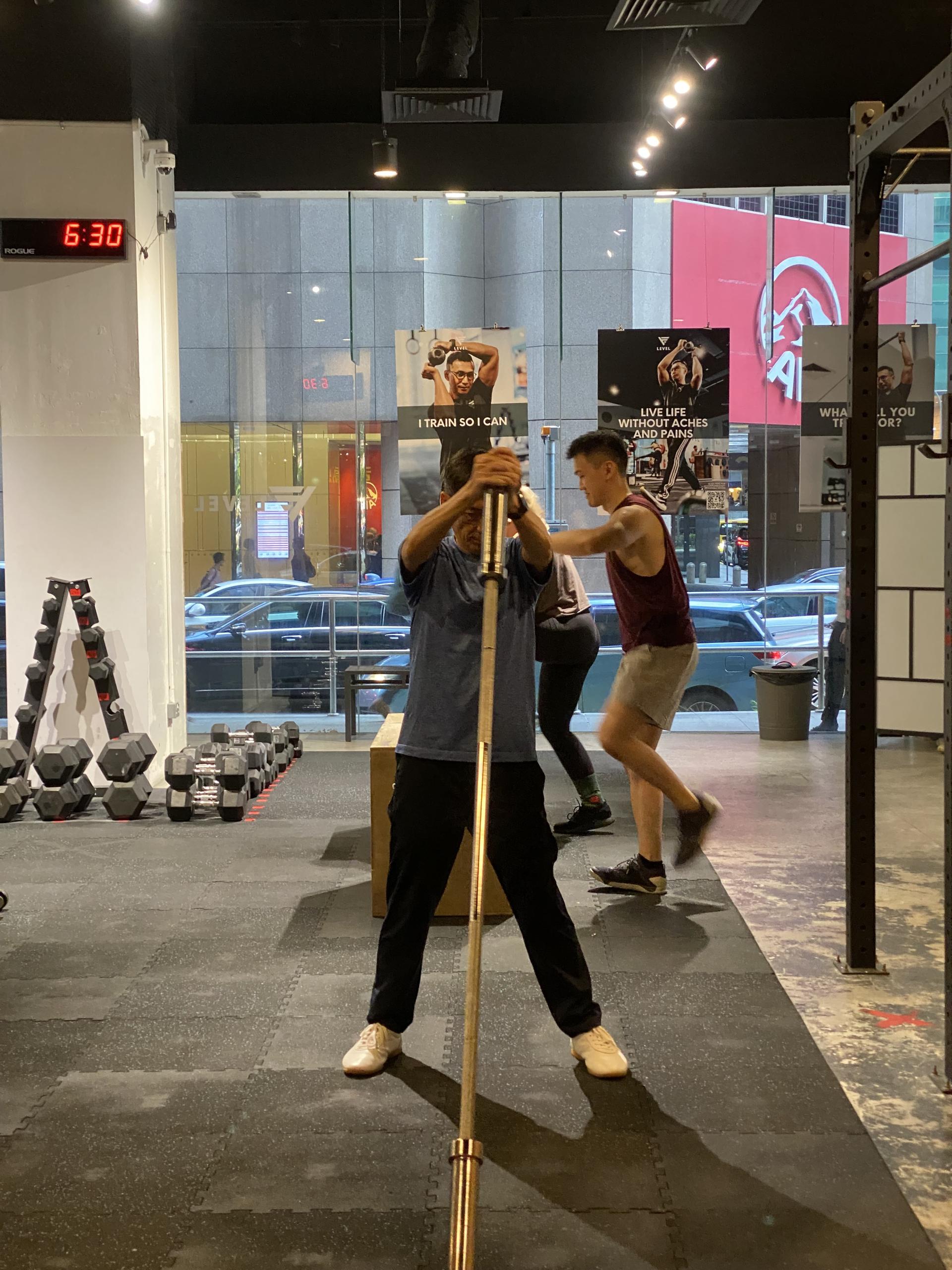
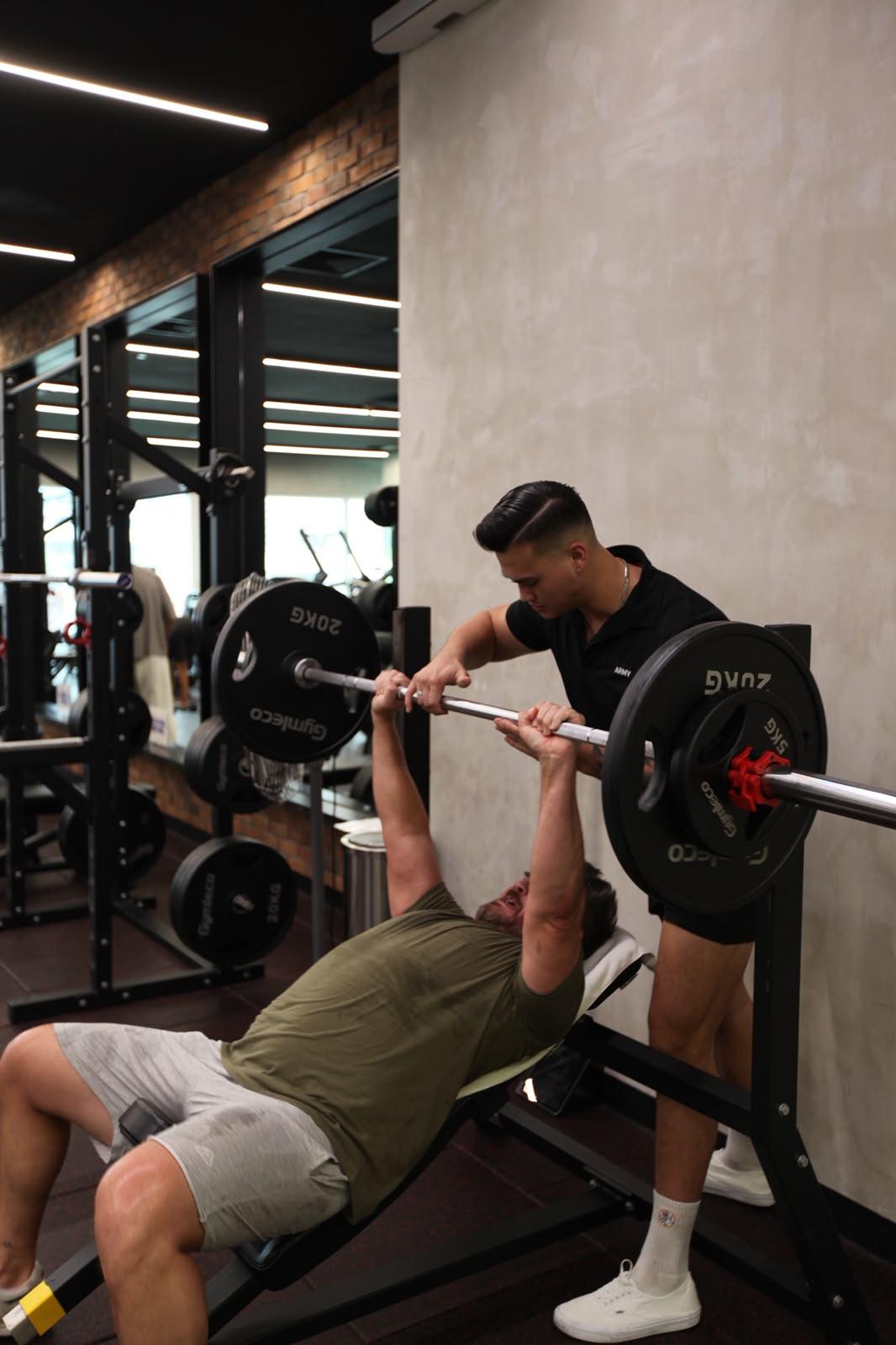
Our coaches at work
Real sessions from our coaches' own galleries. Swipe for more.

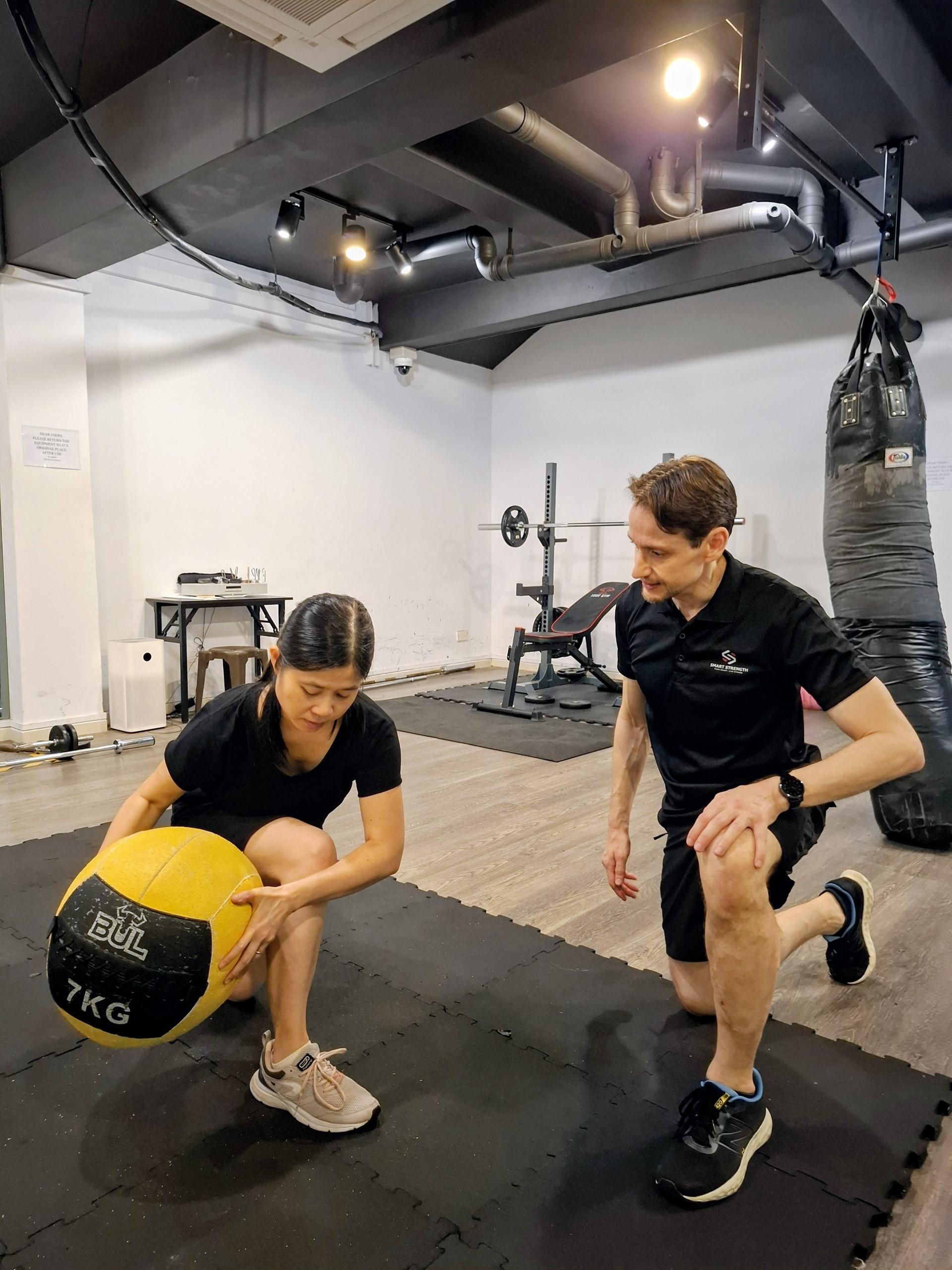
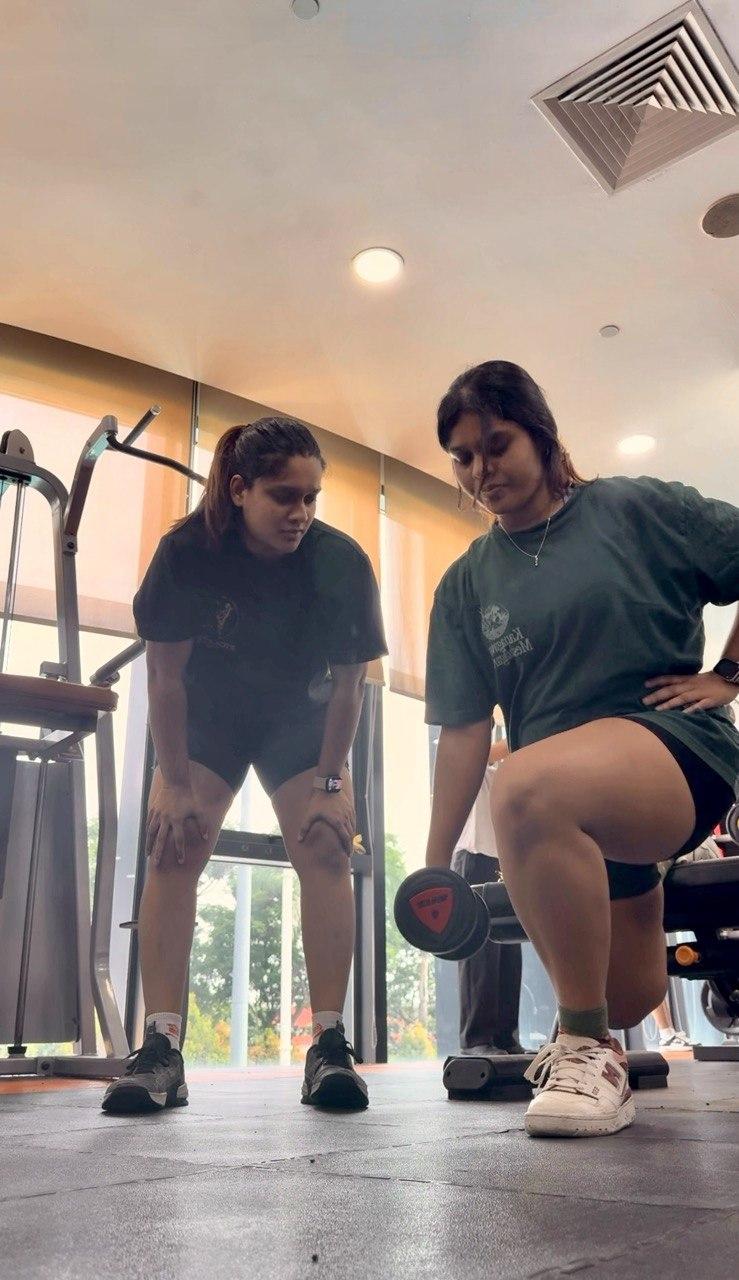
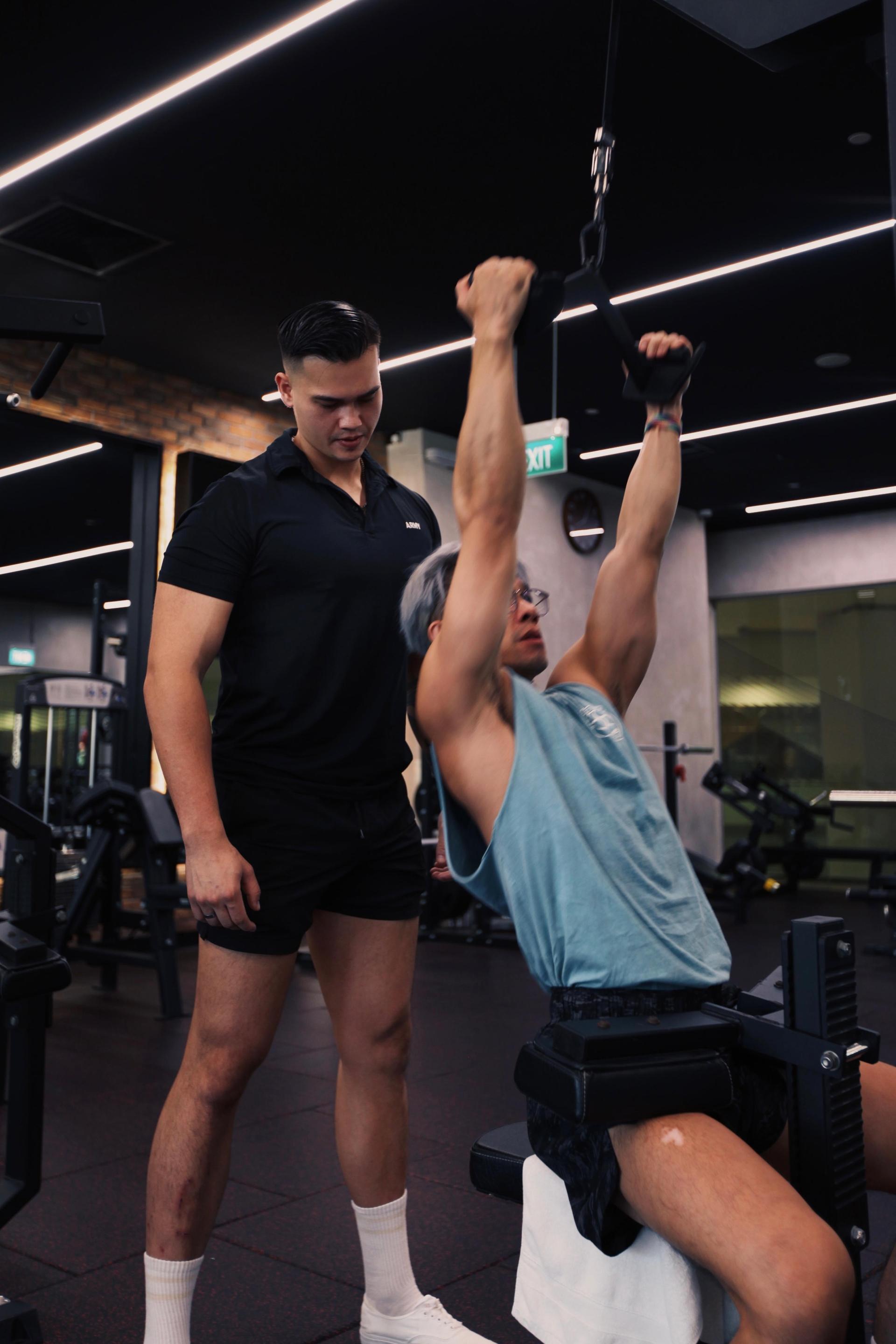
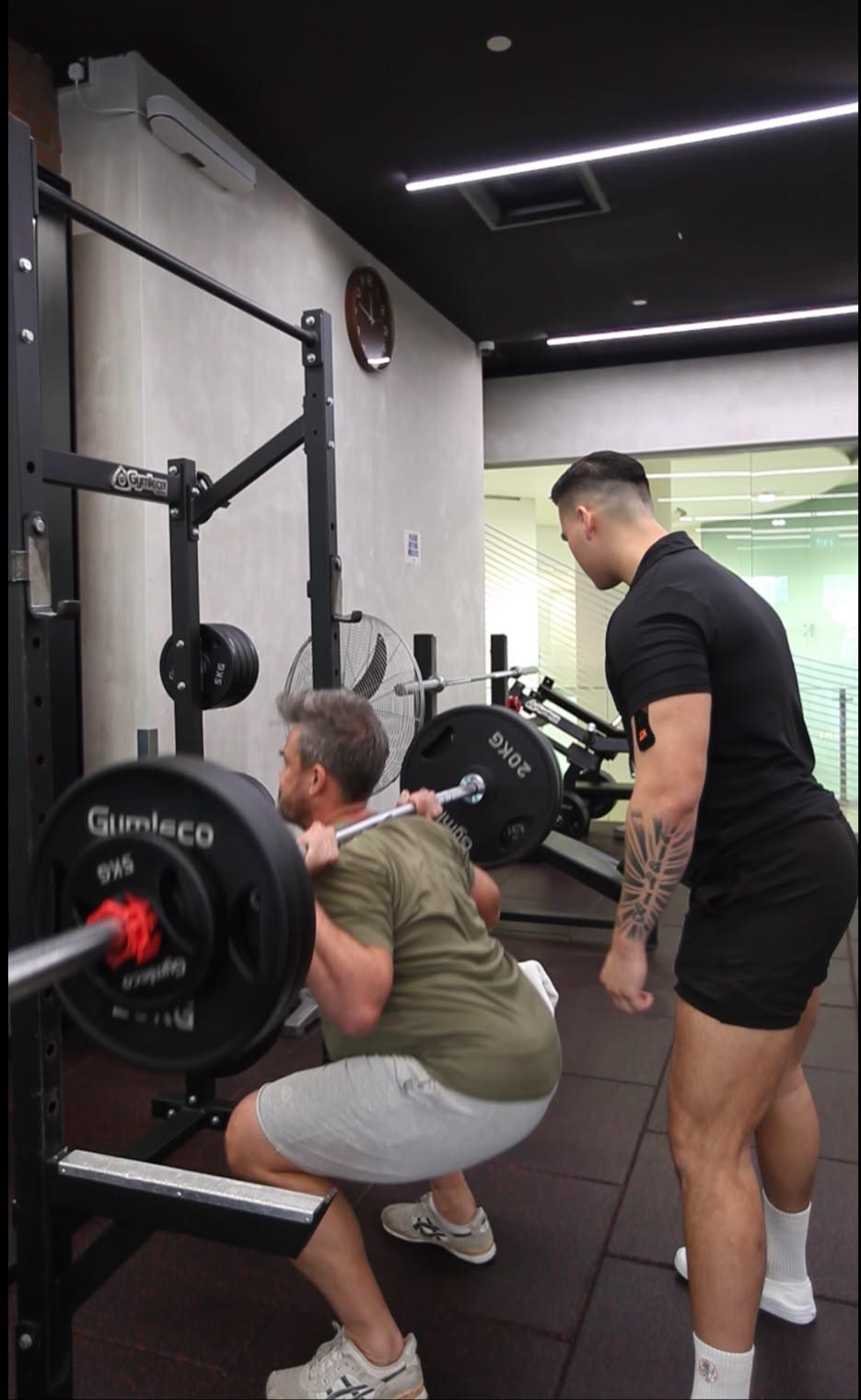
Protein per day questions.
Is 100 g of protein a day too much?
For most healthy adults who train, no. At 80 kg it is 1.25 g/kg, inside the ACSM range of 1.2-2.0 g/kg, and it sits within the 80-120 g a day the 2025 GLP-1 advisory offers as a simple target. At 50 kg it is 2.0 g/kg, the top of the ISSN range. If you have chronic kidney disease, it is likely above KDIGO's suggested 0.8 g/kg, so ask your doctor first.
How much protein is in one egg?
About 7 g in a 50 g egg, according to HPB. Two eggs with a glass of low-fat milk, HPB's own breakfast example, gives about 23 g, which covers one meal's share for most adults.
Can your body use more than 30 g of protein in one meal?
The ISSN recommends 20-40 g per serving, or about 0.25 g/kg. The ACSM joint position notes that more than 40 g at once has not been shown to raise muscle protein synthesis further, except perhaps for the largest athletes or during weight loss. Splitting your total across three or four meals is the simplest approach.
Should I use my current weight if I am overweight?
Not necessarily. The 2025 GLP-1 advisory says using actual weight can significantly overestimate protein needs in people with obesity. It suggests 1.5 g per kg of fat-free mass if you have a body composition reading, or a flat 80-120 g a day.
Do women need less protein than men?
Per kilogram, HPB's recommendation is the same: 0.8 g/kg under 50 and 1.2 g/kg from 50. A lighter person needs fewer grams in total. HPB notes that needs rise during pregnancy and breastfeeding, so get advice from your doctor then.
Is a high-protein diet bad for your kidneys?
If you have chronic kidney disease, KDIGO 2024 suggests 0.8 g/kg a day for stages 3 to 5 and avoiding more than 1.3 g/kg where the disease may progress. For healthy adults, the ranges on this page come from the major sports nutrition and geriatric bodies, and the GLP-1 advisory cautions against staying at or above 2 g/kg for long. If you are unsure of your kidney function, ask your doctor before raising protein.

About this guide
Published
Terms used
- HPB:
- Health Promotion Board, the government agency behind Singapore's public health guidance, including physical activity recommendations and the national effort on diabetes.
- ACSM:
- American College of Sports Medicine, a US body that publishes exercise guidelines and certifies trainers and exercise physiologists.
Sources
- Why protein is more important than you may think, and 5 common protein myths (read 26 Oct 2026) · HealthHub / Health Promotion Board
- National health surveys show Singaporeans are embracing healthier lifestyles, with a need to improve our diet quality, 3 Oct 2026 (read 26 Oct 2026) · Ministry of Health Singapore
- Proteins for seniors (read 26 Oct 2026) · HealthXchange / Changi General Hospital
- Best and worst Singapore hawker Chinese food: duck rice, fishball noodle and more (read 26 Oct 2026) · HealthXchange / KK Women's and Children's Hospital
- Best and worst Singapore hawker Chinese food: wonton mee (read 26 Oct 2026) · HealthXchange / KK Women's and Children's Hospital
- Best and worst Singapore hawker Chinese food: dim sum, char kway teow (read 26 Oct 2026) · HealthXchange / KK Women's and Children's Hospital
- Best and worst Singapore hawker Malay breakfast foods (read 26 Oct 2026) · HealthXchange / KK Women's and Children's Hospital
- Best and worst Singapore hawker Indian meat dishes (read 26 Oct 2026) · HealthXchange / KK Women's and Children's Hospital
- Energy content and nutrient profiles of frequently consumed meals in Singapore, Foods 2021 (read 26 Oct 2026) · A*STAR Clinical Nutrition Research Centre, via PubMed Central
- International Society of Sports Nutrition position stand: protein and exercise, 2017 (read 26 Oct 2026) · Journal of the International Society of Sports Nutrition, via PubMed Central
- Nutrition and athletic performance: joint position statement, 2016 (read 26 Oct 2026) · Dietitians of Canada, Academy of Nutrition and Dietetics, American College of Sports Medicine
- Evidence-based recommendations for optimal dietary protein intake in older people: PROT-AGE, 2013 (read 26 Oct 2026) · Journal of the American Medical Directors Association, via PubMed
- Protein intake and exercise for optimal muscle function with aging: ESPEN Expert Group, 2014 (read 26 Oct 2026) · Clinical Nutrition, via PubMed
- Nutritional priorities to support GLP-1 therapy for obesity: a joint advisory, 2025 (read 26 Oct 2026) · ACLM, ASN, OMA and The Obesity Society, via PubMed Central
- KDIGO 2024 clinical practice guideline for the evaluation and management of chronic kidney disease (read 26 Oct 2026) · Kidney Disease: Improving Global Outcomes
- Nutrition tips for chronic kidney disease: protein (read 26 Oct 2026) · Singapore General Hospital
General information, not medical advice.