
Train safelyUpdated
Rehab personal trainer in Singapore
- Trial 10% off
- No membership
- WhatsApp reply, usually within the hour
The short answer
Post-injury training starts once your doctor or physiotherapist clears you to load.
- A coach then rebuilds range, strength and confidence step by step, usually 2 sessions a week for 8 to 12 weeks, at home, in your condo gym, at a Gym Pod or in a park.
- Each coach sets their own rate, most S$80 to S$130 a 60-minute session.
- The first session is at 10% off and starts with an assessment, not a workout.
- This is general guidance, not medical advice.
Written by the Fit Titans coaching team. Edited by Theon. How we write
On this page (9)
- 1. When can you go back to the gym after an injury?
- 2. What happens in a post-injury training session?
- 3. What does rehab coaching cover?
- 4. How do you keep rehab training safe?
- 5. Do you work with a physiotherapist?
- 6. Which signs mean you stop training and see a doctor?
- 7. How long does a return-to-training block take?
- 8. How long until you can train normally after ACL or rotator cuff surgery?
- 9. What does injury-rehab coaching cost in Singapore?
Key facts
- Trains within your doctor's or physio's clearance
- Corrective exercise for posture and movement faults
- Post-injury and post-surgery reconditioning
- Coaches work alongside your physiotherapist and coordinate with their plan
When can you go back to the gym after an injury?
When your doctor or physiotherapist says so, and for the movements they name. Ask them which exercises and loads are cleared and which are not yet, and bring that note to your first session.
- Get the listYour doctor or physio names the exercises and loads that are cleared, and those not yet.
- Bring the noteTo your first session.
- Train inside itThe coach works within that list.
- Update before a step upA new note before each step up in load or impact.
A coach works inside that list and asks for an updated one before each step up in load or impact.
What happens in a post-injury training session?
- 01Assessment firstThe first session checks how you move, where it hurts and what your clearance allows, before any workout.
- 02Range before loadEarly sessions restore movement and control around the injured joint.
- 03Gradual loadingWeight, reps or impact rise only when the movement stays clean and pain free.
- 04Back to your normal trainingThe last weeks rebuild the lifts, runs or sport you want to return to.
What does rehab coaching cover?
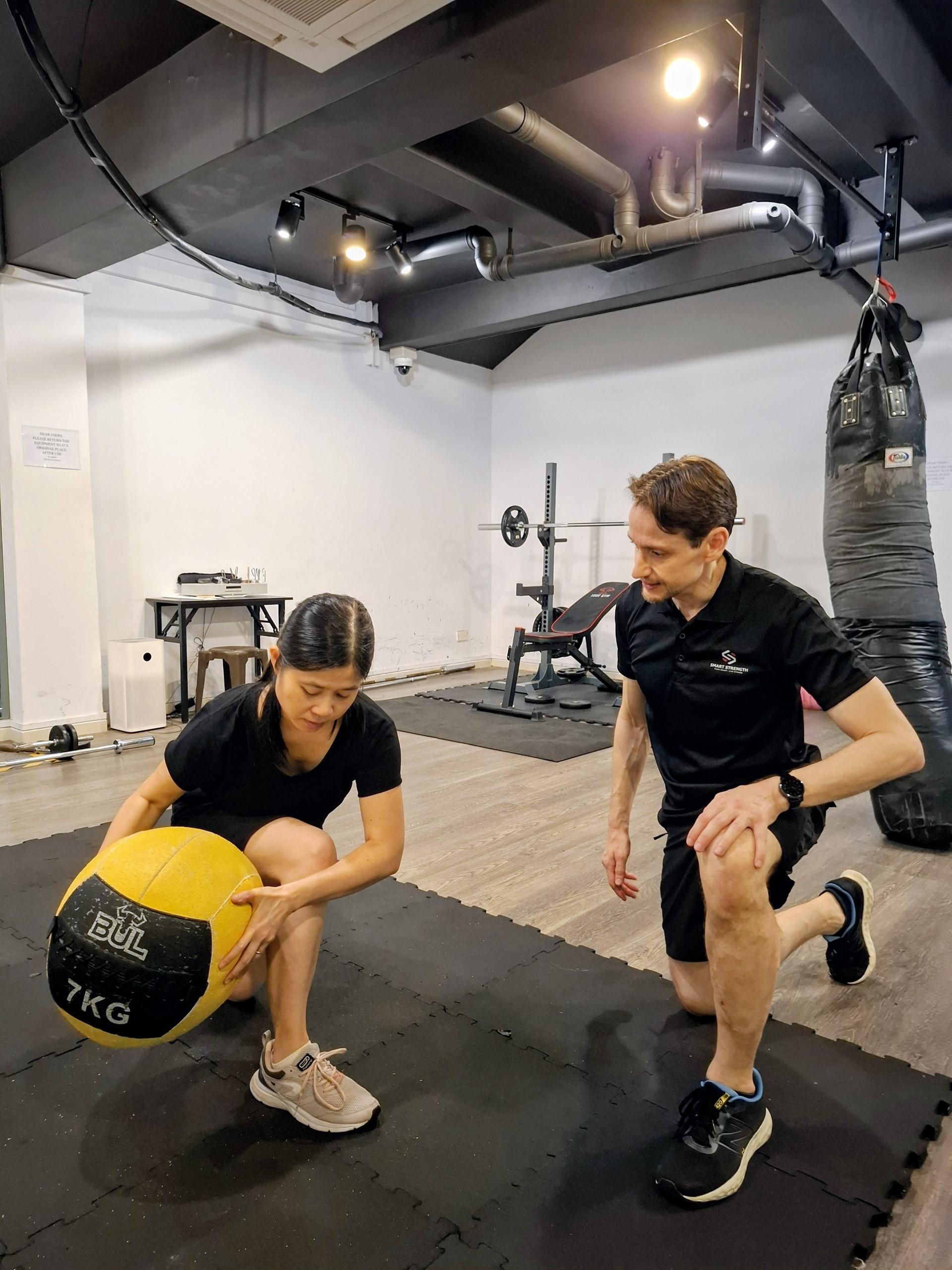
We work the space between physiotherapy and ordinary training, the phase where you're cleared to move but not ready to load fully. That means restoring range of motion, correcting the movement faults that contributed to the injury, and rebuilding strength step by step.
- Corrective exercise for posture, hips, shoulders and knees
- Post-surgery reconditioning within clearance
- Working around back pain, sciatica and joint issues
- Gradual return to lifting, running or sport
How do you keep rehab training safe?
We start from what your doctor or physiotherapist has cleared, never push through sharp pain, and progress load only when movement is clean. If something is beyond coaching, we say so and refer you on.
Do you work with a physiotherapist?
Assessment, hands-on treatment and diagnosis belong with your physiotherapist or doctor. Our coaches work alongside your physiotherapist and coordinate your programme with their plan. We do not have a physiotherapy partner, so if you do not have a physiotherapist yet, ask your GP or a polyclinic for a referral. If you're training around a pregnancy-related issue, see prenatal personal training, or postnatal personal training after the birth.
Which signs mean you stop training and see a doctor?
Stop and get urgent medical care for loss of bladder or bowel control, or numbness around the groin and inner thighs, which SingHealth and HealthHub flag as emergency signs. If pain is clearly worse the morning after a session, stop for 24 hours and reassess. Nothing here is medical advice.
| What you notice | What we do about it |
|---|---|
| Loss of bladder or bowel control, or numbness around the groin or inner thighs | Stop immediately and seek urgent medical care. SingHealth and HealthHub flag this as an emergency. |
| New numbness, tingling or weakness travelling down a leg or arm | Session stops, we log it, and you see your doctor or physiotherapist before the next one. |
| Sharp, one-sided pain that is different from your usual ache | We stop loading that pattern for the day and reassess against your clearance. |
| Pain clearly worse the morning after every session | We cut load and volume and rebuild slower. Progress should not cost you sleep. |
| Chest pain, dizziness, or breathlessness out of proportion to the effort | Stop and get medical attention. That is not a training problem to coach through. |
Your doctor or physiotherapist sets the clearance and we train inside it. We do not diagnose or override a physio, and we refer you on when something is beyond coaching. More: slipped disc, knee injuries, shoulder injuries, and clearance terms in the fitness glossary.
How long does a return-to-training block take?
Plan on 8 to 12 weeks of coached work at 2 sessions a week to get from cleared-to-move to loading properly. Expect the first 3 weeks to look unimpressive: HealthHub notes most low back pain settles within about 6 weeks with self-management anyway.
- Weeks 1 to 3RestorePain-free range, breathing and the patterns your clearance allows. Two sessions a week, light load.
- Weeks 4 to 6RebuildLoad the pattern that hurt, at a weight you could repeat twice more. Up to 80% of Singaporeans get low back pain at some point, so we run this phase most.
- Weeks 7 to 9ReloadHeavier compound work, plus what you want back: carrying a toddler up 4 flights, or a park run.
- Weeks 10 to 12RetestAgainst the week 1 screen. If a marker has not moved, we send you back to the physio rather than push harder.
Coaching is about not re-injuring it. We will not put a date on when a joint stops hurting. That is your clinician's call, not ours.
How long until you can train normally after ACL or rotator cuff surgery?
Longer than most people expect, and your surgeon and physiotherapist decide each step, not a coach. Coaching usually joins once your physio has moved you into strengthening, and works to their stage, not ahead of it.
- First 4 to 6 weeksSlingNo active use of the arm.
- 02Active exerciseStarts after that.
- About 8 to 12 weeksStrengtheningUsually where coaching joins.
- 4 to 6 monthsFunction backMost patients have functional range and adequate strength. Source: OrthoInfo, American Academy of Orthopaedic Surgeons.
After ACL surgery, a 2-year cohort of 106 patients showed a 51% lower reinjury rate for each month of delay in returning to pivoting sport, up to 9 months after surgery. More even quadriceps strength between the two legs before returning lowered it further (Grindem et al., Br J Sports Med 2016, 50(13):804-8).
A coach should never suggest you are ready early. Bring the physio's latest note, and expect us to ask for an updated one before each step up in load or impact.
What does injury-rehab coaching cost in Singapore?
The same as any other coaching: typically S$80 to S$130 a session, with the full roster at S$50 to S$210, and the clearance conversation happens on WhatsApp before your first session.
| Pack | Per session |
|---|---|
| 5 sessions | Full rate |
| 10 sessions | 5% off |
| 15 sessions | 10% off |
| 20 sessions | 15% off |
Send the paperwork, the letter, scan report or physio note, before your first session. Train where it suits: your HDB flat, condo gym, the void deck or a Gym Pod, a pay-per-use private gym that accepts outside trainers, so you do not queue for a machine.
If the coach is not right, tell us and we may help you move to another coach where reasonable. See back-pain coaching and the pricing page.
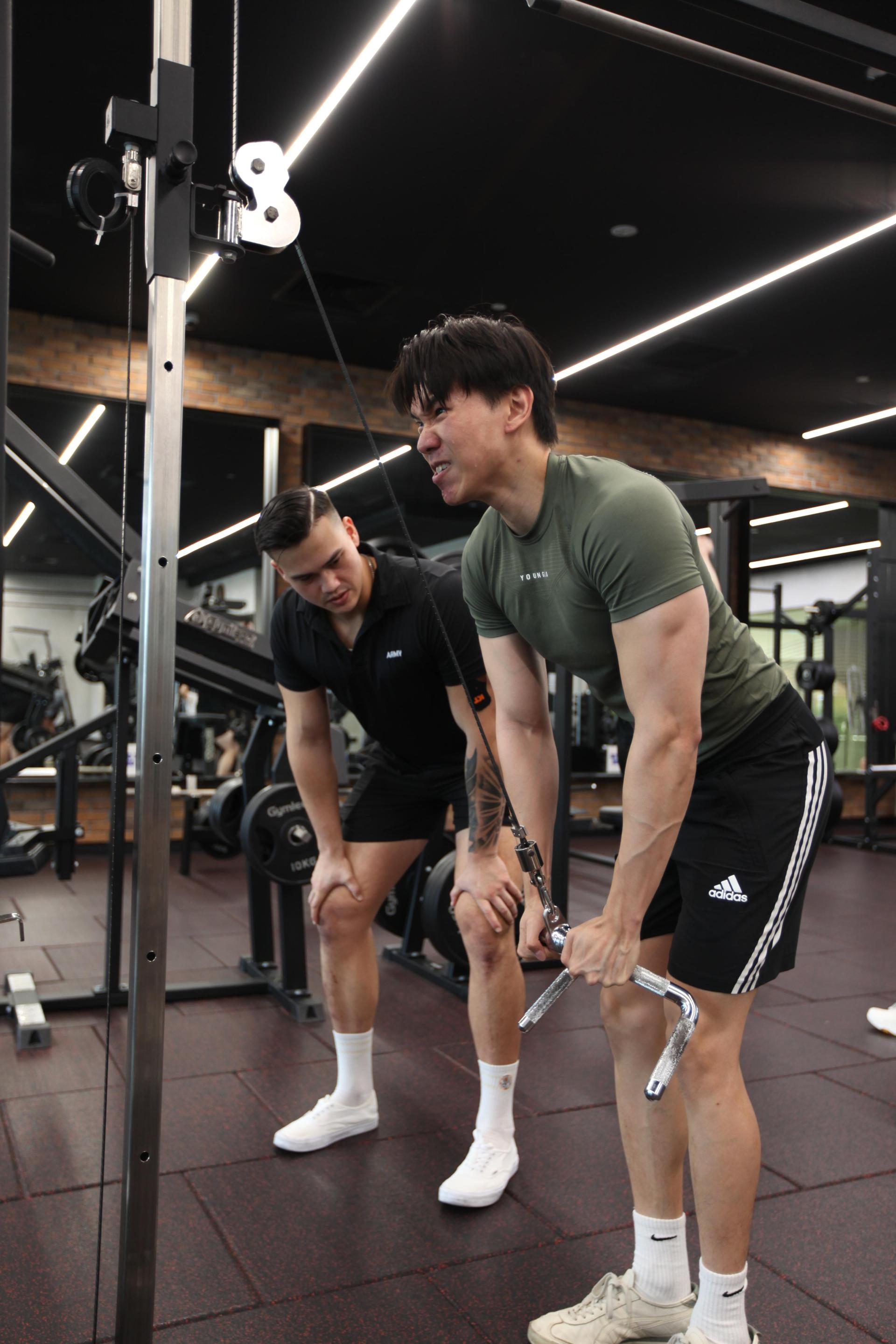
Our coaches at work
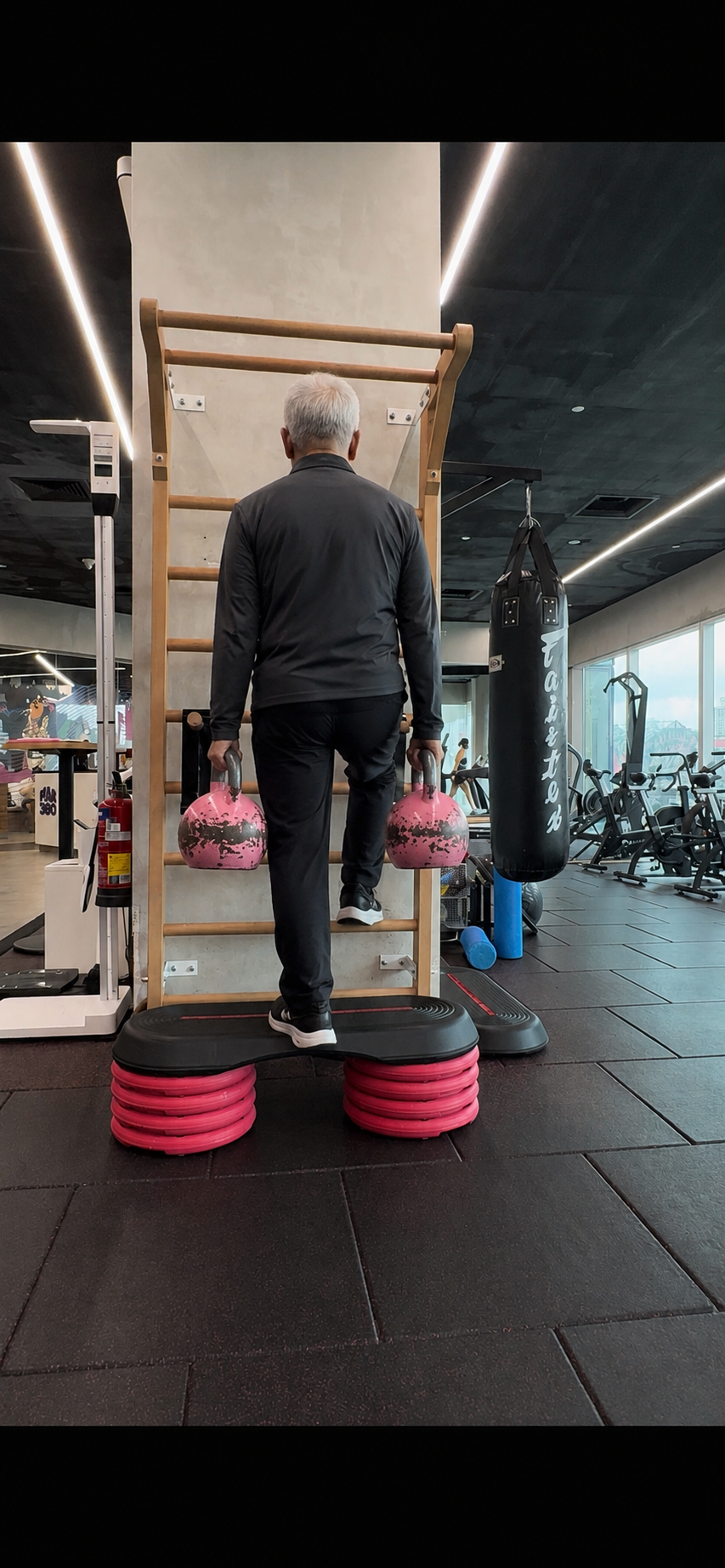
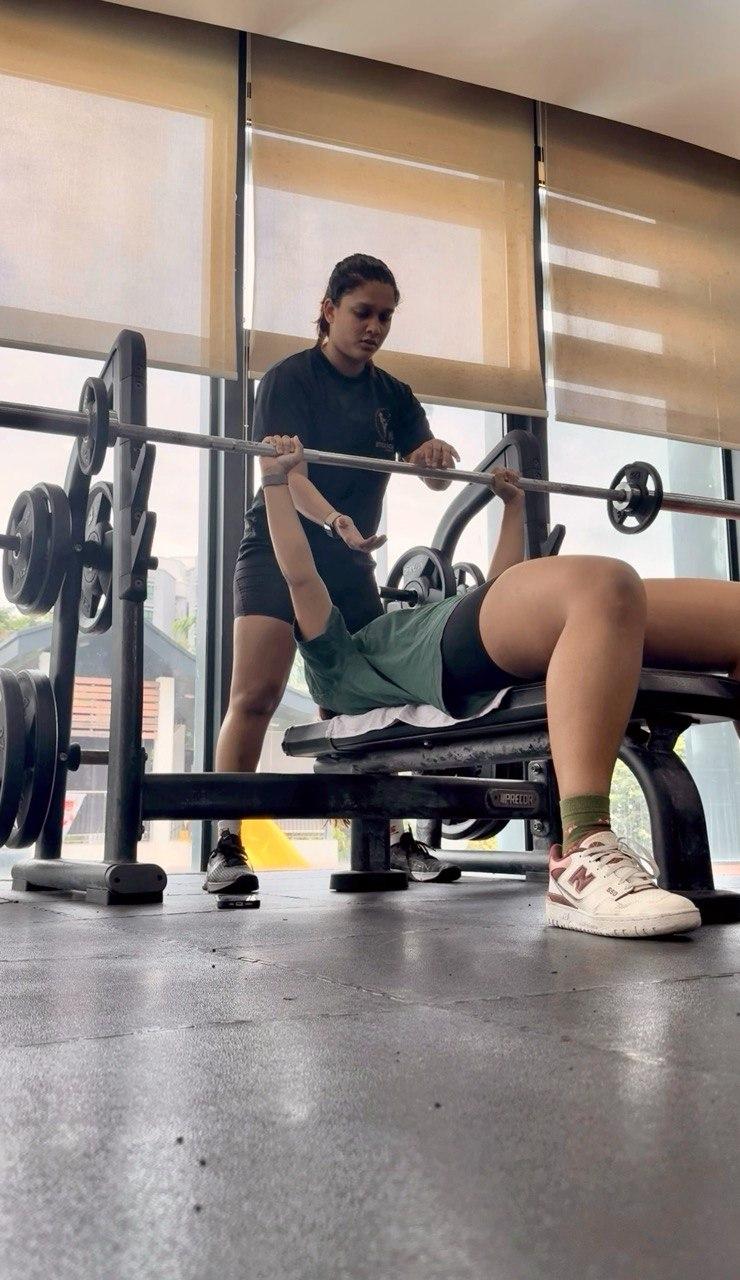
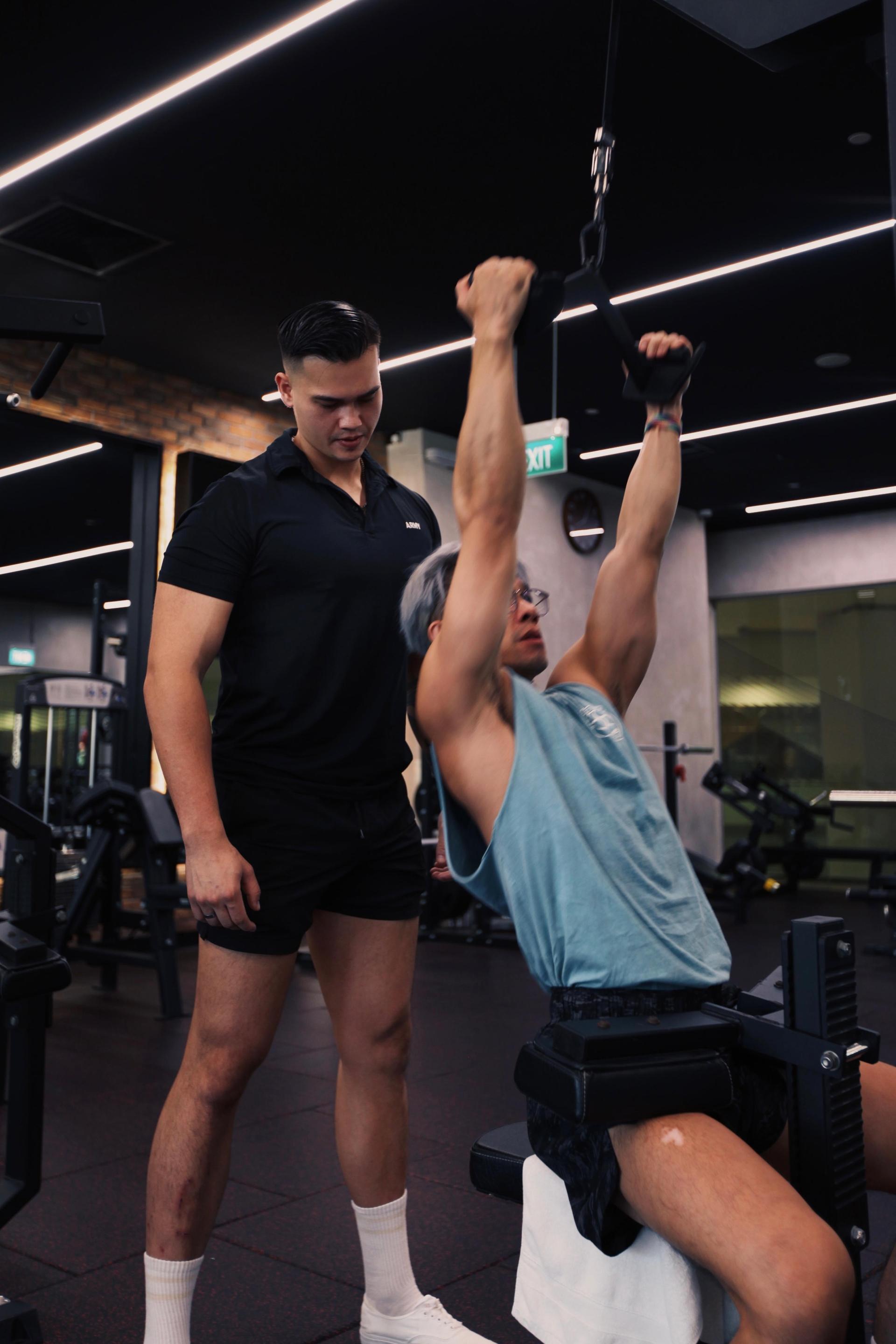
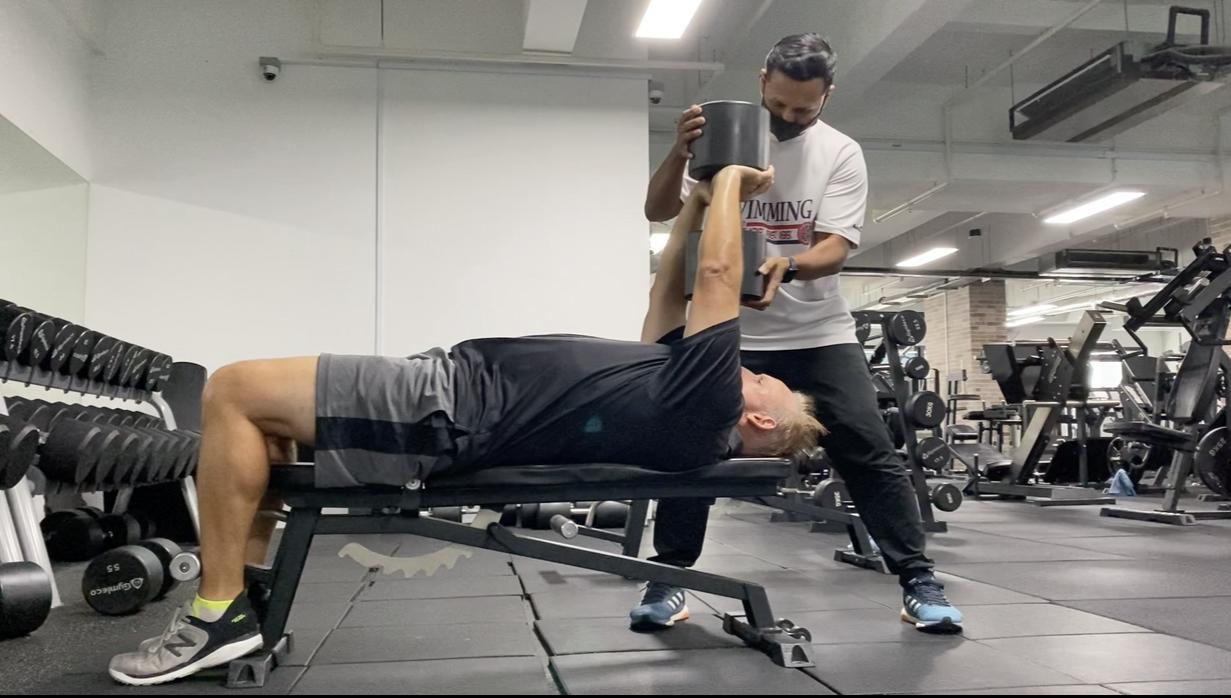
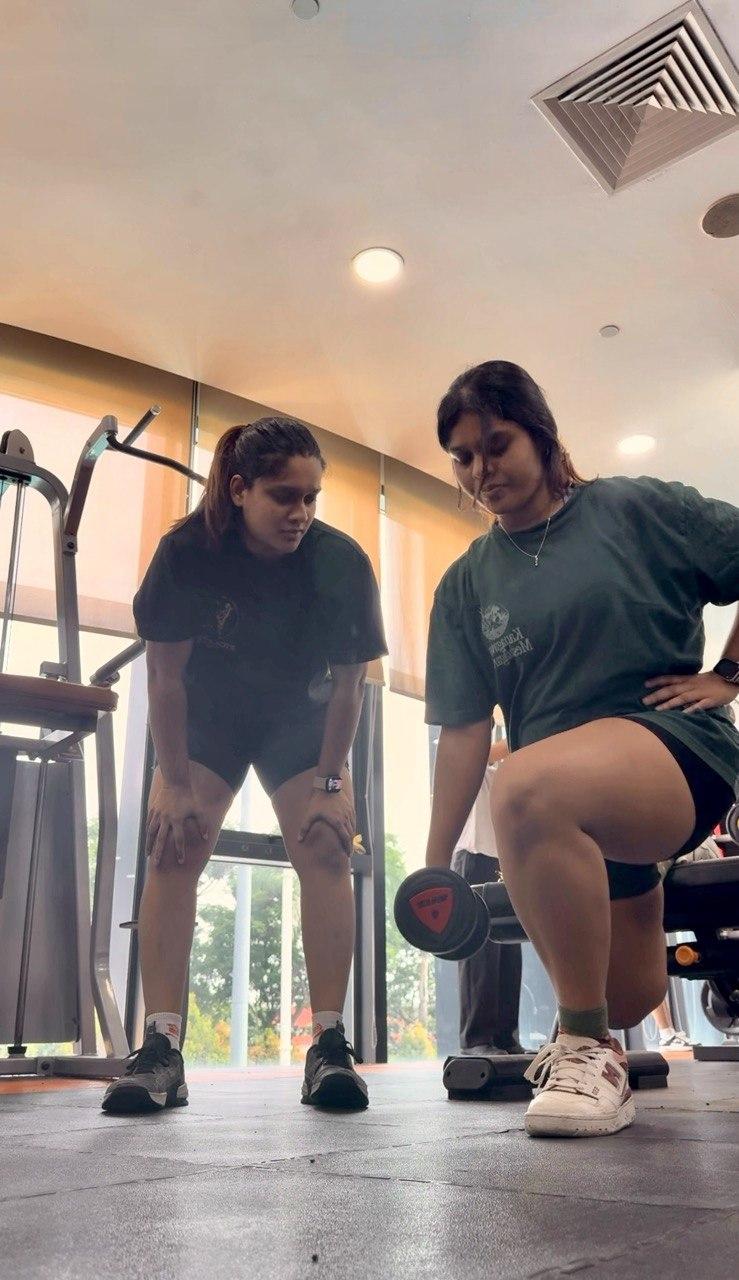
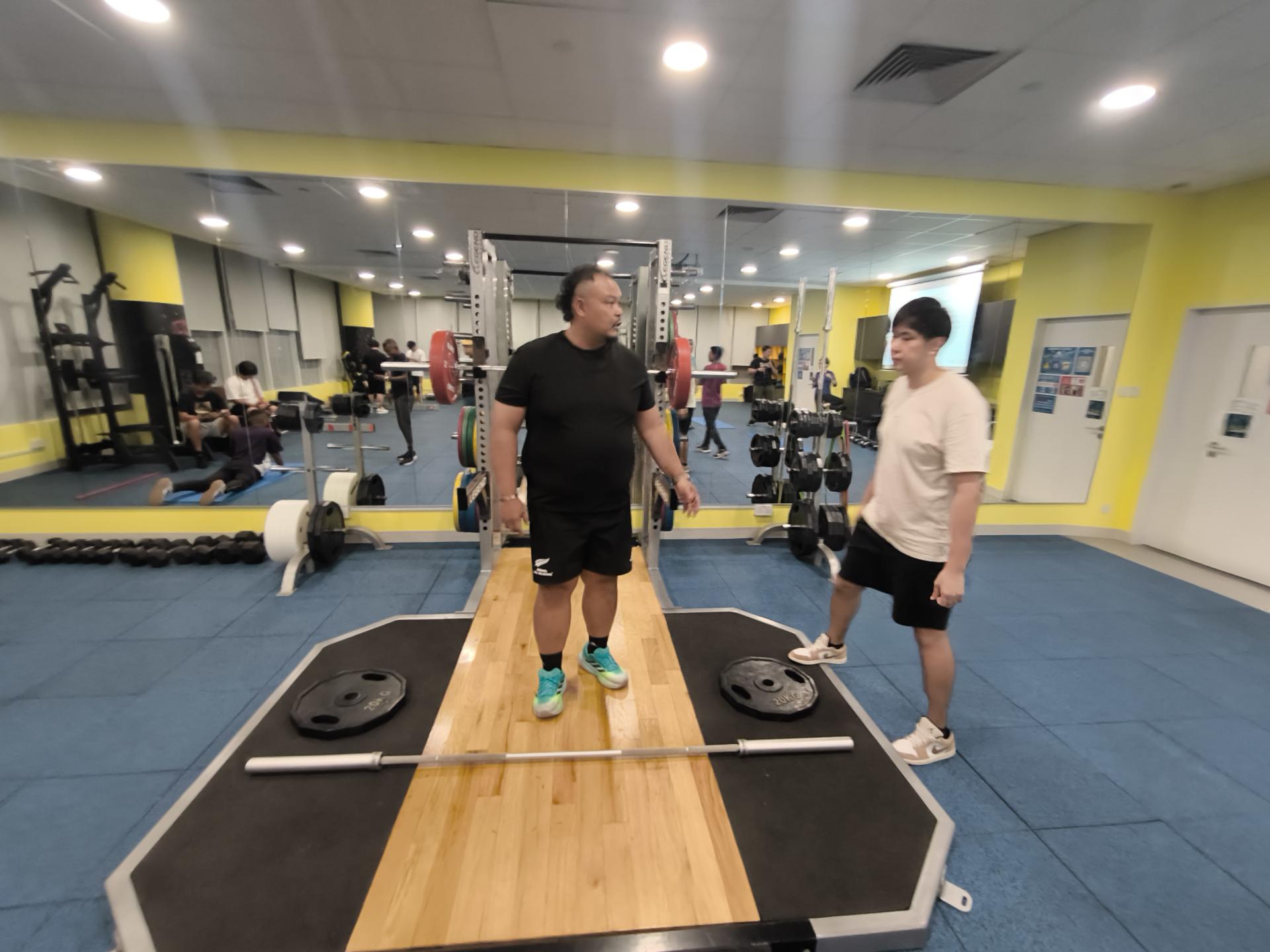
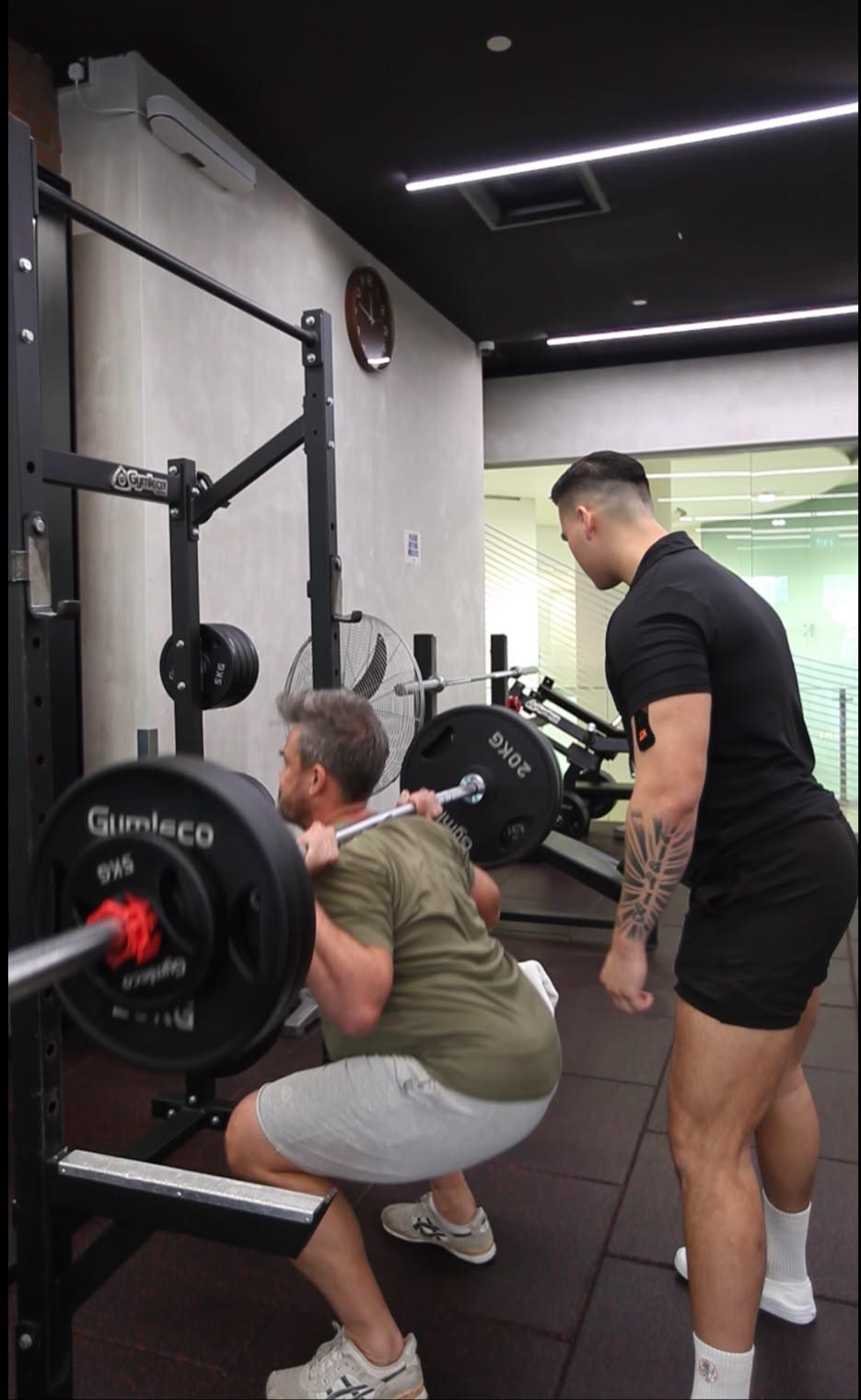
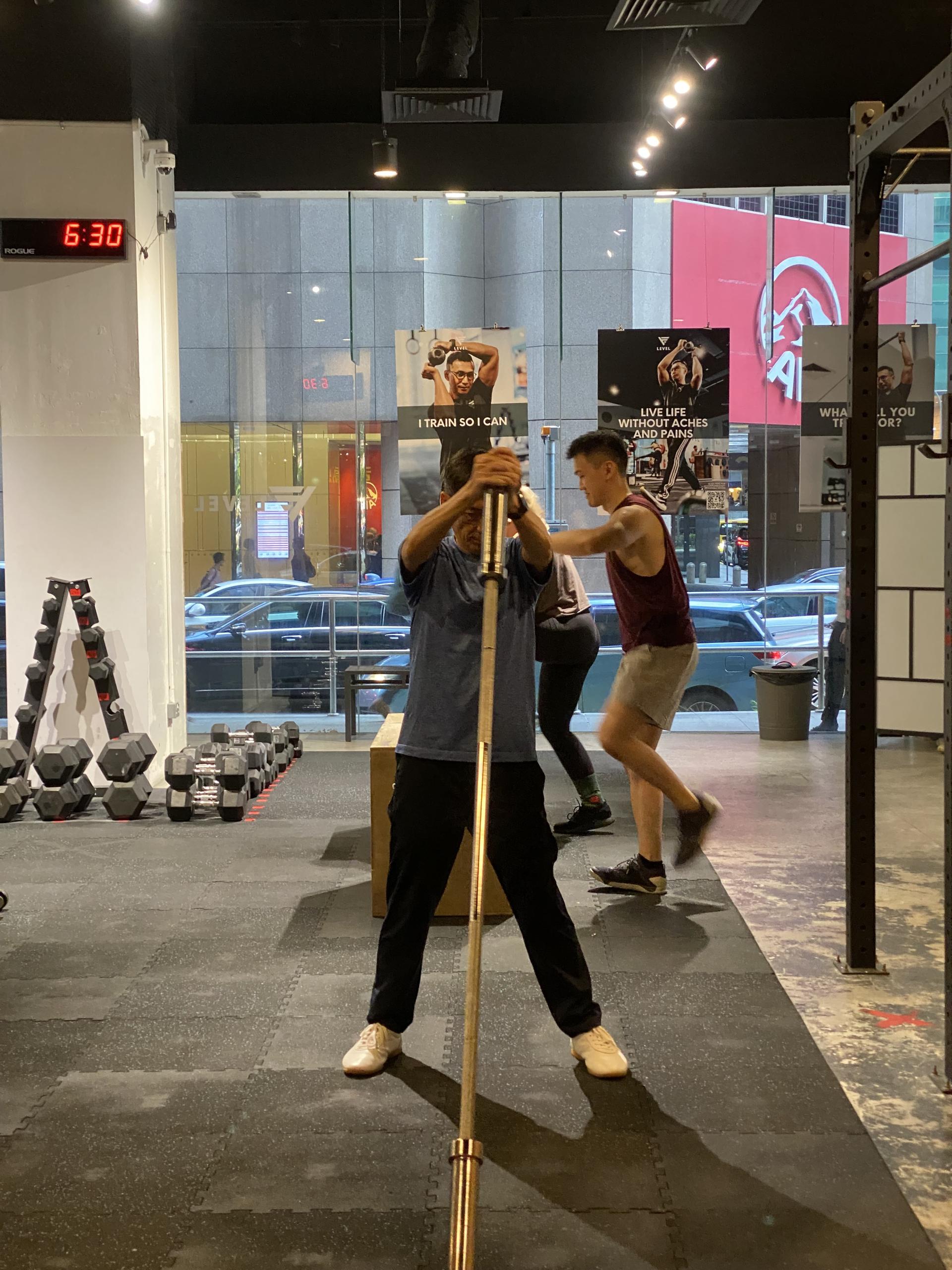
Real sessions from our coaches' own galleries. Swipe for more.
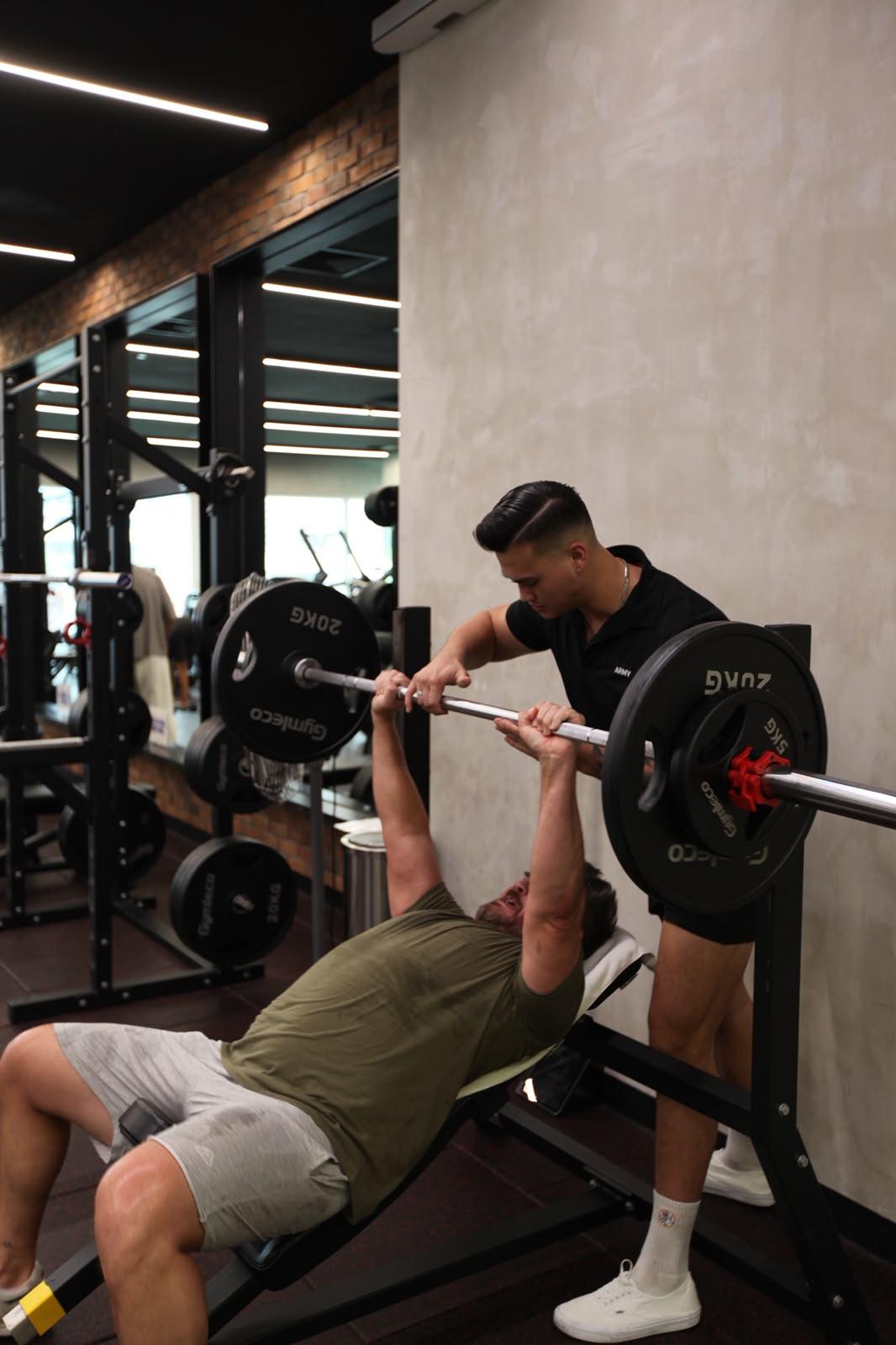
Injury rehab questions.
Do I need a doctor's clearance first?
For a recent injury or surgery, yes, we train within the clearance your doctor or physiotherapist gives. For longstanding aches we'll assess and refer you on if needed. Send the letter, scan report or physio note before your first session, and expect us to ask for an updated one before each step up in load or impact.
What's the difference between this and physiotherapy?
Physiotherapy diagnoses and treats the injury. Rehab coaching rebuilds your strength and movement afterwards so it doesn't return. Coaching usually joins once your physio has moved you into strengthening, and it works to their stage. We coordinate with your physio. If you do not have one yet, your GP or a polyclinic can refer you.
Can you help with back pain?
Often, yes. Many back issues improve with the right corrective and strengthening work. HealthHub notes most low back pain settles within about 6 weeks with self-management, and a coached block typically runs 8 to 12 weeks at 2 sessions a week. We'll assess, train within comfort, and tell you to see a physiotherapist or doctor if it's beyond coaching.
Do I need clearance from a doctor before rehab coaching?
For a recent injury, a new diagnosis or anything post-surgery, yes. We train inside the clearance your doctor or physiotherapist gives and we ask to see it. For a longstanding ache with no diagnosis we screen at your first session and refer you on if what we find belongs with a clinician rather than a coach.
What is the difference between a rehab trainer and a physiotherapist?
A physiotherapist diagnoses and treats the injury and is a registered healthcare professional. A rehab-focused coach rebuilds strength and movement afterwards, inside that clearance, and has no diagnostic role. We coordinate with your physio where you want us to, and when something is beyond coaching we send you back to them, or to your GP or a polyclinic if you do not have one yet.
Can I train with a slipped disc?
Often yes, with clearance, and SingHealth advises staying active and starting gentle exercise as soon as you can tolerate it rather than resting completely. We avoid the loaded positions that reproduce your symptoms and build the hinge pattern first. Loss of bladder or bowel control, or numbness around the groin, means urgent medical care instead.
How soon after surgery can I start training again?
Whenever your surgeon says so, and not before. Post-surgical timelines differ by procedure and by person, so we work from the written clearance and the physio's stage of rehab. Early blocks are usually 2 sessions a week of unloaded range and breathing work, then graded loading once the clinician signs off the next phase.
Will training make my back pain worse?
Well-chosen training usually helps, and HealthHub advises against complete bed rest because avoiding movement weakens you. The rule we hold to is that pain should not be worse the next morning. If it is, we cut the load rather than push through, and we escalate to a physiotherapist if it keeps happening.
Published · revised . Each coach sets their own rate, confirmed before you book.
Terms used
- Corrective exercise:
- Exercise chosen to improve how a joint moves or how a movement is performed, often after injury or with posture complaints.
- Condo gym:
- The shared gym in a private condominium, run by the building's management.
- Gym pod:
- A small, privately bookable gym unit rented by the hour, found in some estates and offices.
Sources
- Physical activity guidelines for adults · World Health Organization
- Low back pain: prevalence in Singapore, red flags and staying active · HealthHub, Health Promotion Board Singapore
- Slipped disc: symptoms, emergency signs and rehabilitation · SingHealth, Singapore
- Knee ligament injuries: types, symptoms and diagnosis · SingHealth, Singapore
- Physical activity guidelines for adults aged 19 to 64 · National Health Service, United Kingdom
- Rotator Cuff Tears: Surgical Treatment Options (rehabilitation timeline) · OrthoInfo, American Academy of Orthopaedic Surgeons
- Grindem H, Snyder-Mackler L, Moksnes H, Engebretsen L, Risberg MA. Simple decision rules can reduce reinjury risk by 84% after ACL reconstruction: the Delaware-Oslo ACL cohort study. Br J Sports Med. 2016;50(13):804-8. doi:10.1136/bjsports-2016-096031. PMID 27162233 · PubMed, National Library of Medicine
General information, not medical advice.