

Nutrition10 min read · Updated
Hawker Eating for Fat Loss
- Trial 10% off
- No membership
- WhatsApp reply, usually within the hour
The short answer
You can lose fat while eating at hawker centres by choosing protein-forward dishes (sliced fish soup, yong tau foo, soup-based noodles, chicken without the skin), going easy on oil-and-sugar-heavy sauces and gravies, controlling rice and noodle portions, and cutting back on sugar in kopi and teh.
- It is about smarter swaps and portions, not banning your favourites.
Written by the Fit Titans coaching team. Edited by Theon. How we write guides
On this page (10)
- 1. Should you eat smarter or stricter?
- 2. What are the protein-forward hawker picks?
- 3. How should you handle sauces, oils and portions?
- 4. Where does the hidden sugar live in drinks?
- 5. How do you put a hawker meal together?
- 6. How do you eat for fat loss around a CBD office day?
- 7. How do you handle weekend zhi char, supper and Malaysia trips?
- 8. Should your personal trainer also coach nutrition?
- 9. How many calories are actually on a hawker plate?
- 10. How fast should you lose weight while still eating out most days?
Key facts
- Fat loss still comes down to a calorie deficit - hawker food fits as long as the overall numbers work.
- Soup-based and steamed dishes are usually lighter than fried, coconut-rich or heavily-sauced ones.
- Protein-forward picks like fish soup and yong tau foo help you stay full on fewer calories.
- Default kopi and teh come heavily sweetened - asking for 'kosong' or 'siu dai' cuts a lot of hidden sugar.
Should you eat smarter or stricter?
Hawker food is not the enemy of fat loss. The enemy is eating well past your calorie needs without noticing - extra oil, sugary gravies, large rice portions and sweet drinks that slip by.
You do not need to swear off char kway teow forever. You need most of your meals to be protein-forward and sensibly portioned, with the richer dishes enjoyed less often. That is sustainable. A list of forbidden foods is not.
What are the protein-forward hawker picks?
Start by anchoring each meal around protein and keeping the cooking method light. These are reliable, widely available choices.
| Go-to picks | Enjoy less often | Why |
|---|---|---|
| Sliced fish soup (less or no fried bits) | Fried fish soup with evaporated milk | Soup base and lean fish keep it high-protein and lighter on oil |
| Yong tau foo (soup, more veg and protein, less fried items) | Fried/laksa-gravy yong tau foo | You control the items - load protein and veg, skip the fried tofu and thick gravy |
| Soup noodles (e.g. fishball, sliced meat) | Fried noodles (char kway teow, fried hokkien mee) | Soup versions carry far less added oil |
| Steamed/roasted chicken rice (skin off, less rice) | Whole skin-on portion with extra rice | Removing skin and right-sizing the rice trims a lot of calories |
| Economic rice with 1 protein + 2 veg, steamed where possible | Multiple fried items with thick curry gravy | Mix-and-match lets you build a balanced plate |
Pick a protein anchor first, then carbs and vegetables. Yong tau foo with tofu and fish, fish soup, grilled chicken wings (limit skin if cutting aggressively), egg dishes and lean pork options work, and so do thunder tea rice for vegetable volume plus a protein side, and rotisserie chicken with salad (watch the skin and gravy).
Carry a simple default for Raffles Place, Tampines Hub or your neighbourhood centre so decision fatigue does not push you to fried bee hoon every weekday. Training context: training without a gym and weight-loss coaching.
How should you handle sauces, oils and portions?
Often the dish is fine and the add-ons are what tip it over. A few small habits make a real difference without making the meal joyless.
- Ask for less gravy or sauce on the side - thick curries and sweet sauces are calorie-dense.
- Go easy on fried toppings (fried shallots, crispy bits, fried wontons) - tasty but oily.
- Right-size your starch: a smaller rice or noodle portion is the simplest cut.
- Add vegetables where you can for volume and fibre that keep you full.
- Choose steamed, soup or roasted over deep-fried as your default cooking method.


Where does the hidden sugar live in drinks?
Default kopi and teh are made sweet, and bubble tea or sugarcane juice can quietly carry as many calories as a small meal. Drinks are one of the easiest places to cut without touching your food at all. Learn the lingo and use it.
- 'Kosong' = no sugar. 'Siu dai' = less sweet. Start with siu dai and work toward kosong.
- Default to water or plain tea most of the time and keep sweet drinks occasional.
- Treat bubble tea, sugarcane and bottled sweet drinks as treats, not daily defaults.
- If you take kopi/teh often, the sugar adds up - small changes here compound fast.
Kopi siu dai and teh o kosong save meaningful sugar across a work week. Liquid calories are the silent killer of hawker-centre fat loss, not the chicken rice itself.
How do you put a hawker meal together?
You do not need to track every grain of rice. Anchor most meals around protein, keep cooking methods light, right-size your starch, and tame the sugary drinks - then let your favourites show up in smaller portions or less often. Pair that with consistent training and the results follow. See our guides on weight-loss training and how many PT sessions it takes to see results.
Soup-based and steamed orders fit best: sliced fish soup with vegetables, chicken breast with less skin and half rice, or two steamed dishes and a vegetable at economic rice. The table pairs each usual order with a leaner swap.
| Usual order | Leaner swap | Why |
|---|---|---|
| Chicken rice (skin + full rice) | Breast, less skin, half rice + soup | Cuts energy density |
| Fried bee hoon | Sliced fish soup + vegetables | More volume, less oil |
| Economic rice 3 fried dishes | 2 steamed/boiled + 1 veg | Controls oil and sodium |
| Sweet iced drinks | Teh-o kosong / water | Removes liquid calories |

How do you eat for fat loss around a CBD office day?
Raffles Place and Tanjong Pagar hawker centres peak 12-1pm - queue eats into lunch break and pushes rushed, high-calorie choices. Pre-decide two protein anchors at your regular stall (e.g. chicken rice breast, yong tau foo without fried items). Meal prep Sunday is optional. Hawker consistency beats perfect Tupperware you abandon by Wednesday.
Pantry biscuits and afternoon bubble tea can erase a careful lunch. Keep a protein yoghurt or nuts at the desk if that helps, or schedule bubble tea as a planned treat after a training day. Hydration with water or unsweetened drinks reduces random kopi-peng extras in air-conditioned offices.
How do you handle weekend zhi char, supper and Malaysia trips?
Plan one higher-flexibility meal rather than an all-day free-for-all. Share dishes, start with soup or vegetables, and keep steps up after evening meals with a short walk. Alcohol and late supper are common Singapore stall points - they are optional, not mandatory culture. If friends insist on supper, choose clear soup noodles over deep-fried platters when you can.
On a Malaysia weekend trip, expect higher calories. Keep protein high, walk more between meals, and return to your Singapore defaults on Monday without guilt spirals. One trip does not erase eight good weeks. Training continuity: no-gym training.
Should your personal trainer also coach nutrition?
Coaches can help with practical meal frameworks and accountability. Diagnosing medical conditions or prescribing therapeutic diets belongs with qualified clinicians. Ask what nutrition support is included before you buy a pack - see PT cost and choosing a trainer.
Local context is why a coach here beats imported advice: Western meal-prep guides ignore kopi peng, zhi char and office pantry snacks. Among other agencies, Athleaders publishes nutrition coaching and StringsSG has postnatal nutrition blogs.
How many calories are actually on a hawker plate?
Enough that one plate can be most of a day's fat allowance. HealthHub puts a serving of char kway teow at 744 Calories with 38 grams of fat, against a recommended daily fat allowance of 55 to 60 grams. Its food-court guidance notes that most meals eaten out run about 700 to 800 Calories, and offers a 500-Calorie lunch as the workable target.
| Figure | Value | Why it matters |
|---|---|---|
| Char kway teow, one serving | 744 Calories, 38g fat | A single plate is roughly two thirds of the daily fat allowance |
| Nasi briyani with chicken | 1,100 Calories | The highest published figure in HealthHub's food-court guidance |
| Typical meal eaten out | About 700 to 800 Calories | Three of those a day is why eating out stalls fat loss |
| Workable lunch target | 500 Calories | HealthHub's own food-court benchmark |
| Recommended daily fat allowance | 55 to 60 grams | The number the 38g in one plate is measured against |
Nothing here bans a dish. It puts a number on frequency: char kway teow once a fortnight is a rounding error, and char kway teow three times a week is the whole problem. Notice too that the fix is usually the cooking method and the portion, not the cuisine.
How fast should you lose weight while still eating out most days?
0.5kg to 1kg a week, and 10% to 15% of body weight over 6 months if your BMI is 23 or above. Those are HealthHub's figures, and they are the reason smart hawker ordering works: swapping two 700-Calorie plates a week for two 500-Calorie ones is a change you can hold for six months, which is what the 6-month target actually requires.
- 01Two swaps a week, not sevenPick the two meals you eat most often and change those first. Fish soup and yong tau foo are the usual answers.
- 02Kopi or teh kosongThe drink is often the cheapest calories to remove in the entire day.
- 03Half rice, full proteinThe portion lever beats the dish-banning lever almost every time.
- 04Judge it at 8 weeksAt 0.5kg a week that is 4kg, which is visible in a photo and in a waistband.
The terms that come up when a coach turns this into a plan - hawker centre, kopi or teh, body recomposition, progressive overload - are all defined in the Singapore fitness glossary if any are unfamiliar.
Our coaches at work
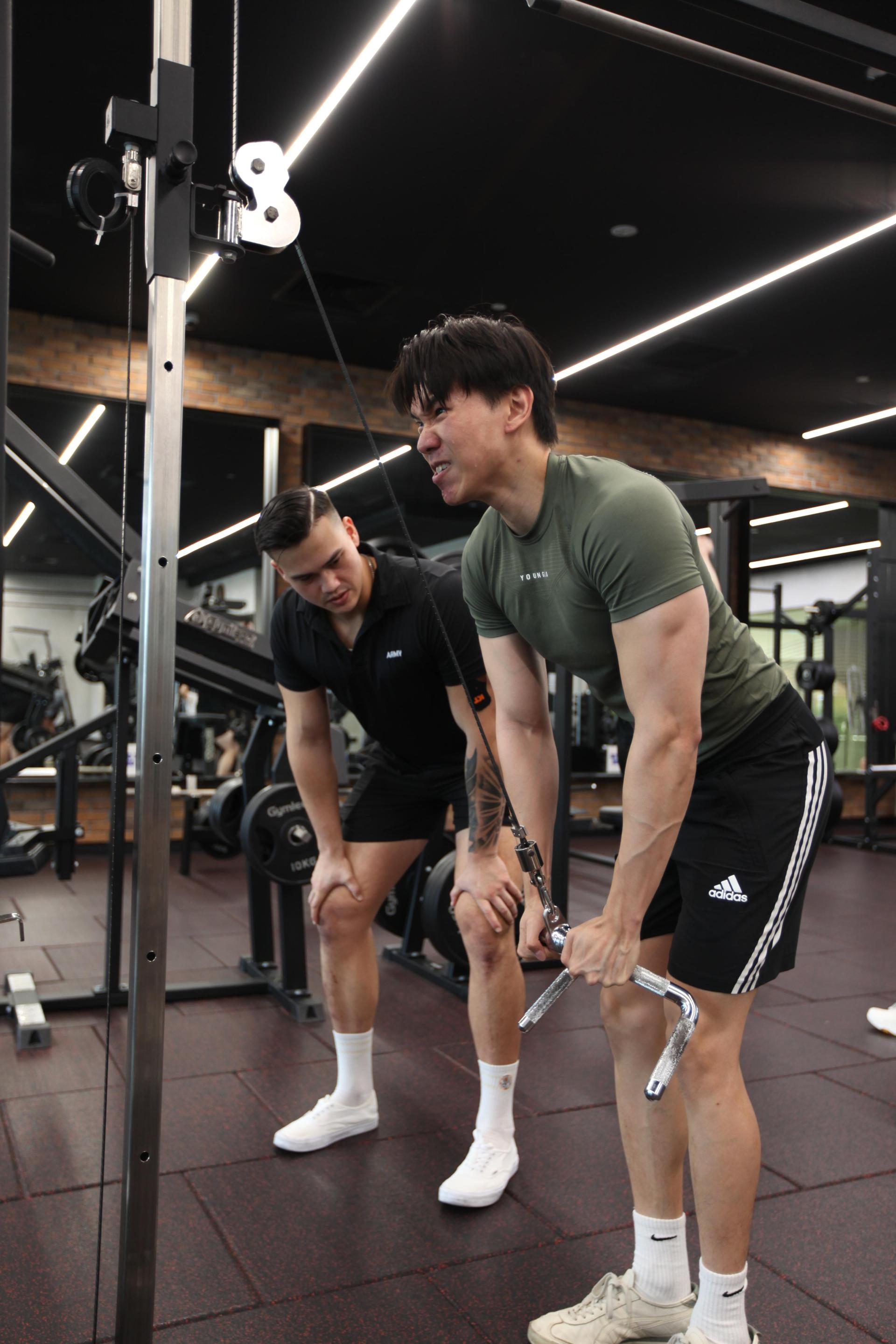
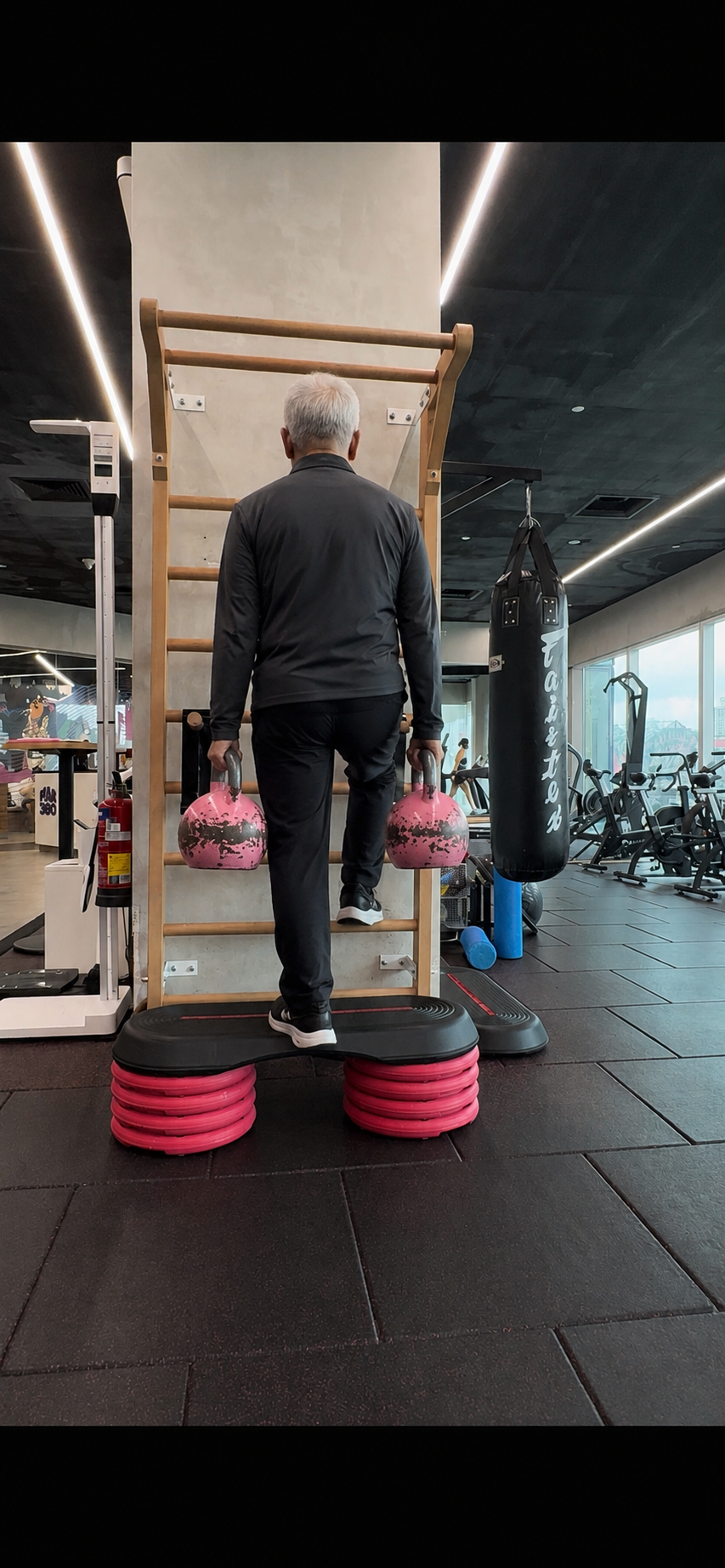
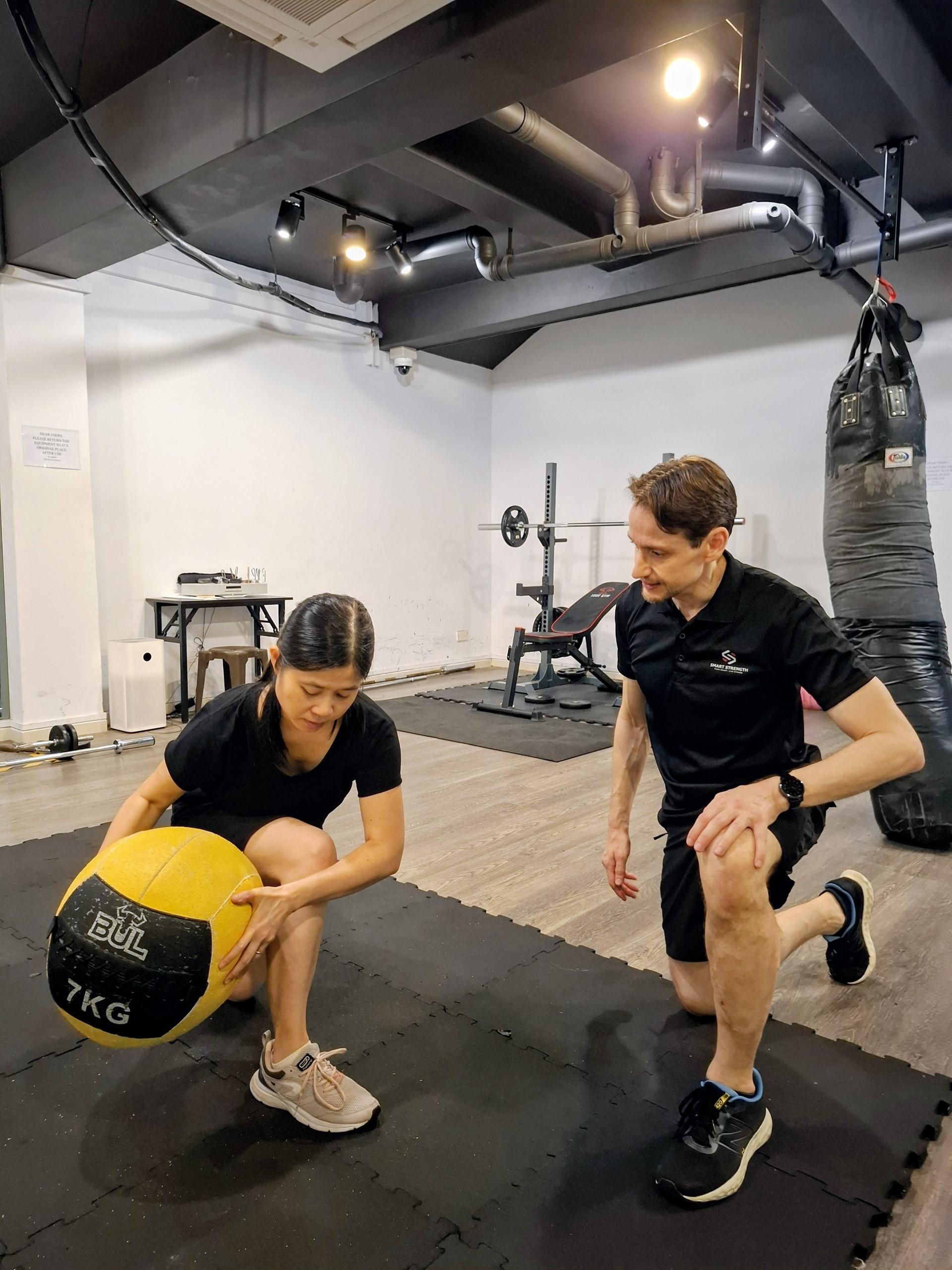
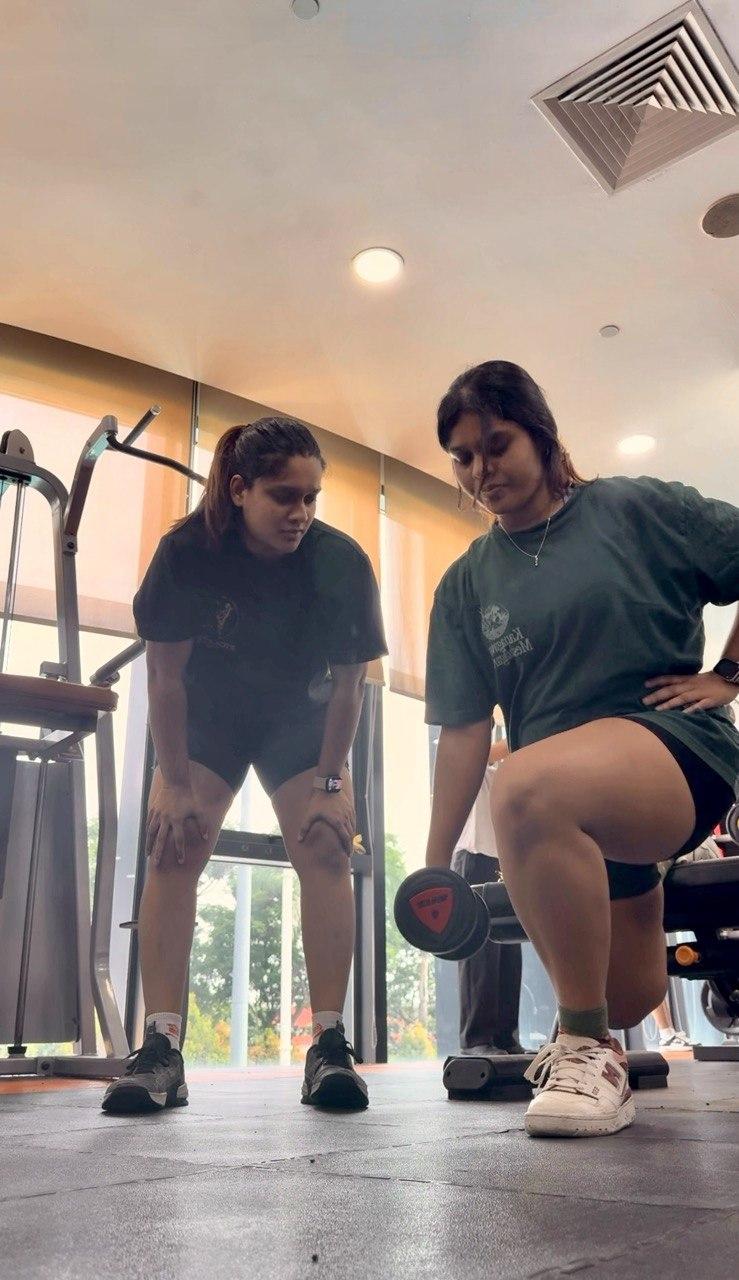
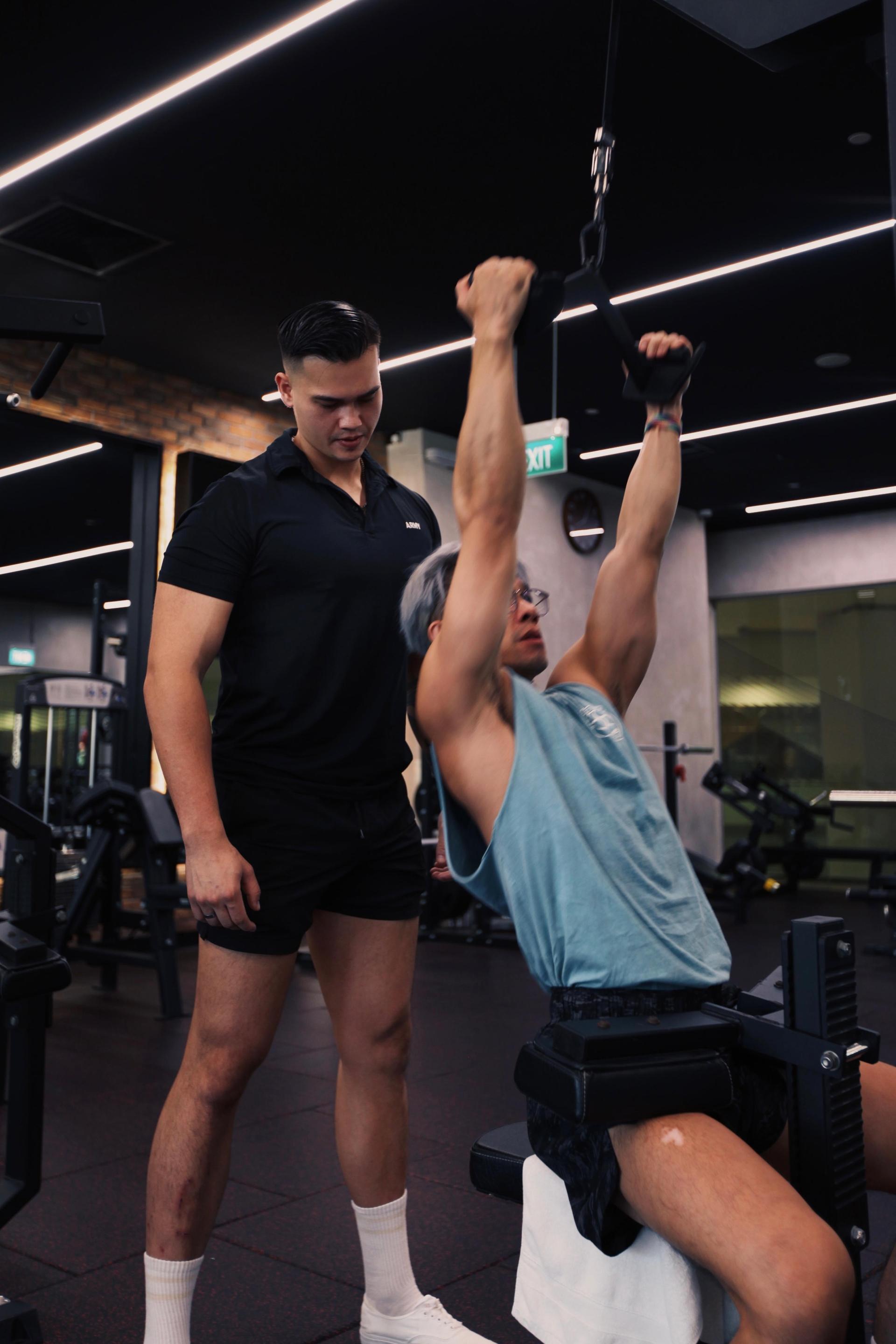
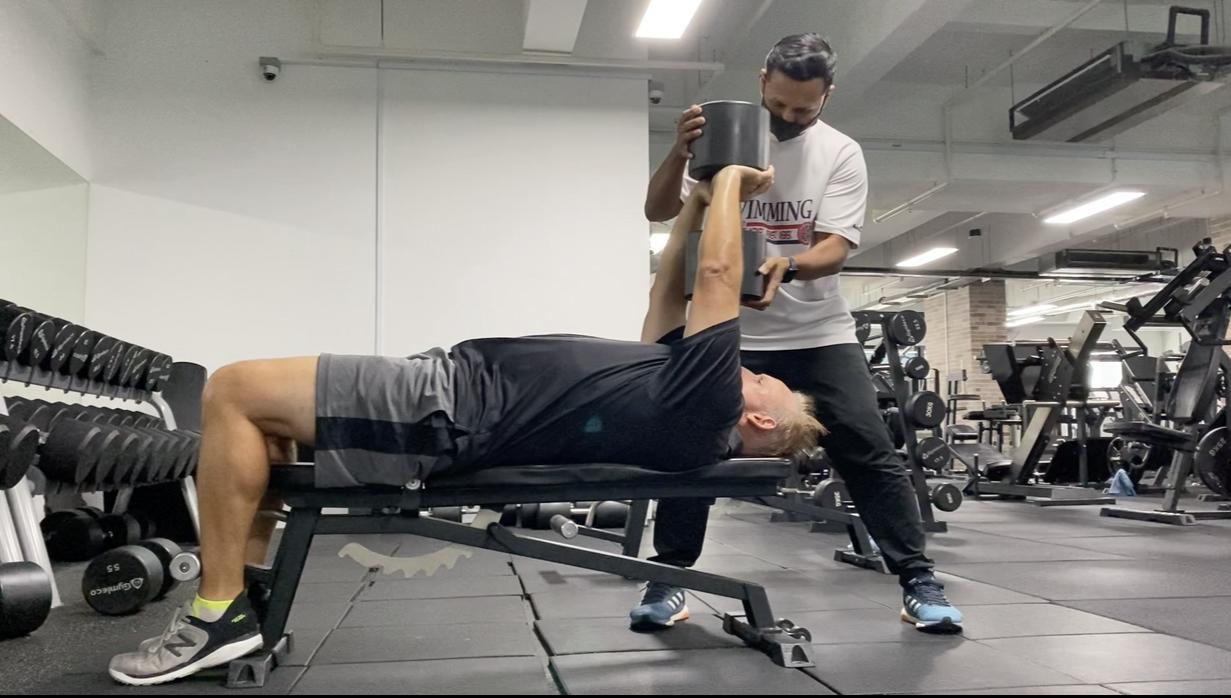
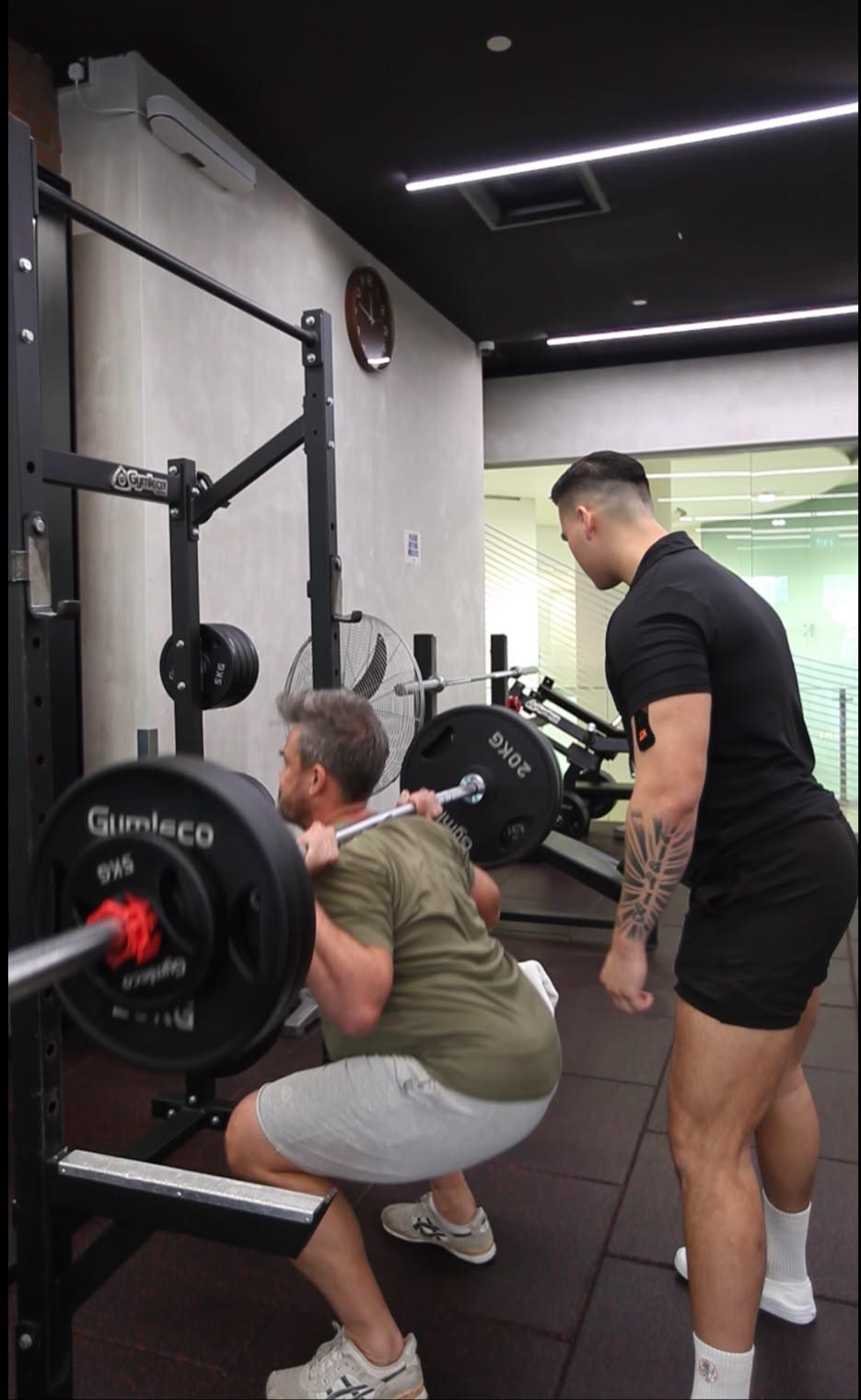
Real sessions from our coaches' own galleries. Swipe for more.

Hawker fat loss questions.
Can I still lose weight eating hawker food every day?
Yes, if your overall calories support fat loss. Anchor meals around protein, favour soup and steamed dishes over fried ones, watch the sauces and portions, and go easy on sweet drinks. Frequency and portion size matter more than any single dish.
What are the best hawker dishes for fat loss?
Protein-forward, lighter-cooked options work best: sliced fish soup, soup-based noodles, yong tau foo loaded with protein and veg (skip the fried items and thick gravy), and steamed or roasted chicken rice with the skin off and less rice. HealthHub's workable target is a 500-Calorie lunch, against the 700 to 800 Calories most meals eaten out carry.
How bad is kopi and teh for fat loss?
The coffee or tea itself is fine. It is the sugar and condensed milk that add up. Ordering 'siu dai' (less sweet) or 'kosong' (no sugar) removes a lot of hidden calories while you keep your drink. Start with siu dai and work toward kosong, because a daily sweet kopi or teh compounds across a work week.
Do I have to give up char kway teow and other fried dishes?
No. Nothing is banned. HealthHub puts a serving of char kway teow at 744 Calories with 38g of fat, so richer fried dishes fit better as occasional choices than daily ones: once a fortnight is a rounding error, three times a week is the whole problem. Enjoy them in a sensible portion, then return to your protein-forward defaults.
Is chicken rice bad for fat loss?
Not inherently. Breast meat, less skin, half rice and soup instead of heavy gravy keeps it a viable daily meal, and it is one of the easiest protein anchors at any hawker centre. Portion and sides matter more than banning hawker food: the skin, the full rice portion and the sauce are where most of the extra calories sit.
Can you build muscle while eating hawker food?
Yes, if protein is high enough and training is progressive. Chicken rice with breast meat, fish soup and tofu-heavy yong tau foo are common tools, and adding a second protein side at economic rice closes most gaps. For a muscle-building surplus you eat more of the same picks rather than more fried food. See build muscle Singapore.
Is cutting rice necessary for fat loss?
Not always. Reducing portion size, frying frequency and sugary drinks often matters more than eliminating rice entirely. Half rice with full protein is the simplest lever: swapping two 700-Calorie plates a week for two 500-Calorie ones is a change you can hold for the six months HealthHub's 10% to 15% weight-loss target takes.
How many times a week can I eat out and still lose fat?
Many Singaporeans eat out most days and still lose fat with portion awareness. The rule is two swaps a week, not seven: pick the two meals you eat most often and change those first, usually to fish soup or yong tau foo. Consistency beats a perfect home-cooked week followed by a chaotic weekend.
More questions (3)
Is economic rice compatible with fat loss?
Yes, with vegetable-heavy plates, steamed options and controlled gravy. A good default is one protein and two vegetables, or two steamed or boiled dishes plus one vegetable, with the curry gravy on the side. Two or three fried dishes plus a sugary drink is the usual stall point, because the oil and sodium add up fast.
How many calories are in a plate of char kway teow?
HealthHub puts one serving at 744 Calories with 38 grams of fat, against a recommended daily fat allowance of 55 to 60 grams. Its food-court guidance also lists nasi briyani with chicken at 1,100 Calories. Neither dish is banned, but at those figures they work as fortnightly choices rather than weekly defaults.
How fast should you lose weight while eating hawker food most days?
HealthHub's healthy rate is 0.5kg to 1kg a week, or 10% to 15% of body weight over 6 months where BMI is 23 or above. That maps onto two meal swaps a week rather than a strict diet, because a six-month target needs changes you can hold for six months. At 0.5kg a week, eight weeks is about 4kg.

About this guide
Published · revised
Terms used
- Hawker centre:
- Open-air food centres selling cooked food at low prices.
Sources
- Protein and exercise - position stand · International Society of Sports Nutrition
- Obesity and overweight - evidence overview · World Health Organization
- Say Yes To Lower-Calorie Hawker Foods - char kway teow at 744 Calories and 38g fat against a 55g to 60g daily fat allowance · HealthHub, Health Promotion Board Singapore
- 7 Tricks for Surviving the Food Court at Lunchtime - meals eaten out run about 700 to 800 Calories, with a 500-Calorie lunch target · HealthHub, Health Promotion Board Singapore
- What is a Healthy Weight? - 0.5kg to 1kg a week, or 10% to 15% of body weight over 6 months at BMI 23 and above · HealthHub, Health Promotion Board Singapore
General information, not medical advice.