

Muscle8 min read · Updated
How to Build Muscle in Singapore
- Trial 10% off
- No membership
- WhatsApp reply, usually within the hour
The short answer
Muscle is built by progressively lifting more over time, eating slightly above maintenance with roughly 1.6-2.2g of protein per kilogram of bodyweight, and sleeping properly.
- A beginner can expect somewhere around 0.25-0.5kg of muscle a month in the first year - visible change in 8-12 weeks, a genuinely different physique in a year.
- Supplements are optional and none of them matter next to those four things.
Written by the Fit Titans coaching team. Edited by Theon. How we write guides
On this page (11)
- 1. How is muscle actually built?
- 2. How long does muscle gain take?
- 3. How do you eat for muscle on Singapore food?
- 4. Can you build muscle in a condo gym, and when do you need a bigger gym?
- 5. What are the five mistakes we see most?
- 6. How many sessions per week for muscle gain?
- 7. How do sleep and climate affect gains?
- 8. What if strength stalls, and when should you deload?
- 9. How many hard sets a week does the research support?
- 10. What does a 12-week beginner muscle block look like in a condo gym?
- 11. How do you track progressive overload without an app?
Key facts
- Progressive overload is the mechanism - more weight, more reps or better control, tracked week to week
- Realistic beginner gain is roughly 0.25-0.5kg of muscle a month, and it slows every year after
- Protein of about 1.6-2.2g per kg of bodyweight per day is the range the evidence supports
- A condo gym with dumbbells to 30kg is enough for years of progress for most people
How is muscle actually built?
Challenge a muscle, feed it, let it recover, then challenge it slightly harder. That loop, progressive overload, is the whole mechanism. If weight, reps or control are not trending up over months, you are maintaining, however sweaty the session felt.
- ChallengeRoughly 10-20 hard sets per muscle group a week, most within a couple of reps of failure.
- FeedEnough protein. Use the hawker guide.
- RecoverEach muscle about twice a week beats once.
- ProgressAdd reps to the top of the range, then load. Log working weights.
Base it on a squat or leg press, a hip hinge, horizontal and vertical pushes and pulls, and a carry or core brace. Arm and delt accessories rotate after. Isolation work is optional seasoning, not the meal. Programme design: muscle gain coaching.
How long does muscle gain take?
In year one most people notice it by week 8 to 12 and hear it from others by month 4 to 6, at a realistic 0.25 to 0.5 kg of muscle a month. It slows from year two.
- Weeks 8-12You noticeAt 0.25-0.5 kg a month.
- Months 4-6Others noticeSame year 1 rate.
- Year 20.12-0.25 kg a monthStrength keeps climbing.
- Year 3+Under 0.1 kg a monthRefinement, measured over years.
Anyone promising two kilos of muscle a month is selling something. Weight climbing much faster than this is mostly fat and water. Week by week: sessions-to-results guide.
How do you eat for muscle on Singapore food?
A small surplus, roughly 10-15% above maintenance, with enough protein. Bigger surpluses build fat faster, not muscle. Protein is what people miss, as many hawker staples are carb-dominant.
- 01Chicken breast or thighEconomy rice or yong tau foo stall, double meat.
- 02Fish soupExtra fish, sliced or fried.
- 03EggsSoft-boiled, in a kaya toast set, or added to anything.
- 04Greek yoghurt, milk, tofu, tempehFor the gaps at home.
- 05WheyIf you are consistently short. Convenient, not magic.
Orders that hit protein: economy rice with two or more protein sides, yong tau foo with tofu, fish balls and lean meat, kaya toast with extra eggs and less kaya. The hawker eating guide has the same picks. Eat more of them.
To bulk, add extra rice or noodles at one meal and another protein serve, not fried snacks. Check your waist monthly. If fat outruns strength, switch to recomposition, not a reckless bulk.



Can you build muscle in a condo gym, and when do you need a bigger gym?
For the first couple of years, almost certainly. Muscle responds to effort and progression, not equipment brands. Dumbbells to 25-30kg, a bench and a cable station take most people a very long way.
Stay in the condo gym
- Slower eccentrics, pauses, higher reps and unilateral work make light loads harder
- Machines are convenience, not a requirement
- What a condo gym can and can't do
Add a bigger gym
- Condo dumbbells top out on rows or presses
- You need a barbell for consistent loading
- ActiveSG or commercial gym days, trained alone between coached condo sessions
- Barbell work with your coach: a pay-per-use private gym that takes outside trainers, such as The Gym Pod, at its published rate
ActiveSG bars personal training in its gyms without its prior written approval. Skip a premium Orchard membership solely for muscle gain while still inconsistent: adherence comes first. Venues: PT vs gym. For a sport, a strength and conditioning coach plans around your competition calendar.
What are the five mistakes we see most?
- 01Programme-hopping- changing plans every three weeks so nothing ever progresses.
- 02Never tracking- if you don't log it, you can't overload it.
- 03Under-eating- training like a bodybuilder, eating like someone on a diet.
- 04Junk volume- lots of easy sets far from failure.
- 05Ignoring sleep- the cheapest, most-skipped recovery tool there is.
How many sessions per week for muscle gain?
Two coached sessions a week is enough for most beginners. Intermediates go to two or three plus a homework day, and a time-poor exec can hold two coached plus one short session. The table sets out all three.
| Level | Coached | Homework | Notes |
|---|---|---|---|
| Beginner | 2x | 0-1x | Full body focus |
| Intermediate | 2-3x | 1x | Upper/lower or full body |
| Time-poor exec | 2x | 1 short | Keep compounds first |
How do sleep and climate affect gains?
Late work, NS duties and humid evenings cut recovery. Prefer air-conditioned strength sessions and protect sleep before adding a fourth hard day. Alcohol-heavy weekends quietly erase progress.
What if strength stalls, and when should you deload?
Check protein, sleep and true progressive overload first. Then vary rep ranges, add a set to lagging lifts, or deload a week. Coaches should not chase fatigue for its own sake. Cost of adding sessions: how often to see a PT.
If sleep, mood and bar speed drop for 7-10 days despite food, cut volume by about a third for a week while keeping light technique work. Singapore work spikes and travel weeks are natural deload triggers, so plan them instead of burning out mid-pack.
How many hard sets a week does the research support?
At least 10 hard sets per muscle group a week. A 2017 Journal of Sports Science meta-analysis found 10 or more weekly sets gave greater gains than fewer than 5, the basis for this page's 10 to 20.
| Training age | Weekly sets | How it fits two sessions |
|---|---|---|
| First 6 months | 8 to 12 | 2 exercises x 2 to 3 sets, twice a week |
| 6 to 24 months | 12 to 16 | 2 exercises x 3 to 4 sets, twice a week |
| 2 years plus | 16 to 20 | A third session or longer sessions |
Three sets of one exercise once a week is below the floor.
What does a 12-week beginner muscle block look like in a condo gym?
Two full-body sessions a week for 12 weeks, six patterns each, one rule: add a rep to the top of the range, then the next dumbbell. With a rack to 30kg, a bench and a cable, most beginners see first change at week 8 to 12, no commercial gym needed.
| Weeks | Sets x reps | Focus | Deload |
|---|---|---|---|
| 1-4 | 2 x 10-12 | Learn the six patterns. Log every load | None |
| 5-8 | 3 x 8-12 | Add load when 12 reps are clean. Slow lowering on presses | Week 8: cut sets by a third |
| 9-12 | 3 to 4 x 6-10 | Heavier squat, hinge and row. Unilateral if dumbbells top out | Week 12: retest and photos |
How do you track progressive overload without an app?
Write six lines per session in the notes app you already have: movement, weight, reps for each set. Overload has happened when this week's line beats last week's on reps or weight for the same movement. If three sessions in a row show no change on a lift, that lift needs a change, not more effort: a different rep range, one more set, or a week of lower volume.
- 01Same conditionsCompare the same movement at the same point in the session, since a press after a heavy squat will read lower.
- 02Reps first, then load20kg x 12 then 22.5kg x 8 is progress. 22.5kg x 6 with worse form is not.
- 03Weekly weigh-in average and monthly waistIf weight climbs more than about 0.5kg a week for a beginner, most of it is not muscle. Trim the surplus.
- 04Send the log to the coachA screenshot after each homework session lets the next coached session start from real numbers.
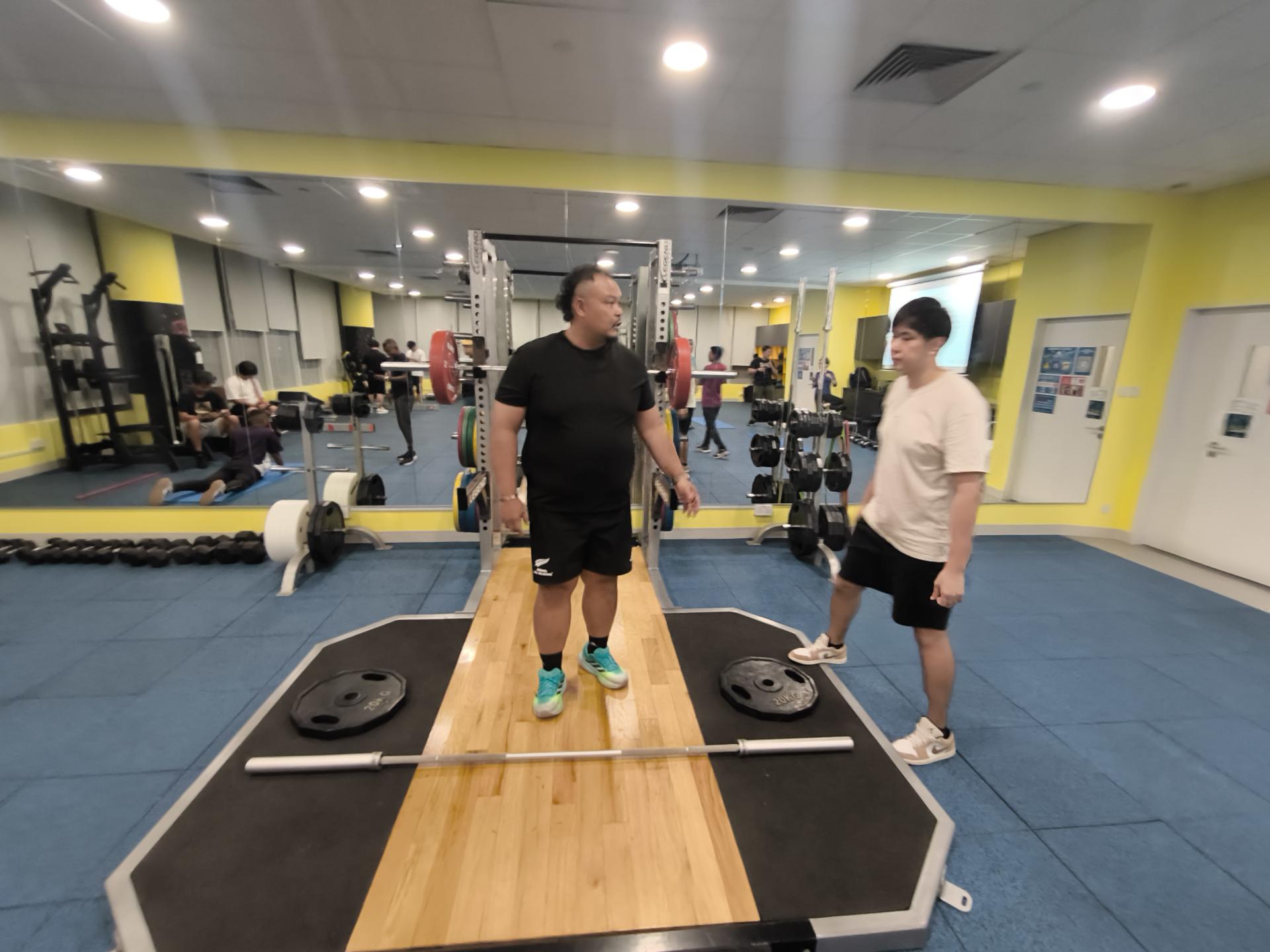
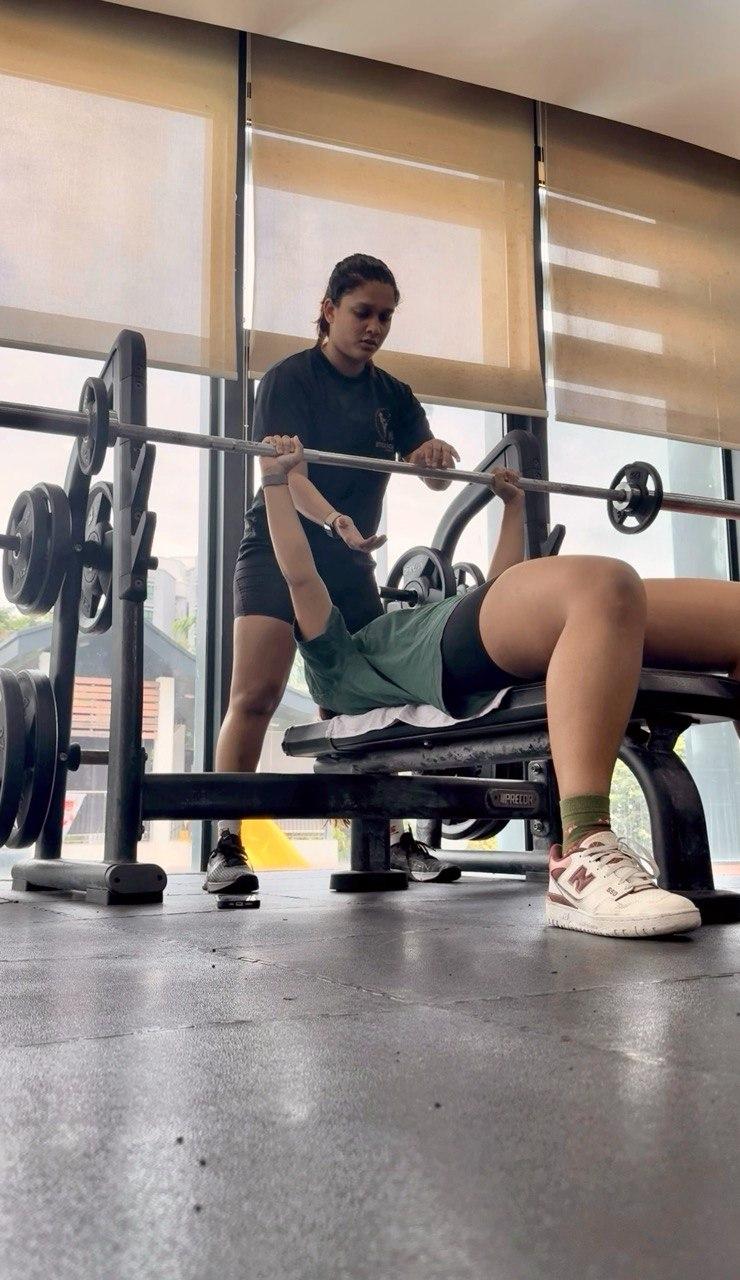
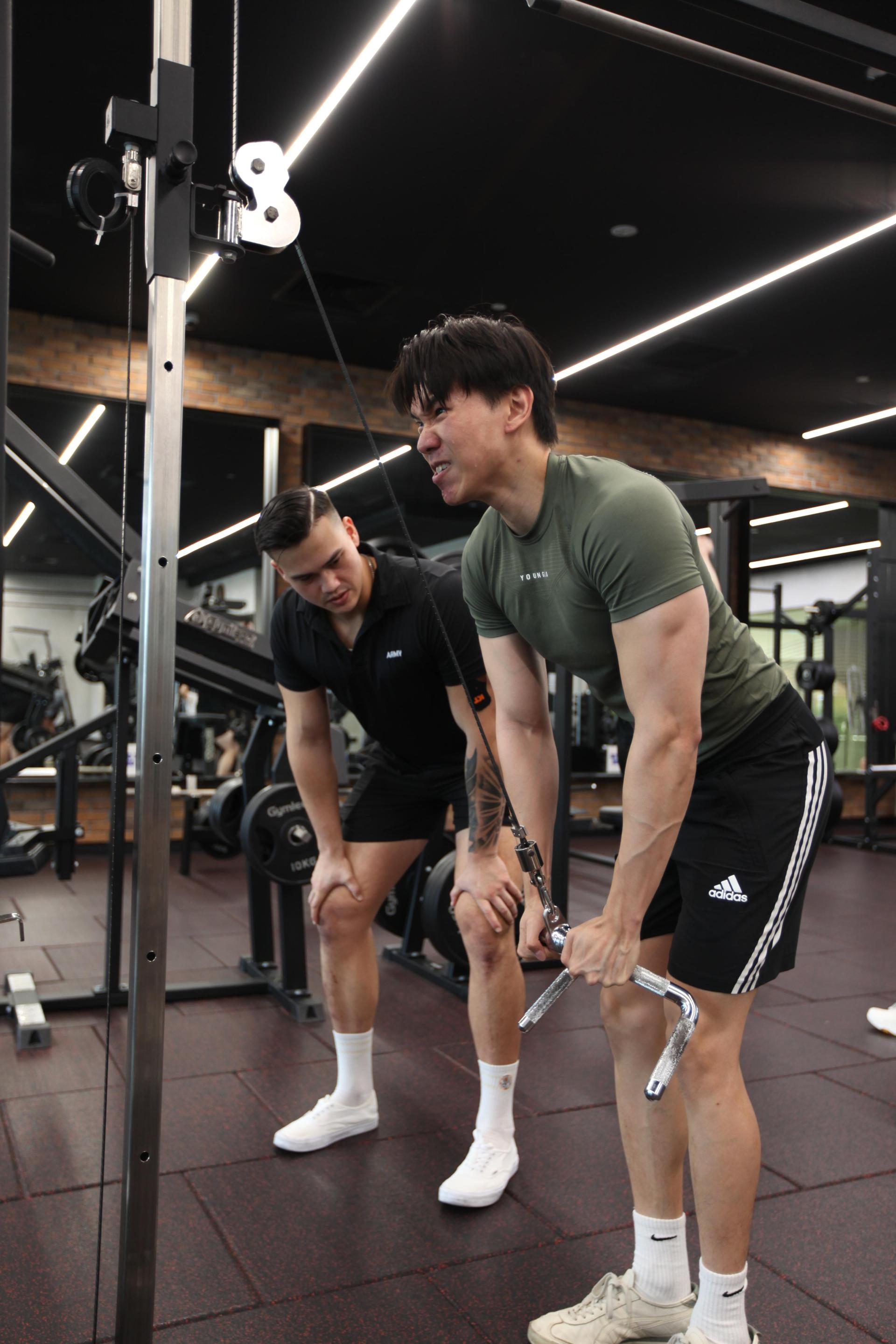
Our coaches at work
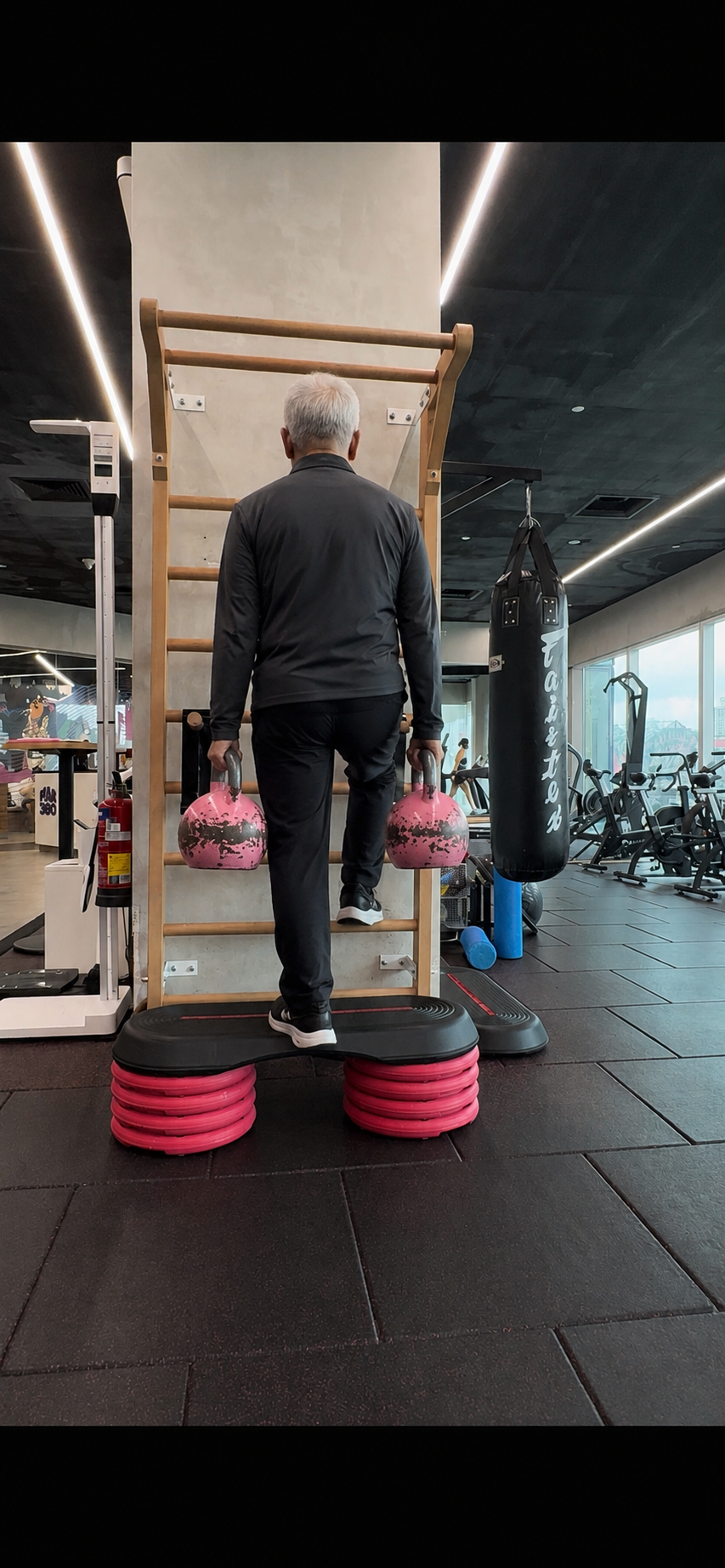
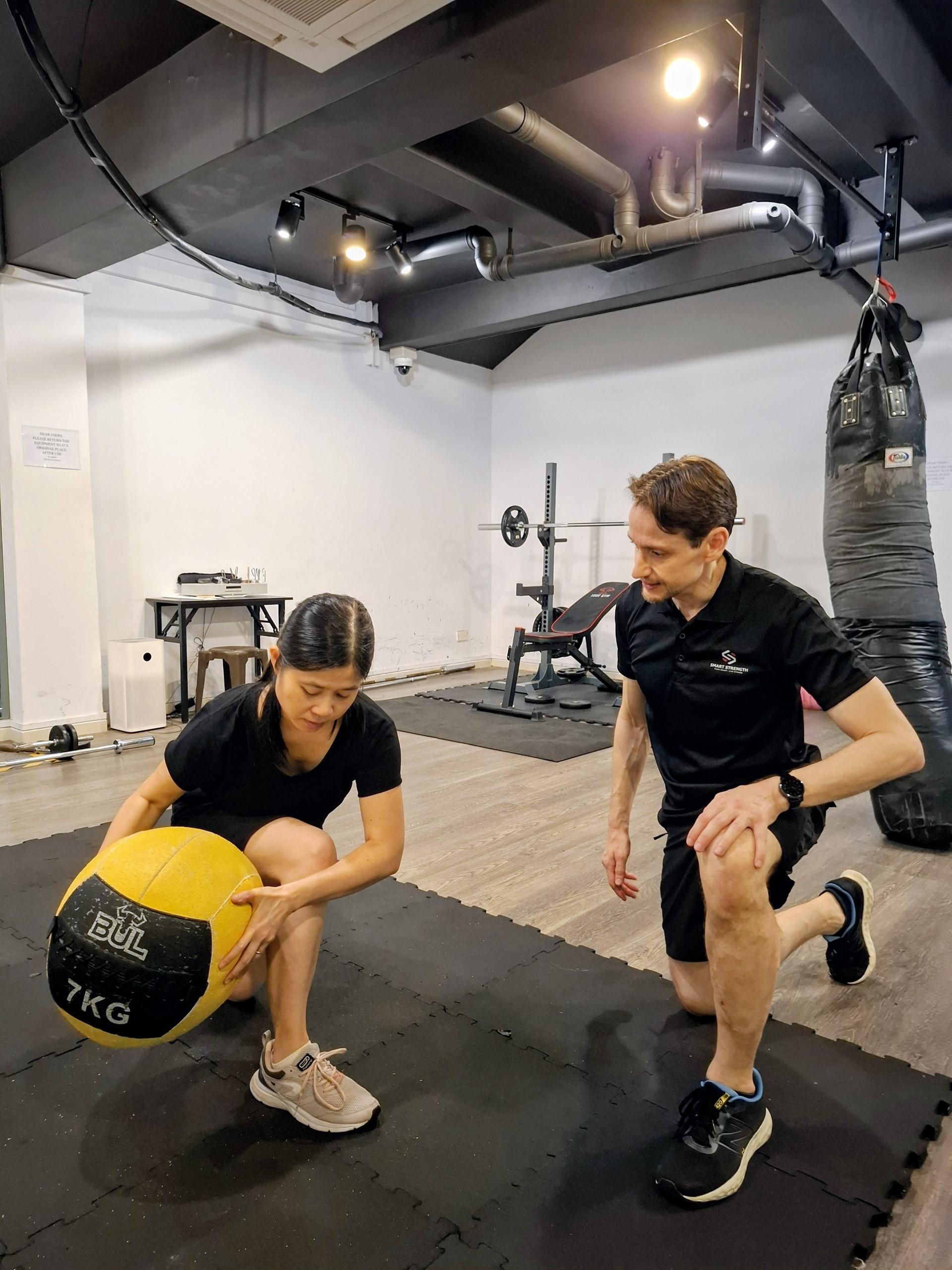
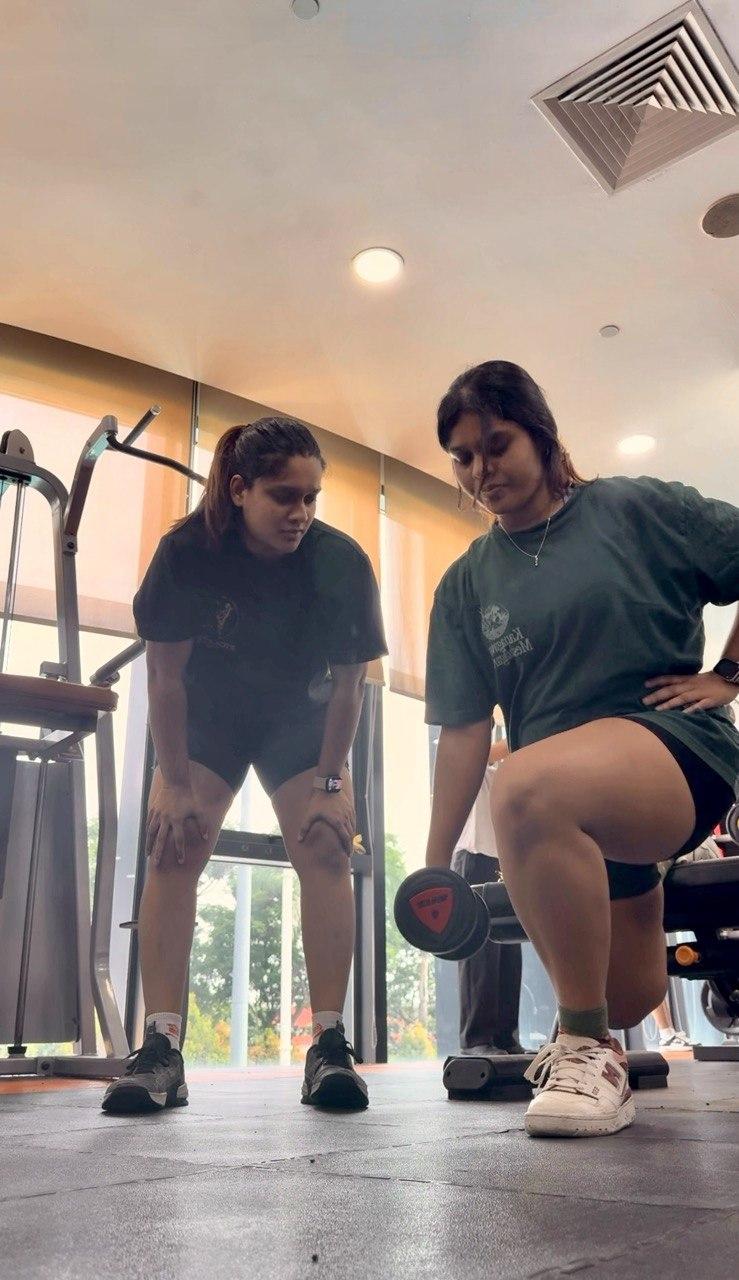
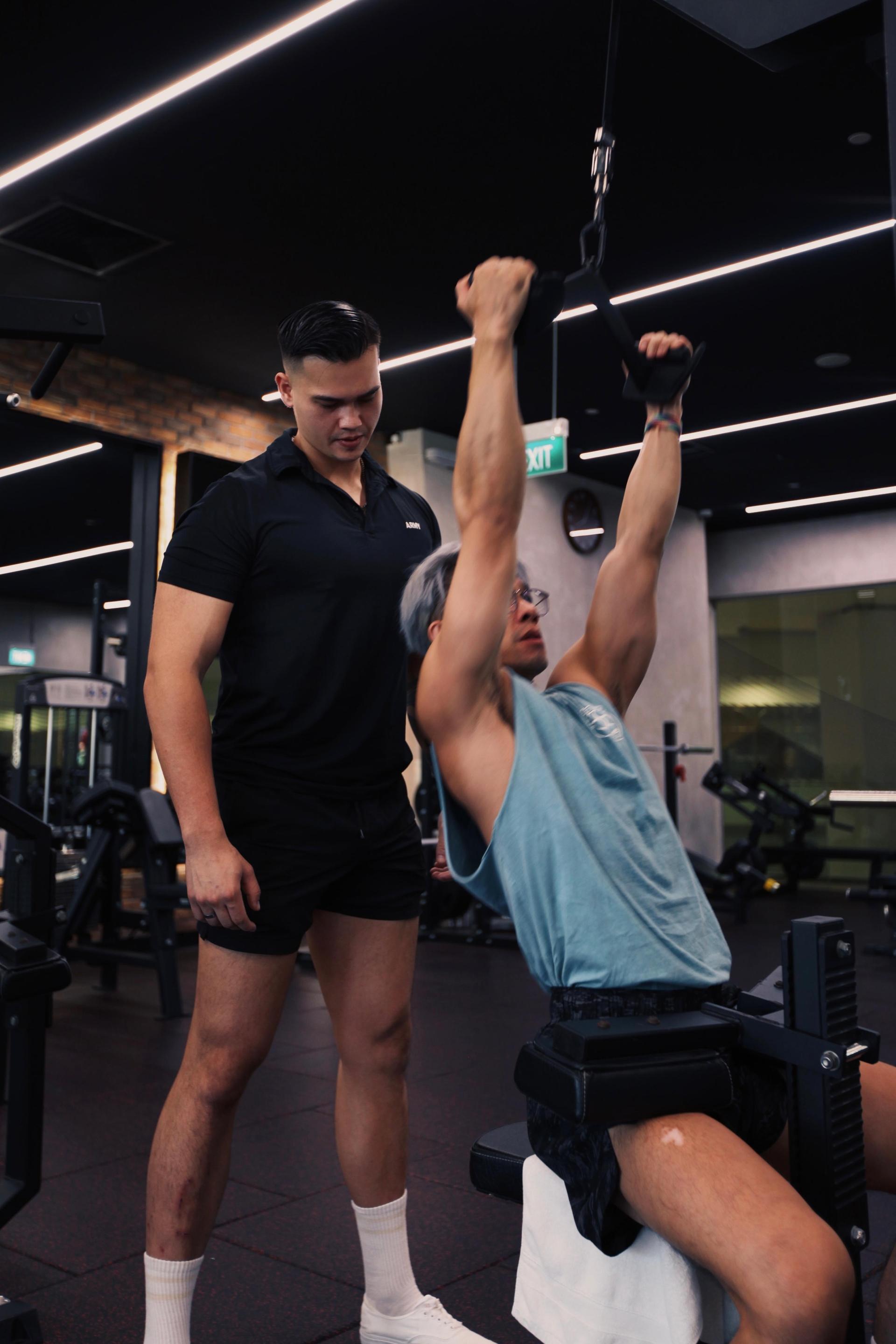
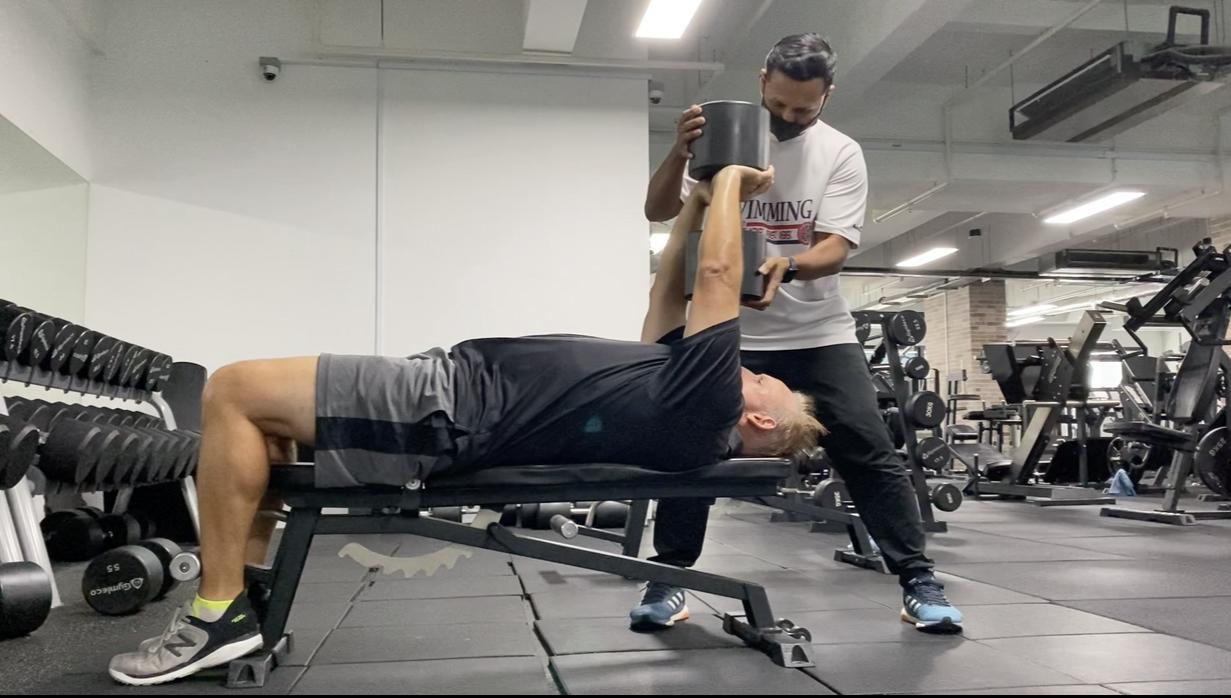
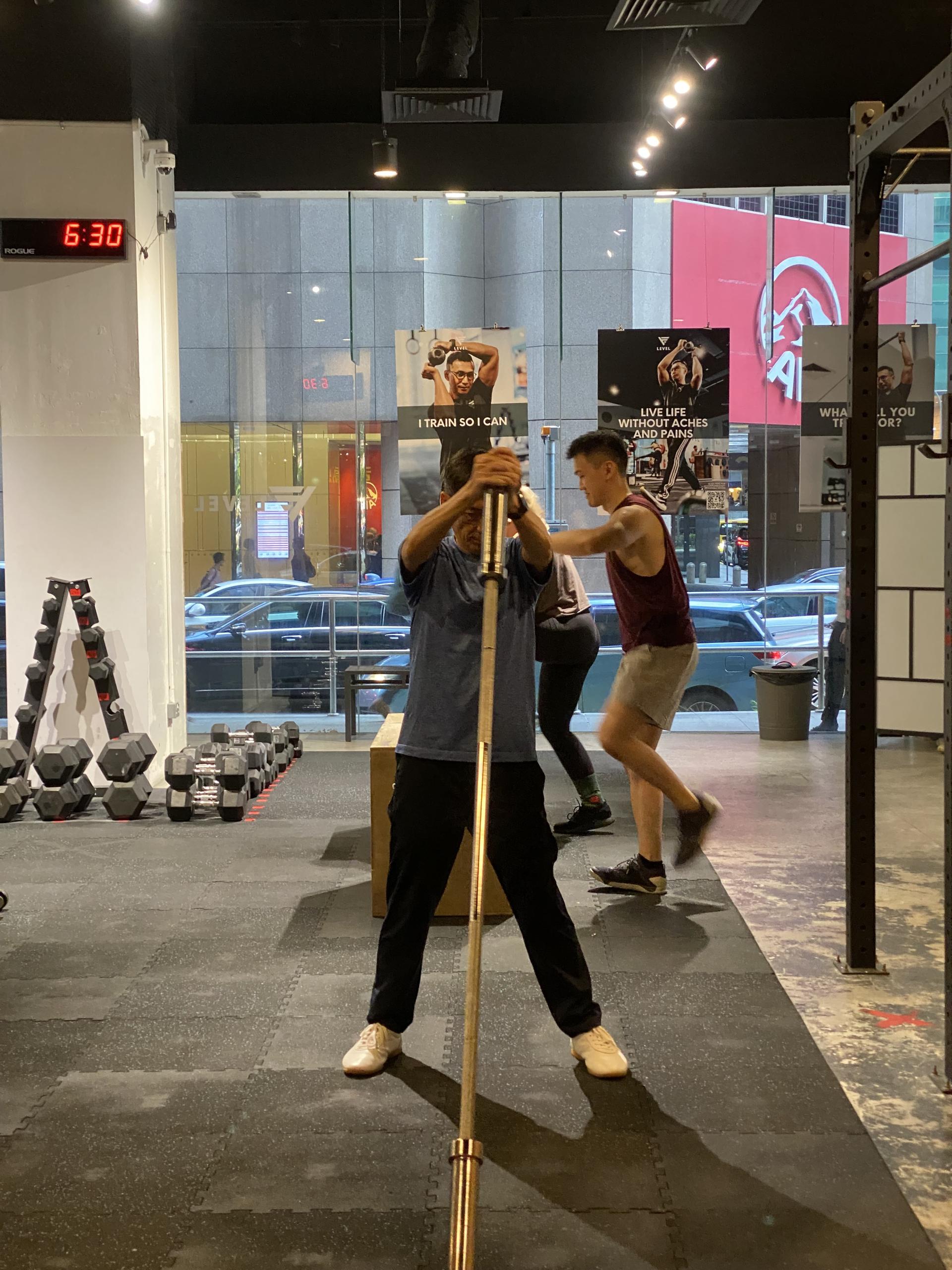
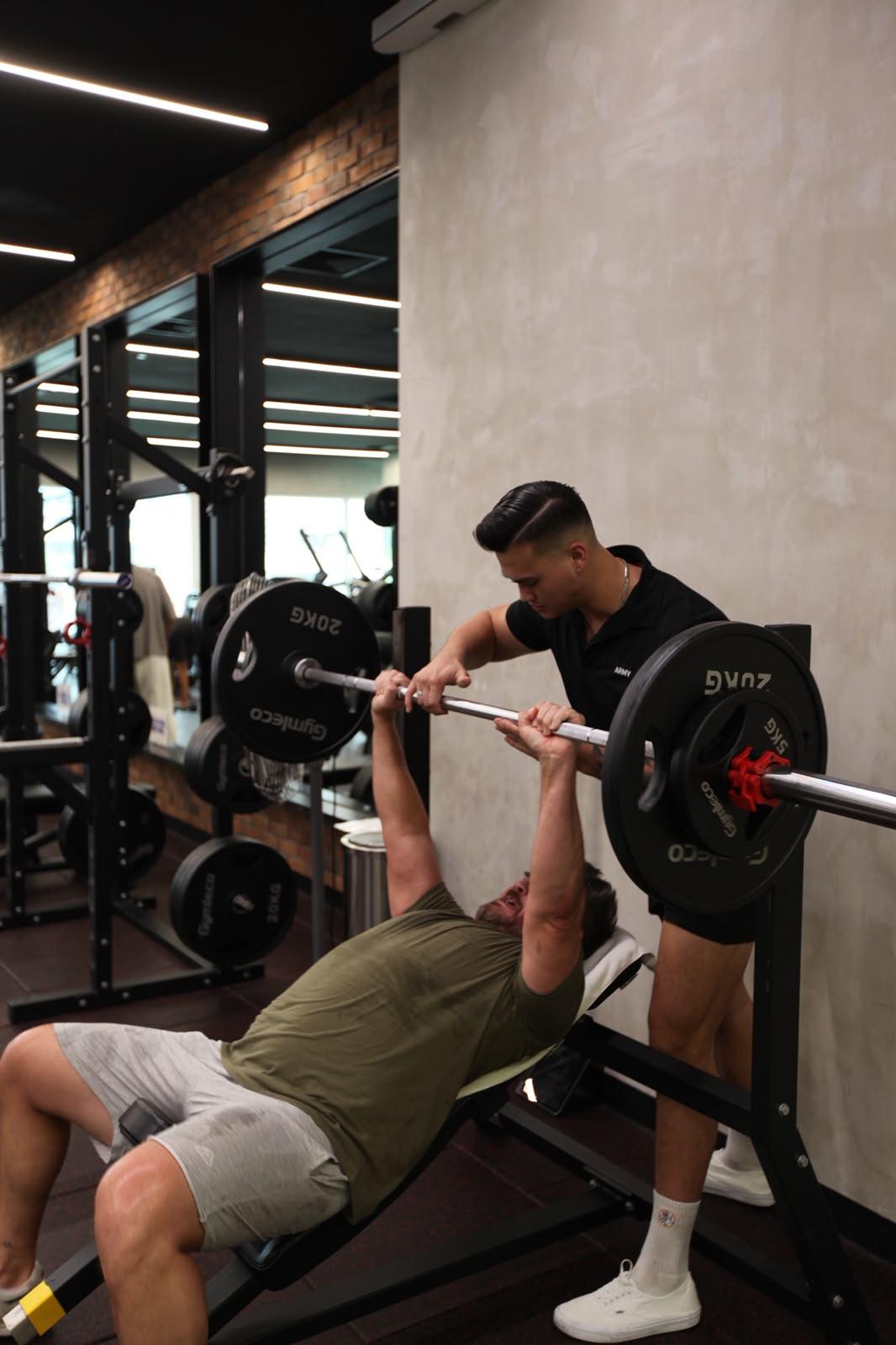
Real sessions from our coaches' own galleries. Swipe for more.
Building muscle questions.
How long does it take to build noticeable muscle?
Most beginners notice a difference in the mirror at 8-12 weeks and get comments from other people at four to six months, training two to four times a week and eating enough protein. The realistic rate in year one is 0.25-0.5kg of muscle a month, slowing from year two, so anyone promising two kilos a month is selling fat and water.
Can I build muscle and lose fat at the same time?
Beginners, people returning after a layoff, and those carrying more body fat often can. It's called body recomposition. It needs progressive lifting and roughly 1.6-2.2g of protein per kilogram of bodyweight a day. Experienced lifters usually have to pick a direction and commit to it for a few months, with a surplus of about 10-15% above maintenance when building.
How much protein do I need to build muscle?
Roughly 1.6-2.2g per kilogram of bodyweight per day, spread across three or four meals. For a 60kg person that is 96-132g daily, and for a 70kg person about 110-155g. On Singapore food that means eggs, dairy, meat, fish and tofu at most meals, for example two protein sides at an economy rice stall.
Do I need supplements?
No. Whey protein is a convenient way to hit your target and creatine monohydrate is the one supplement with strong evidence for strength and size. Everything else is optional at best, so be wary of hard-sell supplement stacks. Food, progressive training and sleep remain the foundation, and you should discuss supplements with a clinician if you have a medical condition.
Can I build muscle in a small condo gym?
Yes for most aesthetic and strength goals, for the first few years. Dumbbells to 25-30kg with a bench and a cable station cover every movement pattern. When you need heavier barbells or specialised machines, add occasional sessions on your own at an ActiveSG or commercial gym, or coached barbell sessions at a Gym Pod, paying the pod's published rate.
Should I cut or bulk to look more muscular?
It depends on your starting body fat. Higher body-fat lifters often look better after a recomp or mild cut while lifting. Very lean lifters may need a surplus of about 10-15% above maintenance, since bigger surpluses build fat faster, not muscle. Track your waist monthly either way, and see the recomp guide.
Can skinny beginners build muscle training at home only?
Yes at first, especially with adjustable dumbbells, because muscle responds to effort and progression rather than to equipment. Add a rep until you reach the top of the range, then add load, and aim for 8-12 hard sets per muscle a week. Plan a venue upgrade when loads stall for months despite good protein and sleep.
How many sets per week do I need to build muscle?
The 2017 dose-response meta-analysis found 10 or more sets per muscle group a week produced greater growth than fewer than 5. Start beginners at 8 to 12 weekly sets per muscle split over two sessions, and move towards 16 to 20 only after a year or more of consistent training.

About this guide
Published · revised
Terms used
- Progressive overload:
- Gradually increasing what you ask of a muscle over weeks: more weight, more reps, more sets or better form under the same load.
- Condo gym:
- The shared gym in a private condominium, run by the building's management.
- Hinge:
- The hip-dominant movement pattern of a deadlift or kettlebell swing: hips travel back, spine stays neutral, hamstrings and glutes do the work.
- ActiveSG:
- Sport Singapore's network of public gyms, pools and sports halls.
Sources
- Protein and exercise - position stand (1.4-2.0g/kg for muscle) · International Society of Sports Nutrition
- Resistance training volume and muscle growth - systematic review · PubMed / National Library of Medicine
- Physical Activity Guidelines resources · American College of Sports Medicine
- Dose-response relationship between weekly resistance training volume and increases in muscle mass: systematic review and meta-analysis (J Sports Sci, 2017) · PubMed, National Library of Medicine
General information, not medical advice.