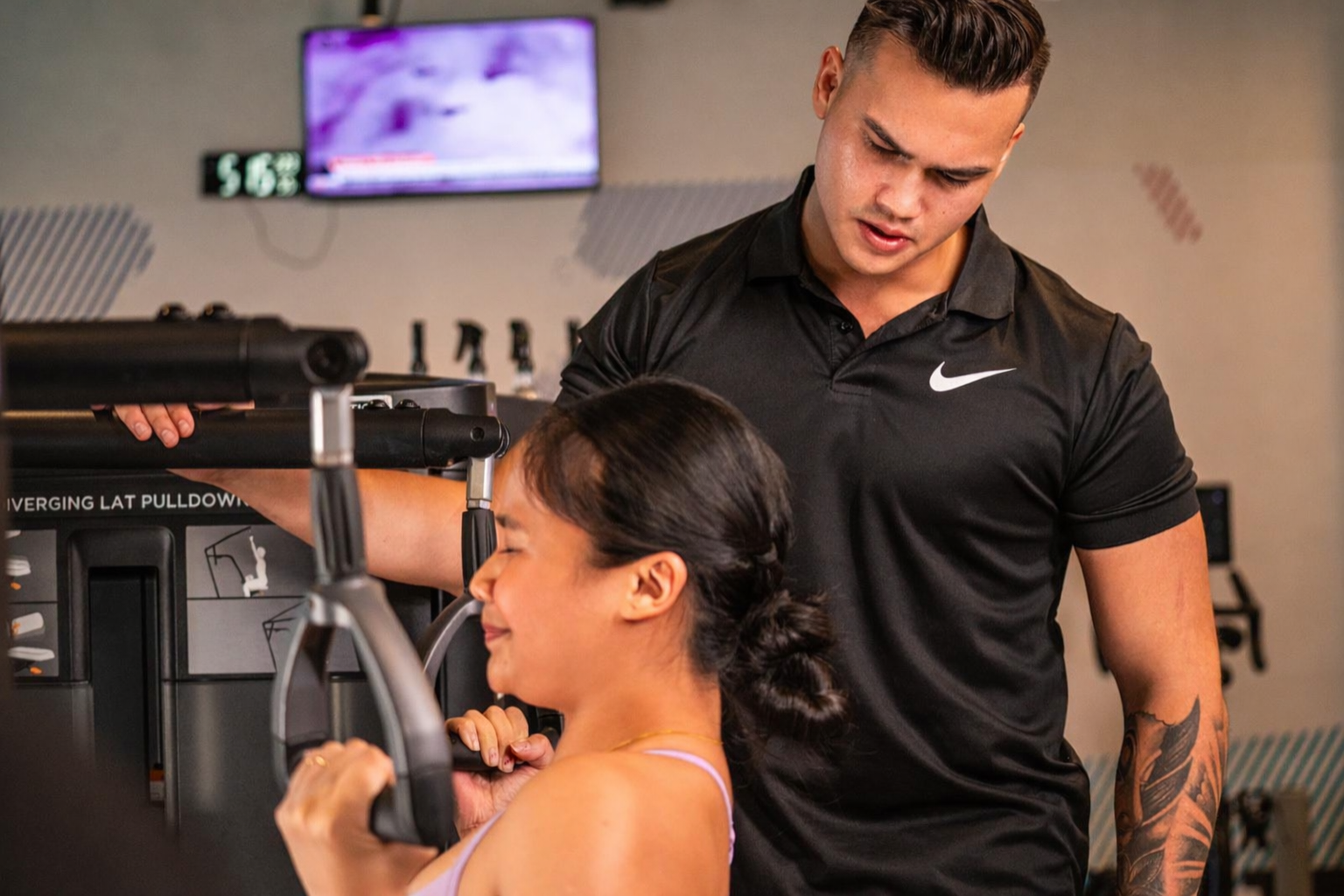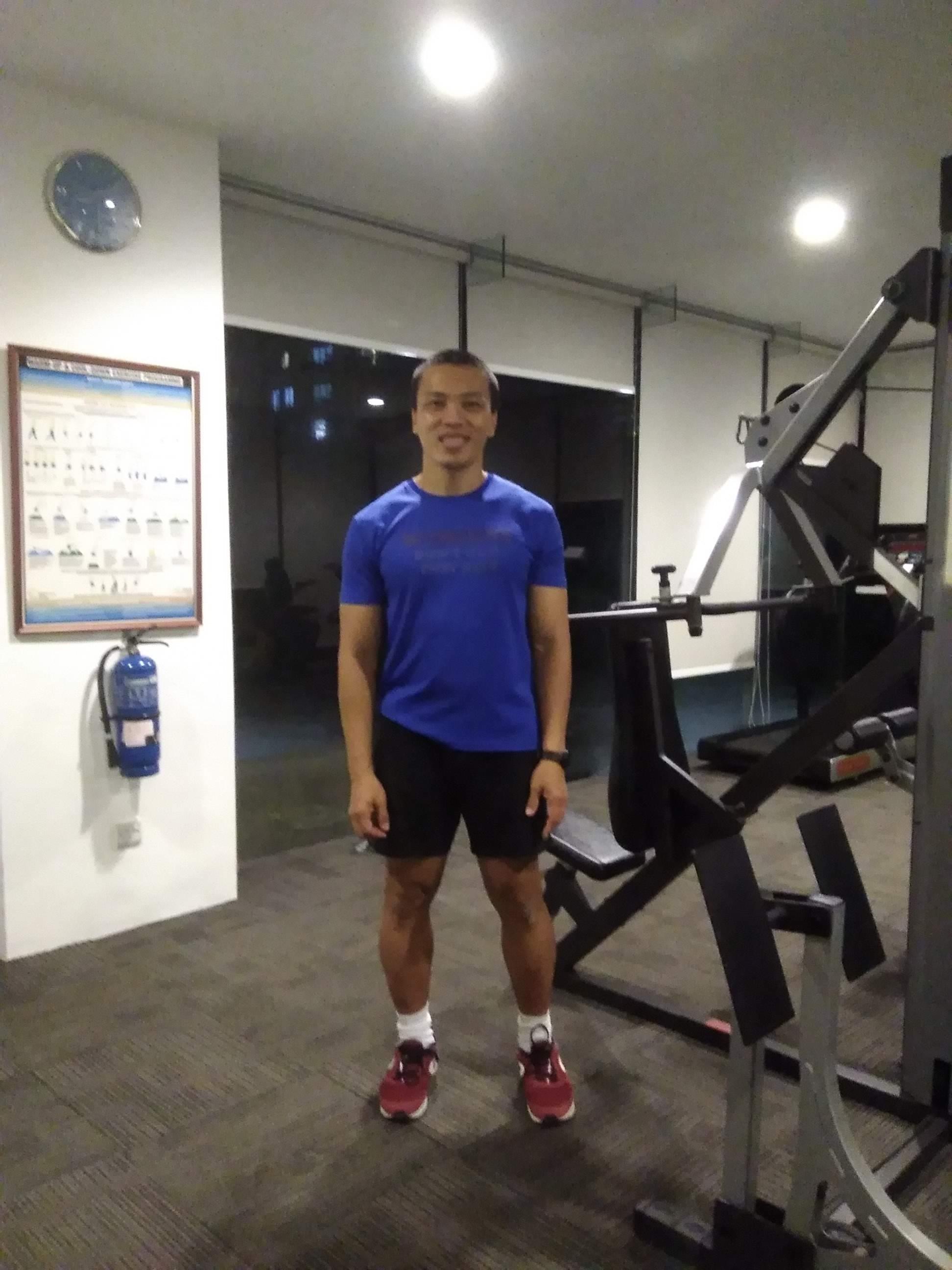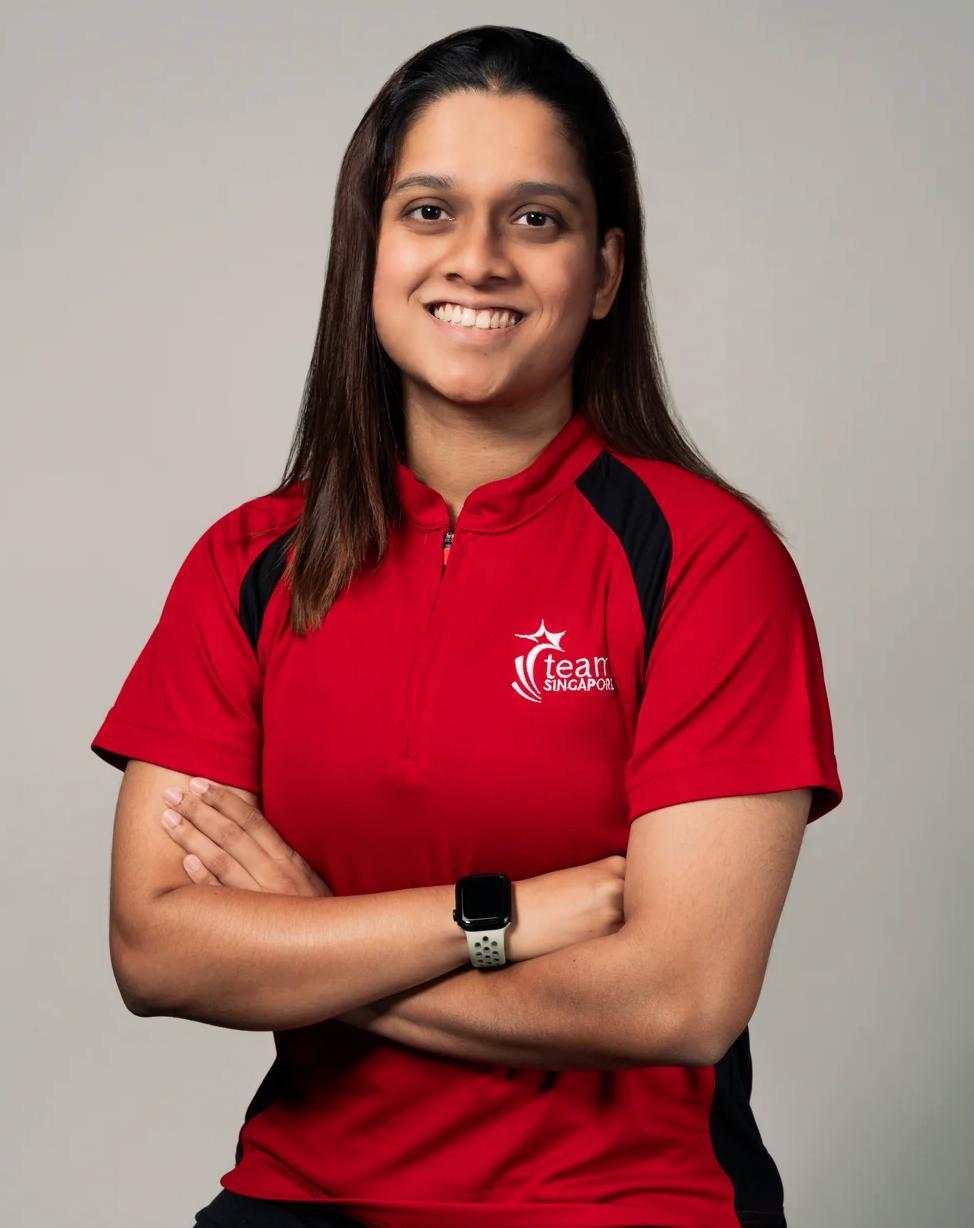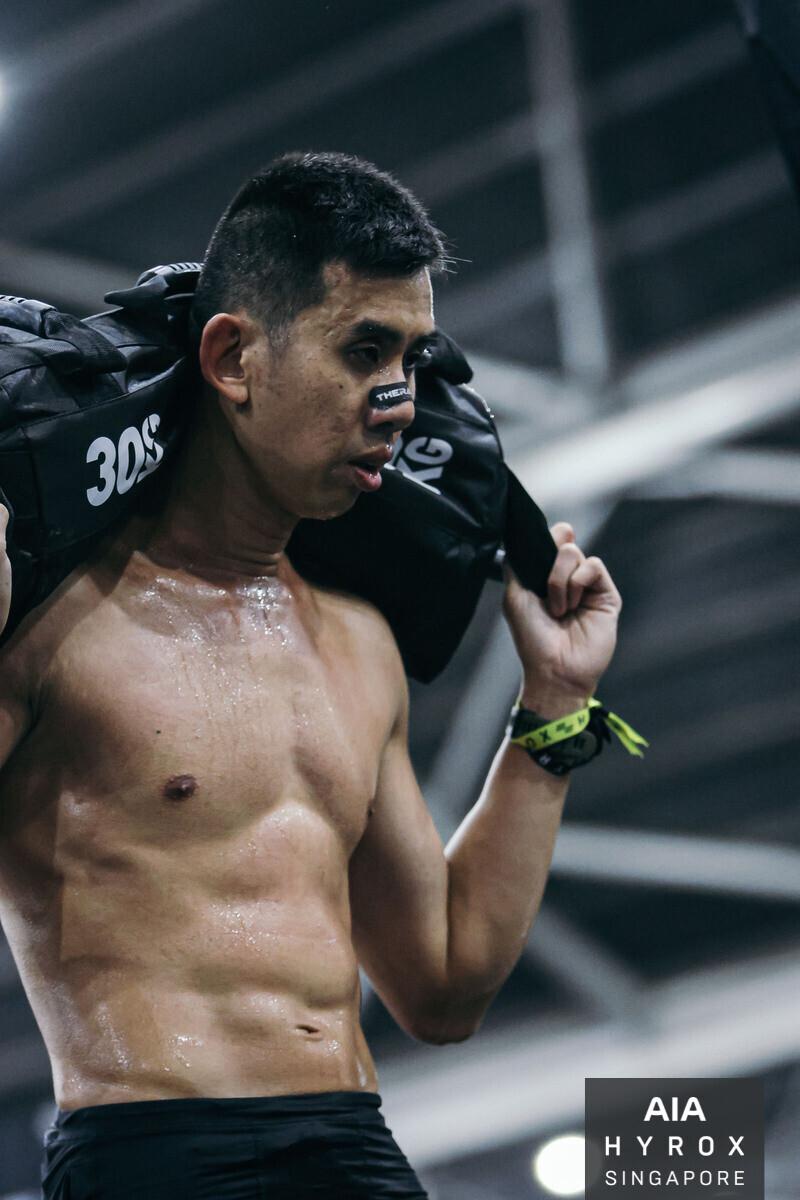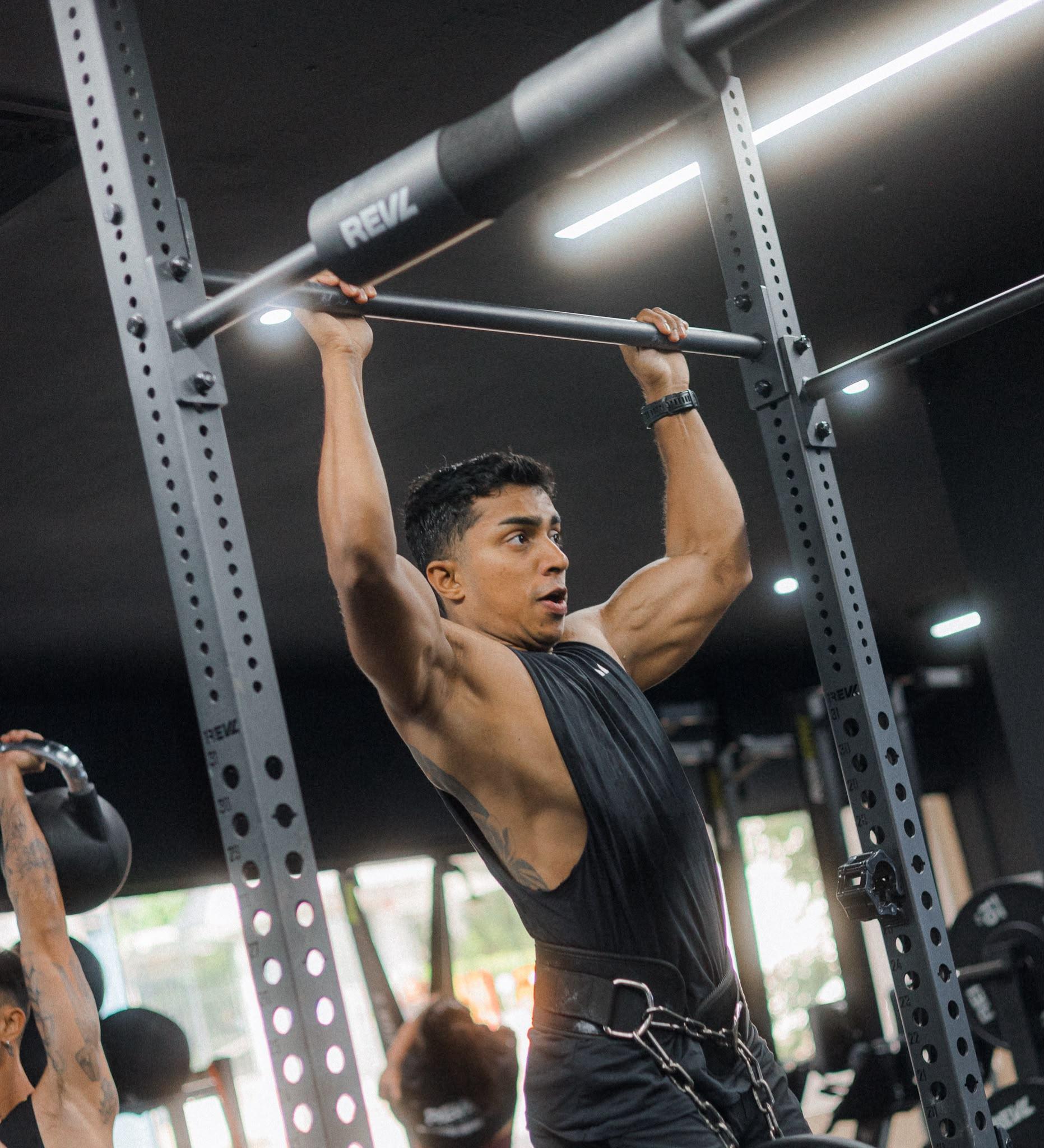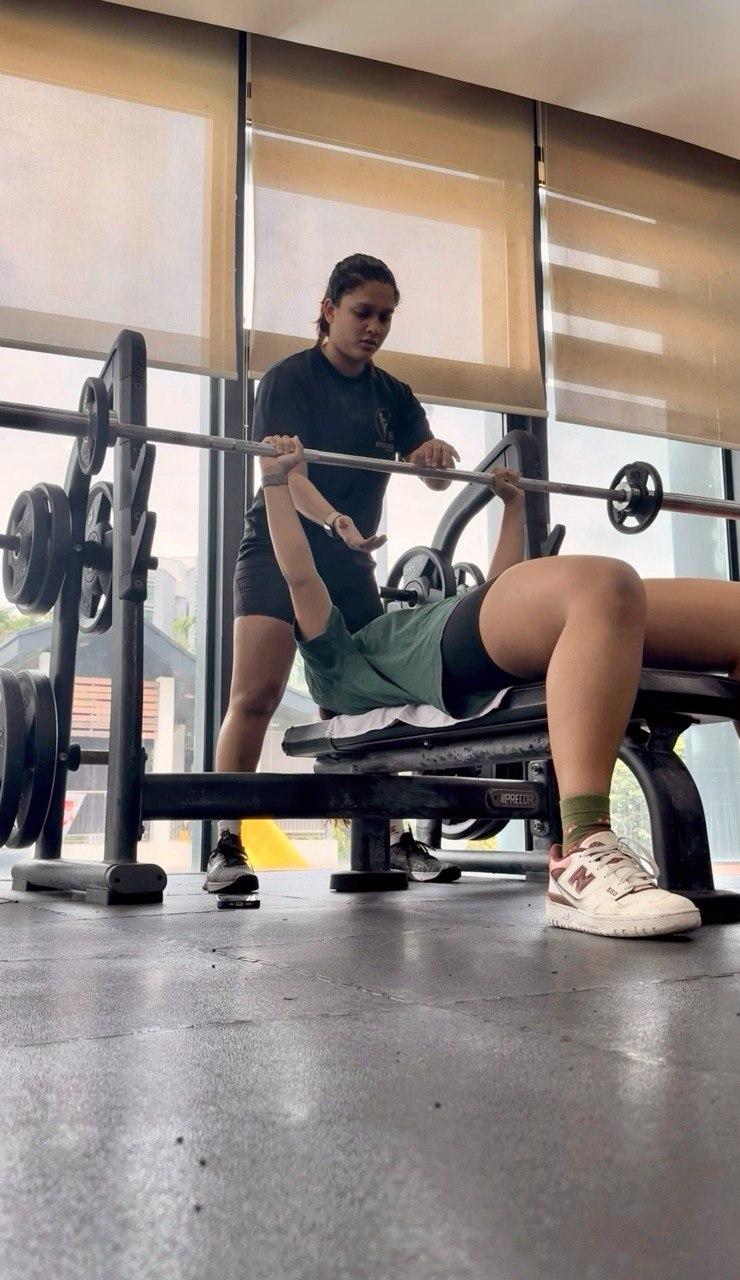
 Photo: Dimanya with a client
What is buddy personal training?
A coach trains two people in the same session. It is not a bootcamp and it is not a class. Programming is still personal - loads, regressions and rest - but the coach's attention is split. Partners are usually a couple, siblings, colleagues, or two friends in the same condo.
How much do you actually save?
On our roster the median pair rate is 72% of that coach's own 1-to-1 rate, so bringing one other person takes the median per-head price from S$90 to S$65. The table adds small-group pricing, which starts from S$35 per person.
| Format | Per person | What you trade |
|---|---|---|
| 1-to-1 | Median S$90, most S$80-S$130 | Full attention, fully individual programme |
| Buddy (2 people) | Median S$65, most S$65-S$85, from S$40 | Shared attention; shared schedule |
| Small group (3-6) | From S$35 | Even less individual coaching |
On our roster each coach sets their own 1-to-1 and buddy rates. 10/15/20-session packs still take 5/10/15% off that coach's rate. Live numbers are on the pricing page; the market context is in the cost guide. If three to six of you want to share a coach, small-group personal training works through the per-person maths, the venues that fit a group and what happens when someone drops out.
When does buddy training work?
- Your goals are in the same family (general fitness, fat loss, getting stronger)
- You can train at the same time and place most weeks
- You are fine sharing the coach's cues rather than getting every minute
- You want the social pressure of not being the one who cancels
When should you stay 1-to-1?
- Rehab, post-surgery, or pain you are still figuring out - see injury rehab
- Prenatal or early postnatal work that needs pelvic-floor and clearance care
- A large gap in starting fitness (one person cannot scale every movement)
- You specifically want a private hour with no audience, even a friendly one
- Your schedules rarely align, so you end up paying solo anyway
How does a buddy session actually run?
Usually as a pair circuit or as alternating sets: one works, one spots or rests, the coach cues both. Loads are independent. If one of you is injured that week, the session can still run - the coach scales that person down rather than cancelling the hour. Sessions happen at home, a condo gym or outdoors, same as 1-to-1. See home personal training.
Does couples training work the same way?
Yes. Couples are the most common buddy pairing we see, especially in condos where the gym is downstairs and the schedule is already shared. The same rule applies: close-enough goals, honest about injuries, and a time you will both keep.
How does buddy pricing compare?
StringsSG's price list says each person in a buddy session pays 70% of the solo rate (S$62 each against S$89 on its 30-session Signature package, read 2 October 2026). Fit Titans buddy sessions start from S$40 per person and small-group from S$35, depending on coach. The saving is real for general fitness; for rehab or technical lifting, train 1-to-1.
Buddy PT in condo gyms and HDB void decks
MCST rules vary: some condos allow one guest trainer; buddy sessions may need advance notice to security. Void decks and park connectors work well for paired circuits - no equipment queue. That suits couples, flatmates and NS prep partners.
What makes a good buddy training pair?
Shared goals, similar training age, and overlapping calendars. Couples fat-loss pairs and NS mates prepping IPPT often work. Large strength gaps force awkward compromises. Price context: /pricing and cost guide.
How do coaches programme two people at once?
Common approach: shared warm-up, paired strength supersets with individual loads, then a conditioning finisher scaled to fitness. Partners rest while the other lifts - session density stays high without becoming a crowded bootcamp.
Which Singapore venues suit buddy PT?
- Condo gyms with enough floor space (check MCST guest rules).
- Void decks for circuits - respect noise and residents.
- Park connectors for run-focused pairs.
- Home living rooms if equipment and space allow.
How do you keep both partners progressing?
Individual load tracking matters even in shared sessions. Celebrate different PRs. Avoid turning every session into a competition that wrecks technique - especially for beginners: PT for beginners.
How do you compare buddy vs solo cost over 12 weeks?
Example at our roster medians (October 2026): solo S$90 x 2 weekly x 12 weeks is S$2,160. Buddy at S$65 each for the same frequency is S$1,560 per person. Savings only hold if both attend. One chronic no-show erodes the maths - agree rules first. Full rate context: /pricing.
Can buddies prep IPPT together effectively?
Yes when run paces are within roughly two minutes on 2.4 km and both need similar station work. Large gaps mean separate run homework with shared strength. Guides: IPPT Gold and IPPT & NAPFA training.
What communication habits keep buddy packs healthy?
- One shared WhatsApp thread with the coach for scheduling.
- 24-hour cancel notice that both partners respect.
- Honest talk when goals diverge mid-pack.
- Separate solo top-ups if one person needs rehab focus.
How do you handle different fitness levels without embarrassment?
Good coaches scale loads privately and keep cues technical, not comparative. Agree beforehand that sessions are cooperative rather than competitive. If one partner feels consistently shamed or rushed, switch to solo packages - saving money is not worth quitting training entirely.
How does buddy training help you reach the weekly activity target?
HealthHub's MOVE IT guidance points to 150 to 300 minutes of exercise a week. Two 60-minute buddy sessions cover 120 of those minutes with a coach present, and the remaining 30 to 180 come from walks, park connector loops and MRT stairs that a pair is far more likely to keep doing together. The value of the format is not the discount; it is that the second person makes the appointment harder to skip.
- Supervision matters: a 2024 meta-analysis of 34 trials in adults aged 60 and over (Gómez-Redondo et al., Sports Med 54(7):1877-1906) found supervised exercise improved physical function and well-being more than unsupervised exercise; buddy sessions keep that supervision at a lower per-person price.
- The minutes add up: two coached hours plus three 30-minute walks is 210 minutes, inside the recommended range.
- Where pairs lose it: when one person's cancellation becomes both people's rest day. Set the rule before the first session.
What should a buddy pack agreement cover before money moves?
Agree five things in the shared WhatsApp thread with the coach: who pays what, what happens when one person cancels, whether a solo session runs at the solo rate, how pack expiry works if one partner travels, and how goals will be reviewed at week 8. Written once, it prevents almost every argument the format is known for.
| Term | A workable default |
|---|---|
| Payment | Each person pays their own share to the coach; no one fronts the pack |
| One cancels with 24 hours notice | The other trains solo; the session counts against the pack or is charged at the coach's solo rate, agreed in advance |
| One cancels late | The session is used for both; the late canceller covers the other person's share |
| Travel or reservist | Pack pauses for that person only; the other may continue solo or wait |
| Goal drift | Review at week 8; if goals diverge, split into two 1-to-1 arrangements with the same coach |
Buddy rates start from S$40 per person and small-group from S$35 per person and are confirmed per coach, so ask for both the pair price and the solo price in the same message. The frequency guide covers how a pair can hold two sessions a week on a shared calendar.
Related training formats
Same format works for partners training together - compare solo cost in our cost guide and worth-it guide.