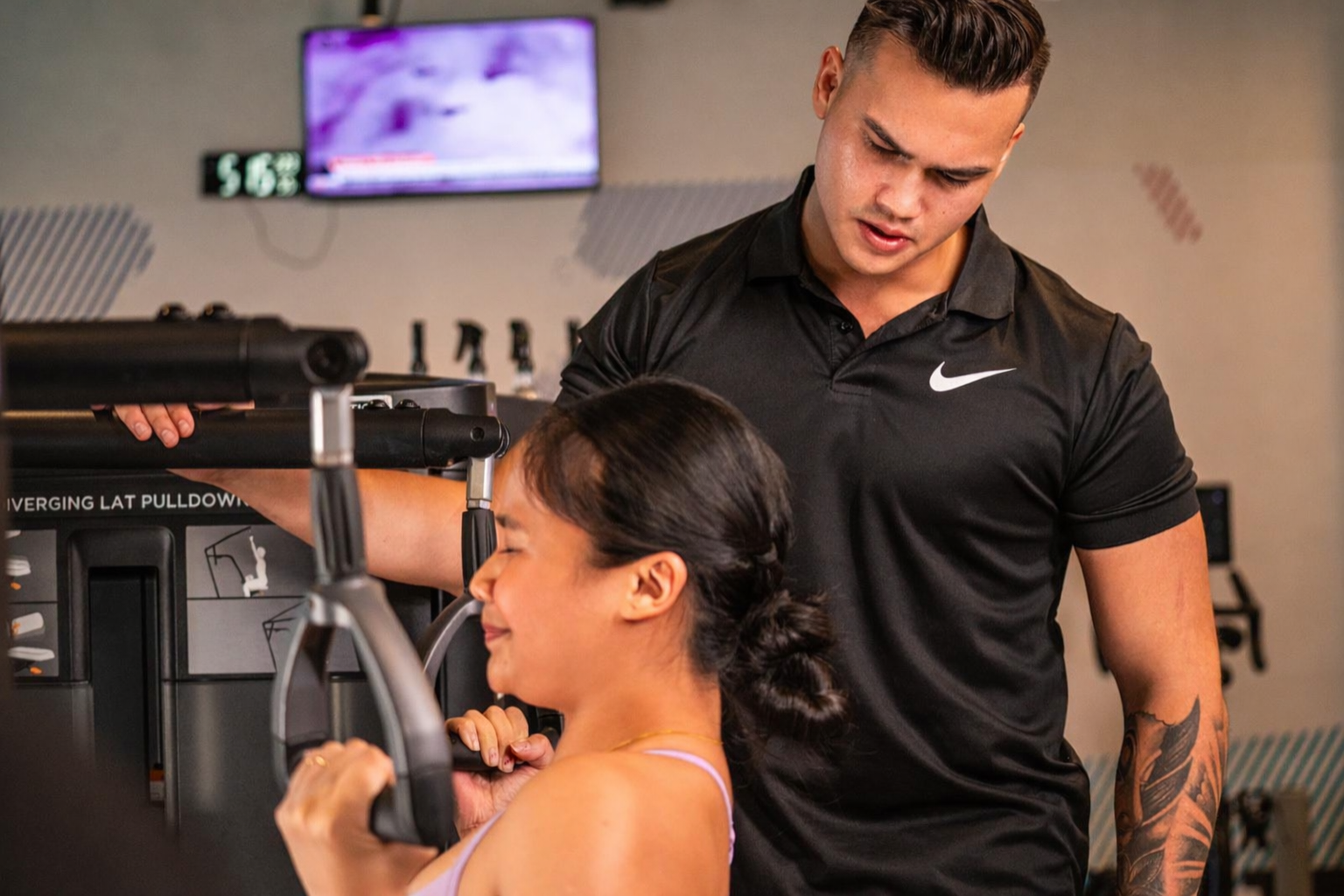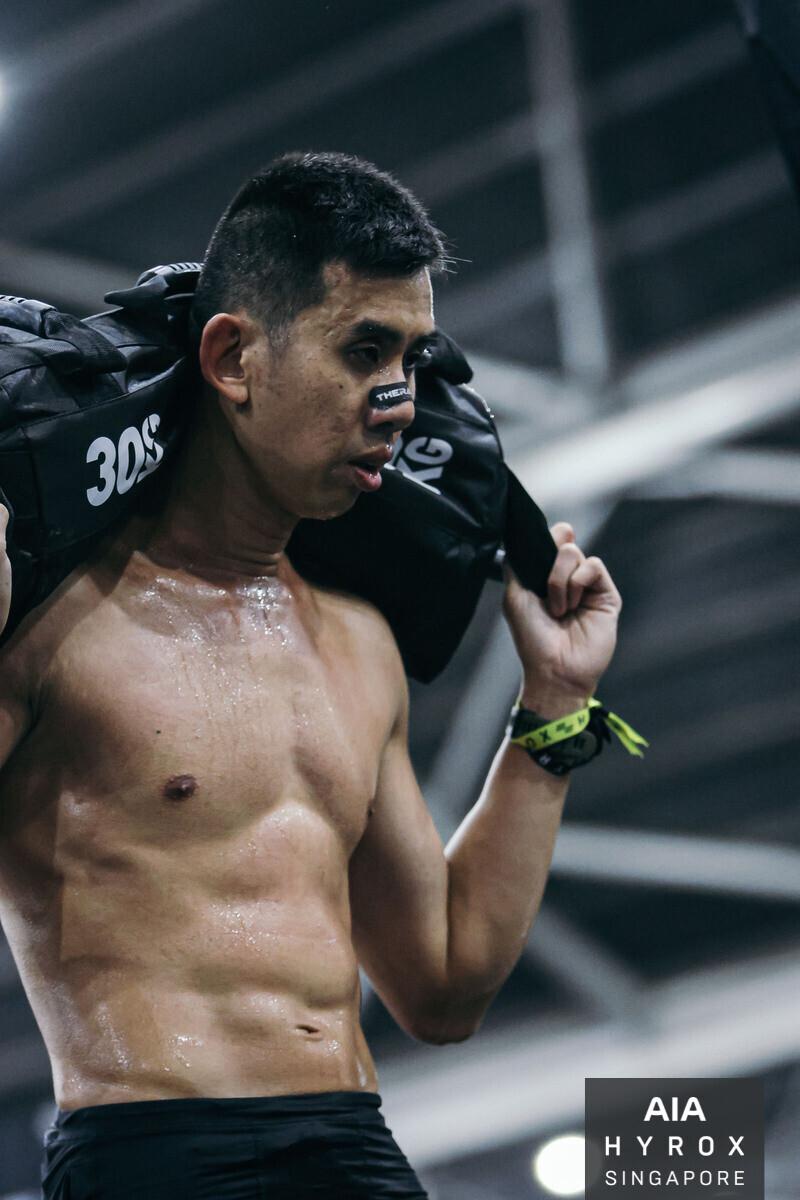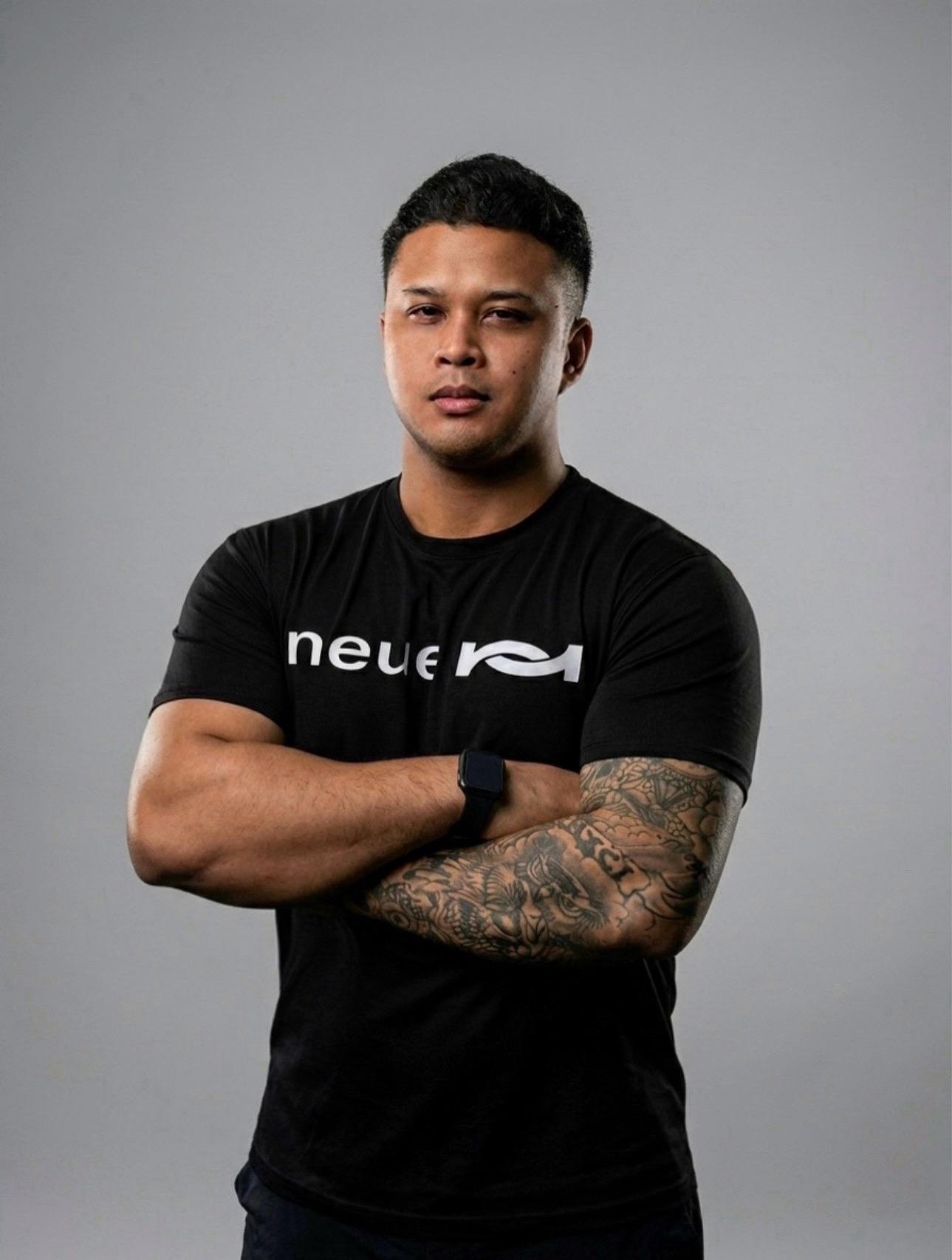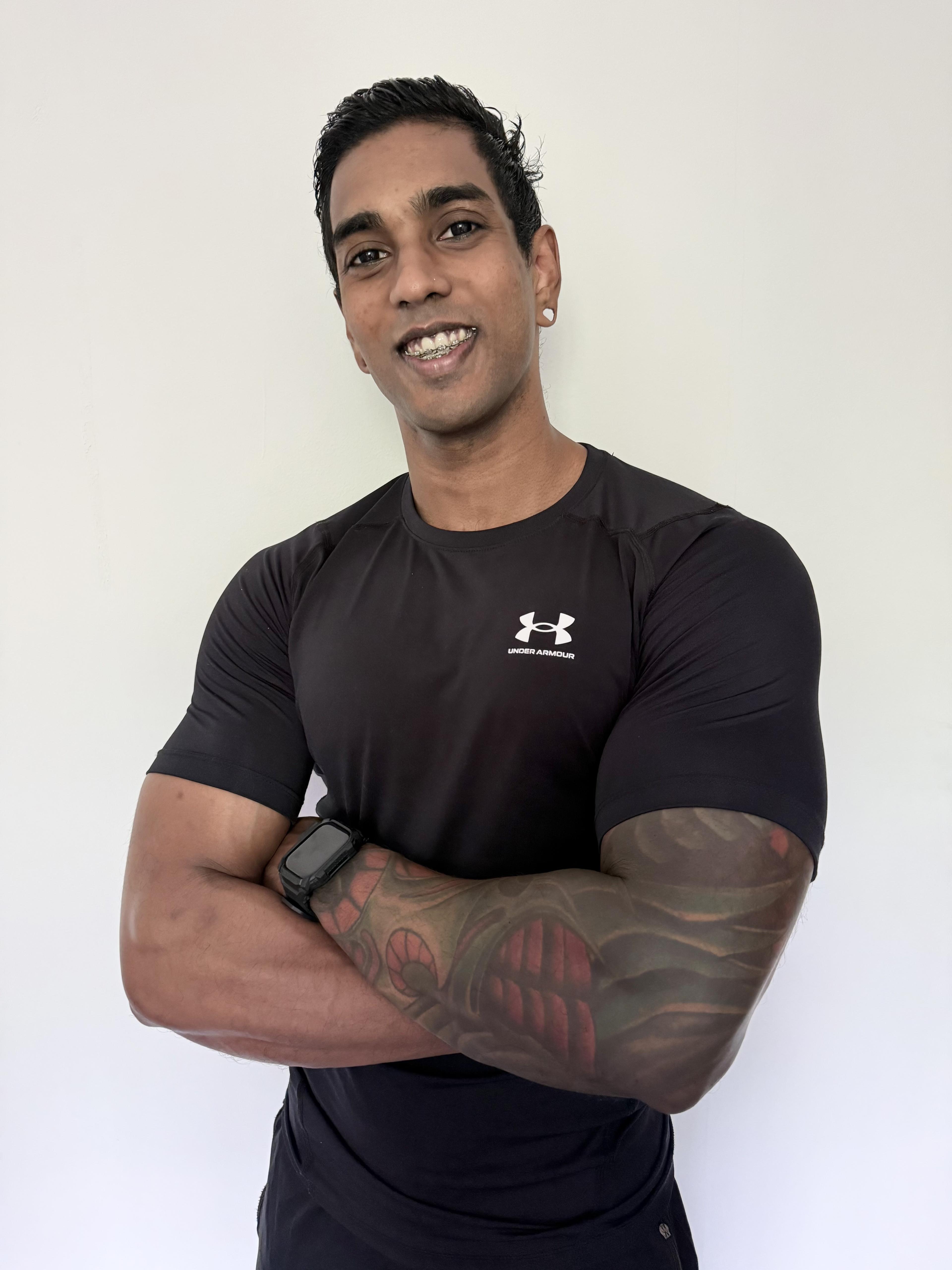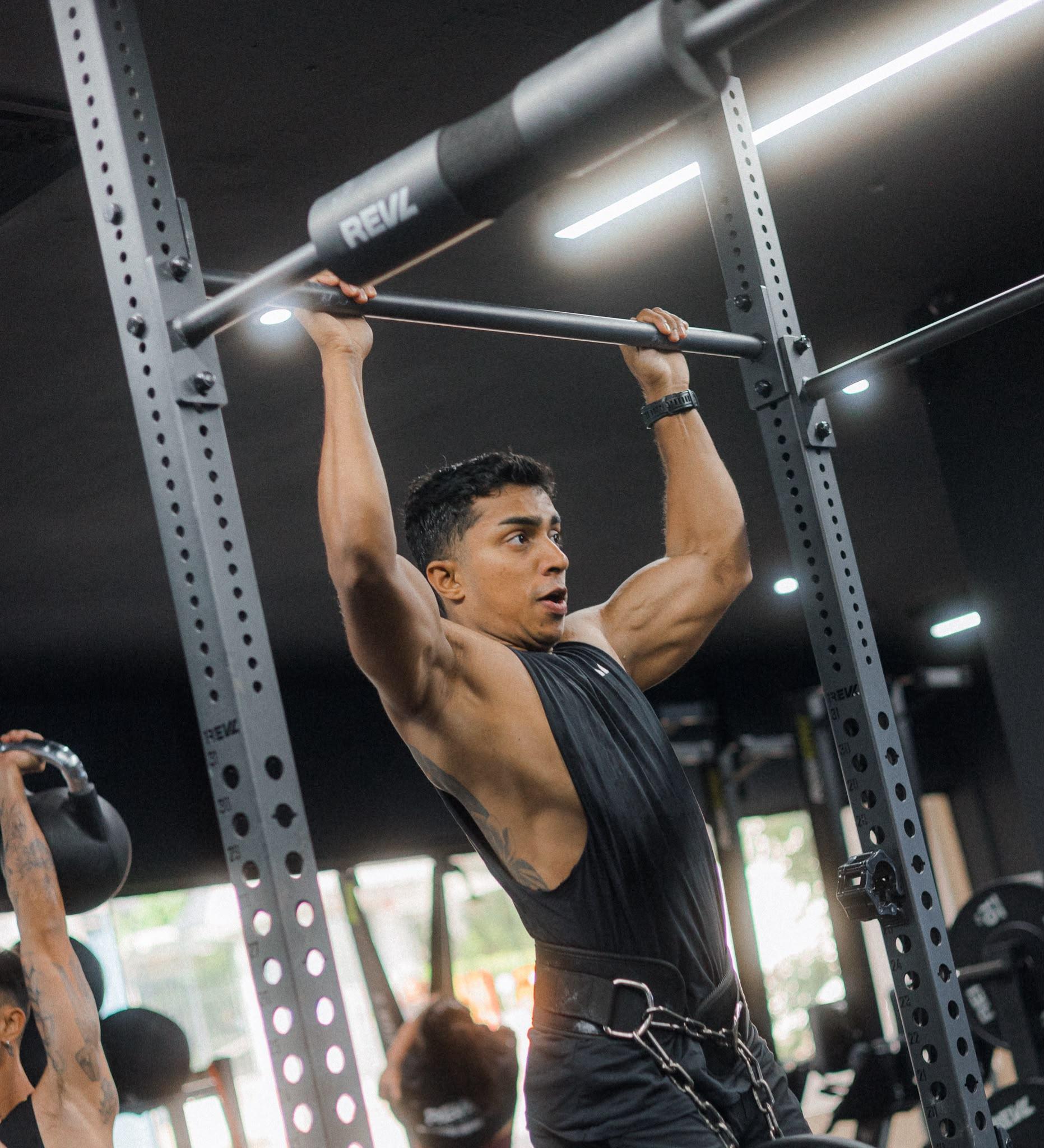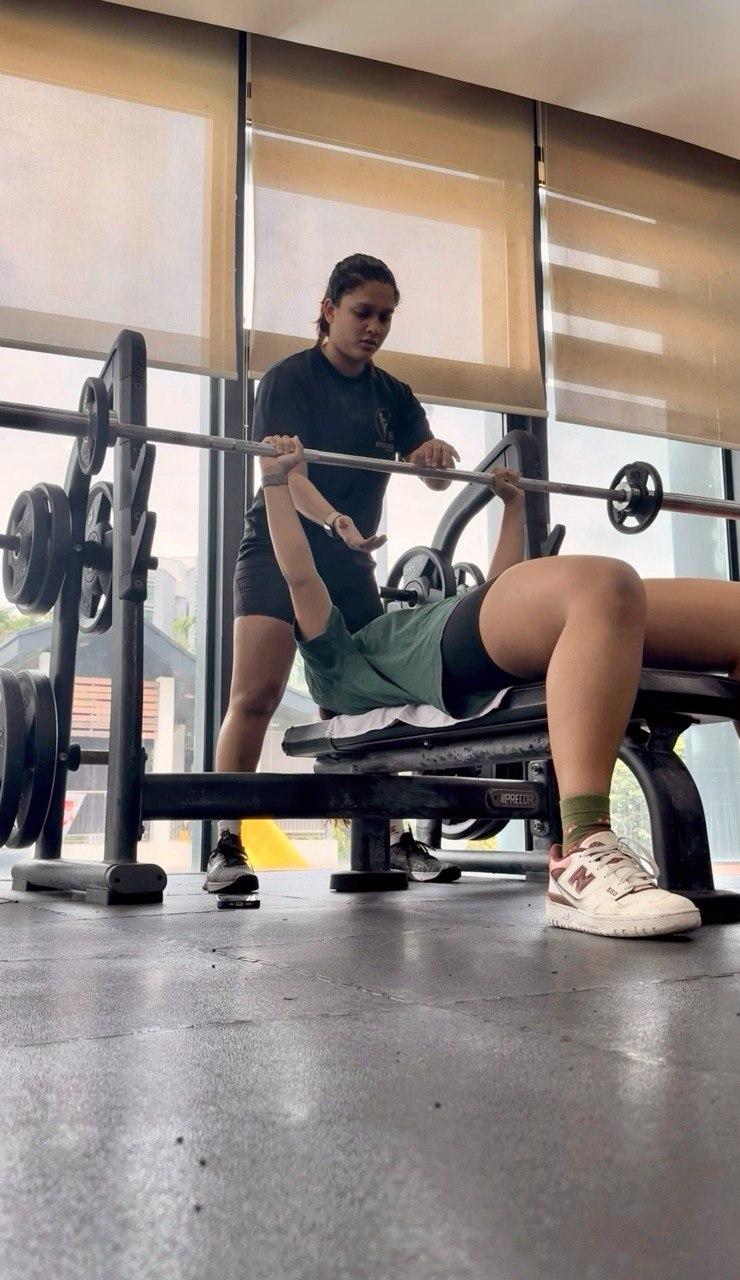
 Photo: Dimanya with a client
Is a personal trainer worth it?
Yes, if the thing you are missing is a plan, accountability, or coaching around a constraint. No, if you already train 3x a week with good form and you just want someone to talk to. The expensive outcome is paying for either option and then quitting.
Is a trainer worth more than a gym membership?
A membership is cheaper on paper and empty if you do not use it. A mobile trainer costs more per hour and removes the commute, the membership and the "I will go later" loop. The comparison table is in personal trainer vs gym vs freelancer. For most people who have already failed a membership, the trainer is the cheaper path to a year of training.
What does 'worth it' cost per month?
At the S$90 median session on our roster, twice a week is about S$780 a month (2 sessions x 52 weeks / 12 months = 8.7 sessions). A 10-pack at 5% off is S$85.50 a session. Buddy training starts from S$40 each, and the median pair rate is S$65 each. That is the real decision - not the hourly sticker. Live coach rates are on /pricing; the full breakdown is in the 2026 cost guide. Frequency options are in how often to see a trainer.
| Source | Per session | Date |
|---|---|---|
| Market range: MoneySmart, citing FIT Asia | S$60-S$150 | 27 June 2024 |
| Fit Titans 1-to-1, full roster | S$50-S$210, median S$90 | October 2026 |
| Fit Titans 1-to-1, where most coaches sit | S$80-S$130 | October 2026 |
| Fit Titans buddy, per person | From S$40, median S$65 | October 2026 |
How do you not waste the money?
- Match the coach to the goal, not to whoever is free - questions to ask
- Get rate, pack expiry and cancellation in writing before you pay
- Show up on the days between sessions: steps, protein, sleep
- Give it 8-12 weeks before you judge body change - honest timelines
- If the first paid session is wrong, ask for a re-match rather than ghosting the pack
Who gets the highest return?
- Chronic quitters: if you have three unused gym memberships in five years, PT is cheaper than repeating the pattern.
- IPPT / NAPFA: structured prep avoids remedial training and lost leave.
- Postnatal / rehab: clearance-first coaching reduces re-injury risk.
- Time-poor parents: home sessions while kids nap - no competitor gym floor required.
How should you read testimonials without getting fooled?
Prefer specific process stories over dramatic unverifiable claims. Ignore fake ranking language and fabricated star-rating boasts. Ask for credentials you can verify instead.
Is there evidence that a trainer changes results, or is it just accountability?
Both, and the evidence is reasonable. A 2014 randomised trial in health-club members (Storer et al., J Strength Cond Res 28(7):1995-2006) found that 12 weeks with a trainer running a periodised programme produced greater lean-mass and fitness gains than self-directed training with the same gym access. A 2000 study on resistance training (Mazzetti et al., Med Sci Sports Exerc 32(6):1175-84) found that directly supervised lifters trained at higher intensities and gained more strength than unsupervised lifters on the same programme. The mechanism is simple: someone else sets the load and the progression, so you train harder than you would choose to.
- What the trials support: faster strength and lean-mass gains under supervision over 12-week blocks.
- What they do not support: any claim about a specific number of kilos, a guaranteed IPPT award, or results without showing up.
- What that means for the bill: the money buys intensity and progression management; if you already provide both, the return is smaller.
How do you run a four-week trial with a clear stop rule?
Book eight sessions over four weeks at the coach's published rate, record five working weights and your waist on day one, and stop at week four if fewer than three of the five lifts have gone up or you have cancelled more than two sessions. At the S$90 median that is an S$720 experiment (8 x S$90) with a written answer at the end, and the first paid session is covered by a re-match within 7 days if the fit is wrong.
| Measure | Day 1 | Week 4 pass mark |
|---|---|---|
| Five working weights (e.g. goblet squat, RDL, press, row, carry) | Recorded | At least 3 of 5 higher |
| Waist at navel | Recorded | Steady or lower; scale weight is ignored |
| Sessions attended | 0 of 8 | 6 or more of 8 |
| Homework completed (if any set) | 0 | Half or more |
| Do you know what next month's plan is? | No | Yes, in your own words |
Pass four of five and the trainer is worth it for you; buy the 10-pack at 5% off. Fail on attendance and the problem is scheduling, not coaching: move to home sessions or an earlier slot before spending more. Fail on lifts with good attendance and it is time to use the re-match. Cost detail is in the cost guide.
Where do the physiotherapy and gym membership figures come from?
They are prices we have seen private providers publish, not a survey, and this page should have said so. We looked for a Singapore government price list for private physiotherapy sessions and for commercial gym memberships and could not find one, so there is no authority we can point you at for either figure. The one membership price on this page that is checkable is ActiveSG's, because Sport Singapore publishes it.
| Figure | What it actually is | What would make it checkable |
|---|---|---|
| Physiotherapy at S$120 to S$180 a session | Observed rates from private clinics' own published price lists, undated by us | A quote from the clinic you would actually attend. Public and subsidised care is priced separately |
| Commercial gym membership at S$80 to S$200 a month | Observed advertised bands from chain gyms' own pages, undated by us | That chain's current membership page, which is the only authority for its own price |
| ActiveSG at S$30 a month peak, S$15 off-peak, S$2.50 per entry | Sport Singapore's published individual rates, read 12 September 2026 | The ActiveSG rates page, listed in Sources below |
| Fit Titans at S$50 to S$210, median S$90 | Our own roster, hand-measured October 2026 | The pricing page, which recomputes live from the database |
The honest way to use the first two rows is as an order of magnitude while you build your own comparison, then replace them with real quotes before you decide anything. The full sourcing of every price we publish is set out in the cost guide.
Is the 45 to 90 minute commute figure a statistic?
No, and it should never have read like one. Nobody measures the round trip from a Singapore home to a commercial gym and back, so there is no LTA or public transport statistic behind that range. What the Land Transport Authority does publish is a planning target, not a measurement of your gym trip: the Land Transport Master Plan 2040 sets out 20-Minute Towns and a 45-Minute City as what journeys should look like by 2040.
So treat the commute argument as arithmetic you do for yourself, not a finding you inherit from us. Here is a worked example, clearly labelled as one.
| Leg | Example minutes |
|---|---|
| Walk from your flat to the MRT | 7 |
| Wait and ride three stops | 15 |
| Walk from the station to the gym | 8 |
| The same again, coming home | 30 |
| Round trip | 60 |
- Do the sum with your own postcode. A Tampines resident training at a Tampines mall gym and a Punggol resident training in the CBD are not having the same argument.
- If your round trip is under about 20 minutes, the commute case for mobile training is weak and you should decide on coaching quality instead.
- Count the trips you did not make. The cost of a commute is mostly the sessions it quietly cancels, and that number is personal.
- Price the hours at what your time is worth to you, not at an average wage figure we would have to invent.
What are the re-match terms this page keeps referring to?
Set out once, because a guarantee mentioned without its terms is not evidence of anything. If you tell us within 7 days of your first paid session that the coach is not right, we re-match you with another coach. It runs once per client and you do not have to justify the decision. The binding wording is on the terms page.
That matters to the worth question specifically, because it changes the size of the bet. Judging a coach costs you one session rather than a pack, which is why a four-week trial is a reasonable way to answer the question rather than an expensive one. Coach rates are on the pricing page.
What does going it alone actually cost?
The fair comparison is not a coach against nothing. It is a coach against what not training has already been costing you. A commercial membership you skip still runs S$80 to S$200 a month, physiotherapy after months of bad form is S$120 to S$180 a session, and most people have a drawer of supplement stacks that did nothing and a week of medical leave from an injury that was avoidable. Twice a week for three months is 26 sessions (13 weeks x 2); at the S$90 median that is S$2,340 before any pack discount, roughly what twelve months of a S$200-a-month membership costs (S$2,400) before any physio for a back you ignored.
If you want the sum rather than the argument, list what the last two years actually cost: unused gym fees, Grab fares to a gym you stopped liking, work you missed after an avoidable injury, and the programmes you bought and abandoned. Put 8 to 12 weeks of twice-weekly coaching at your quoted rate beside that total. Then add travel, because travel is the line mobile coaching deletes rather than discounts. A 75 minute round trip twice a week is about 10 hours a month, and priced at whatever an hour of your own time is worth, the mobile premium usually stops looking like a premium. Those minutes are yours to count rather than ours to assert, which is why the commute section above refuses to hand you a figure for them. Rates are in the cost guide and frequency options in how often to see a trainer.
The return is largest where the gap is a constraint rather than motivation: a postnatal or menopause return that needs clearance first, desk-related pain a clinician has already screened, or fat loss where hawker planning is the part you will not do on your own and nutrition coaching alongside the training is what earns the fee. The honest version of the return question is simple. Would you train consistently if nobody were waiting at your door? If yes, spend the money somewhere else.
When is PT probably not worth buying right now?
When you already train three or four times a week alone, enjoy programming and hit your goals. Keep your condo gym and spend the money elsewhere, because PT adds little when accountability is not the gap. The test that separates the two cases is whether you can name your training plan for the next month. If you can, and you have been following it, better sleep and better food will do more for you than a coach will. If you cannot, and solo adherence has already failed twice this year, a short pack is probably worth buying.
Wait, too, if the only quote you have sits far above the S$80 to S$130 band and nobody can explain what the premium buys, or if what you are being sold is a six-week transformation promise, which is marketing rather than coaching. Wait if you cannot name a goal more specific than getting fit and will not spend twenty minutes picking one, because a coach cannot program for that either. A trial session settles the rest: a coach who arrives late, has not checked whether your condo MCST admits an external trainer, cannot explain a cue plainly, or sends you home with no homework has answered the question, and a session that turns into a pack pitch has answered it twice. How the agencies differ on all of this is in our agency comparison.
The last case is budget. If the fee itself becomes the stress, start with ActiveSG at S$30 a month peak or S$15 off-peak plus the guides here, and come back when a pack is comfortable. Under roughly S$200 a month all in, the two honest options are buddy training or one coached session a week with homework, not a full programme you will cancel in week three. Honest agencies say no sometimes, and we will say it before you book rather than after you have paid.