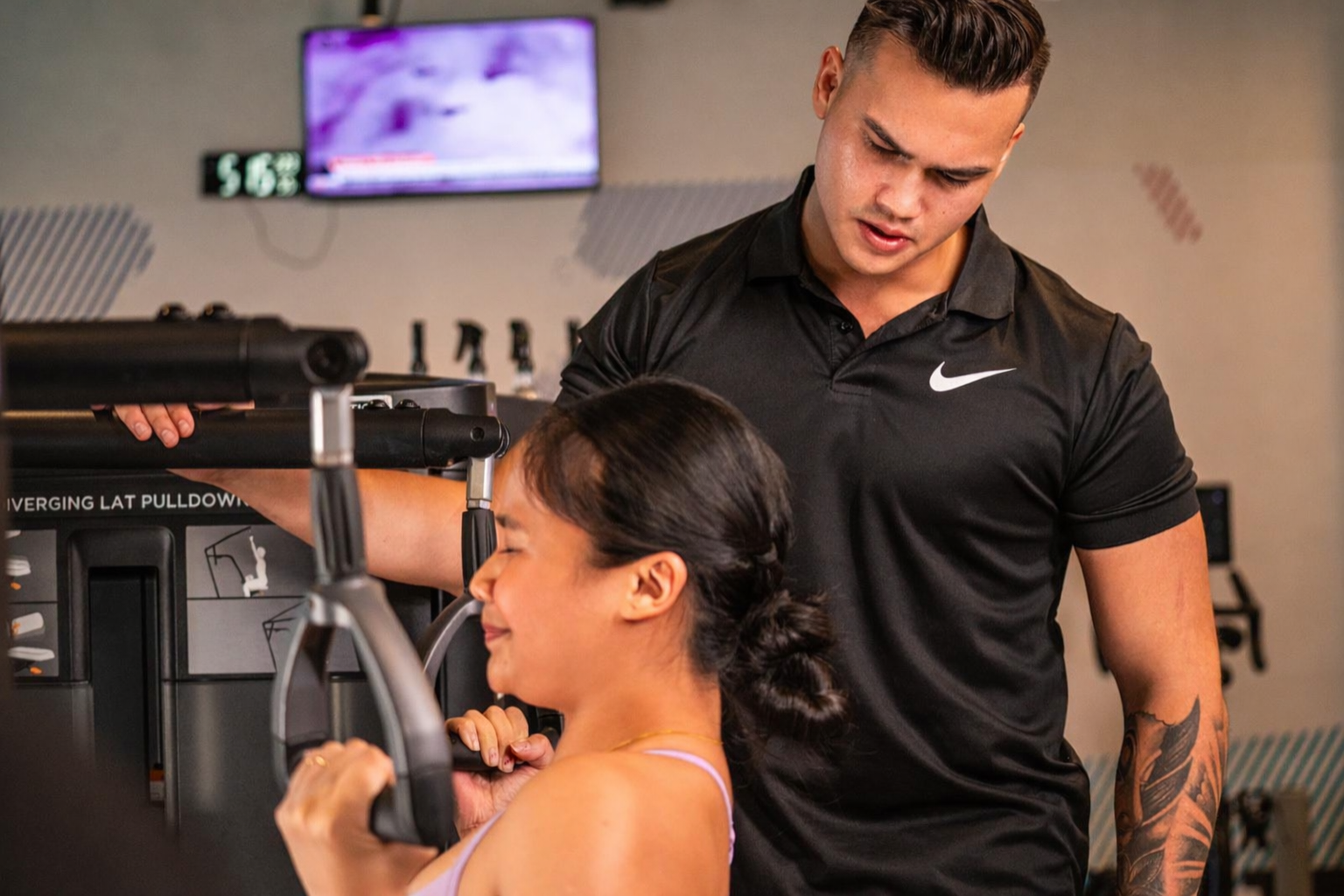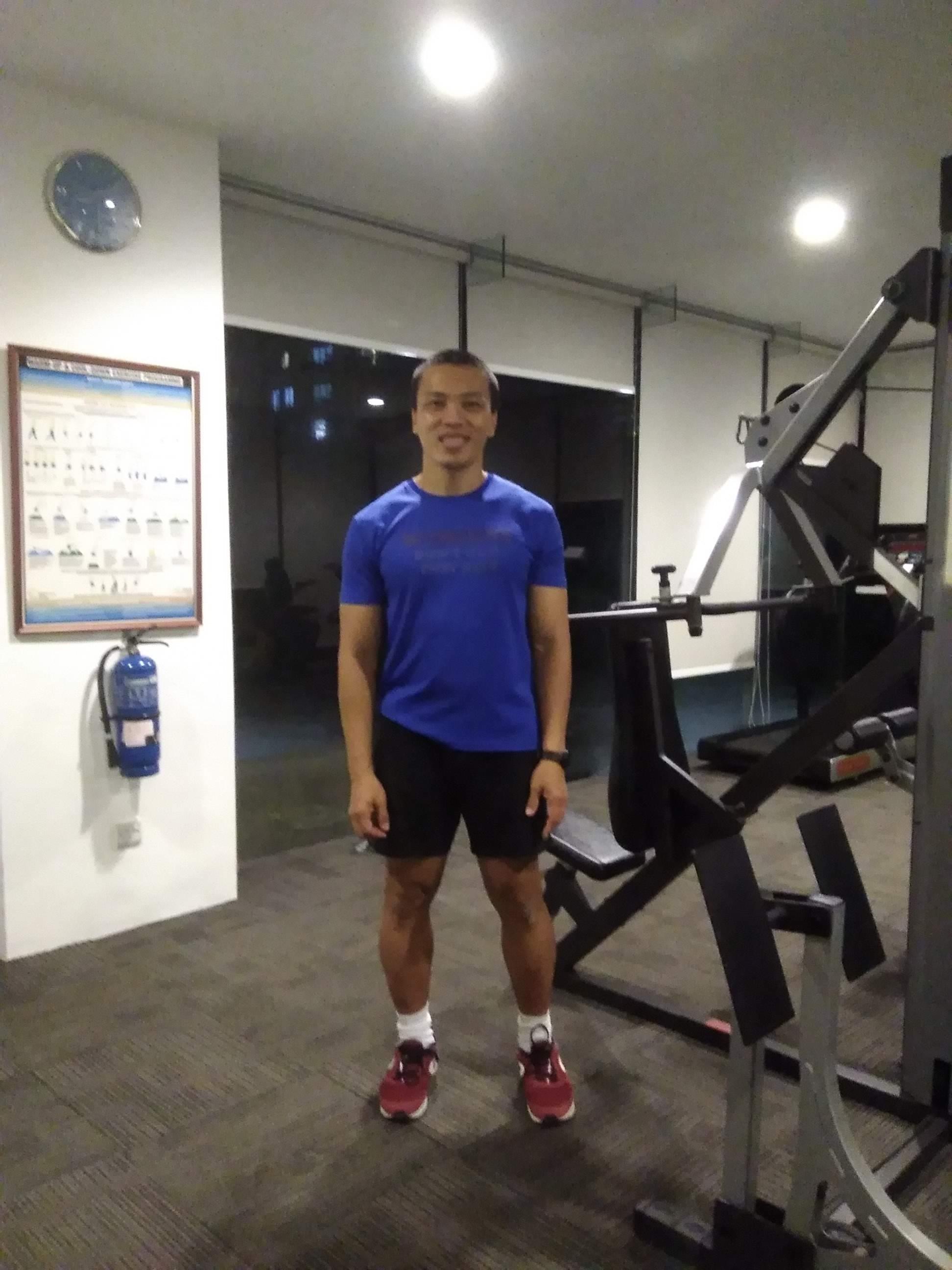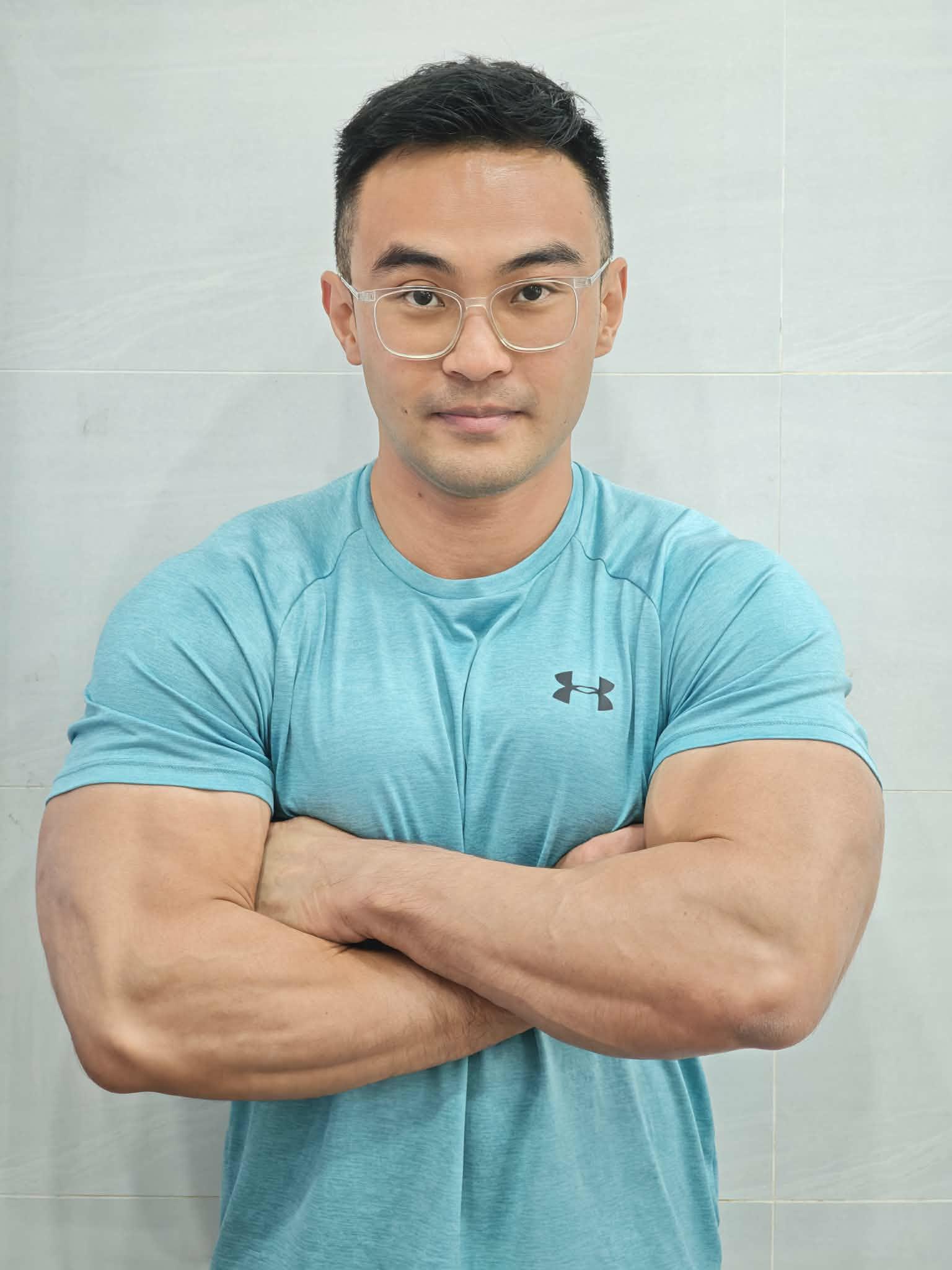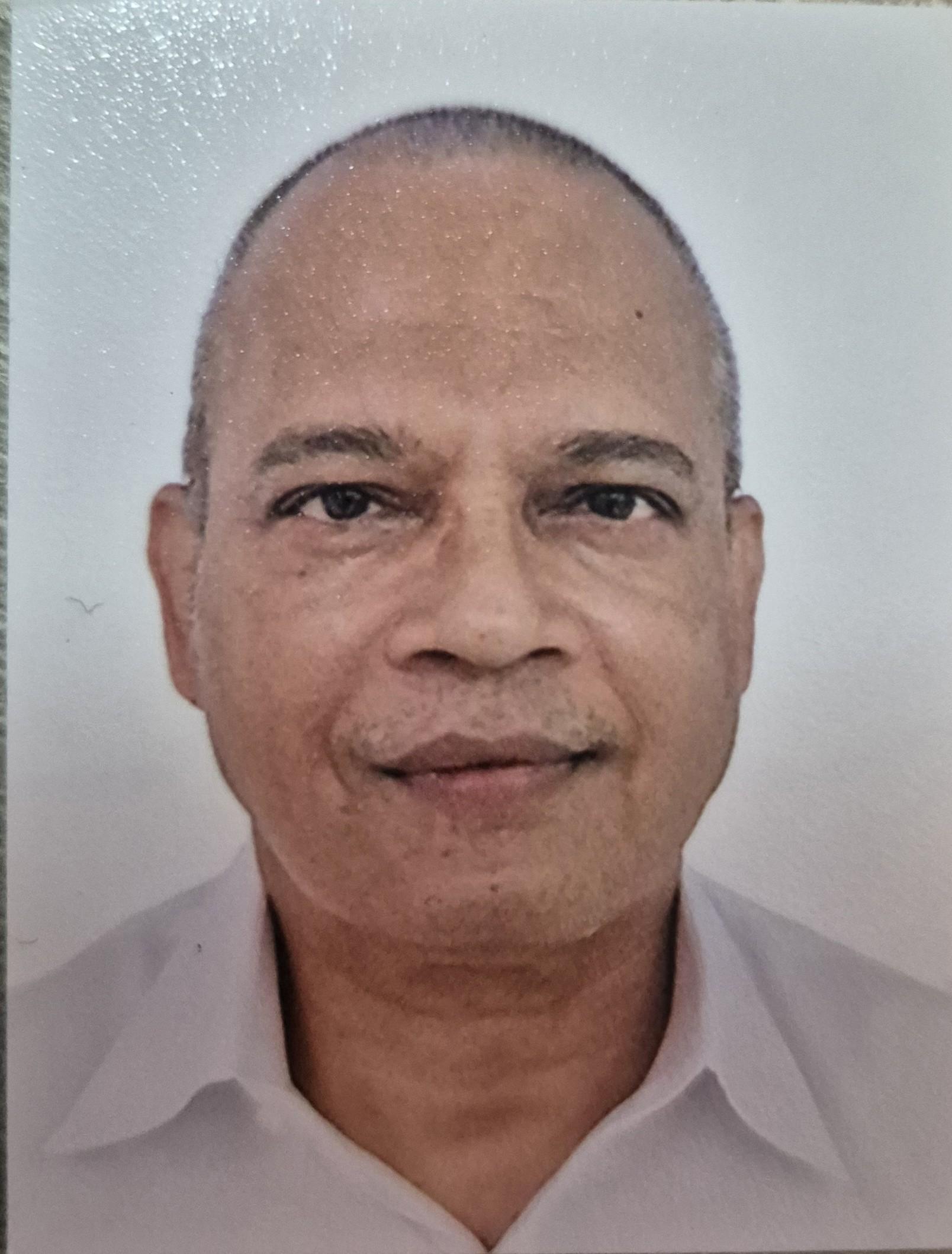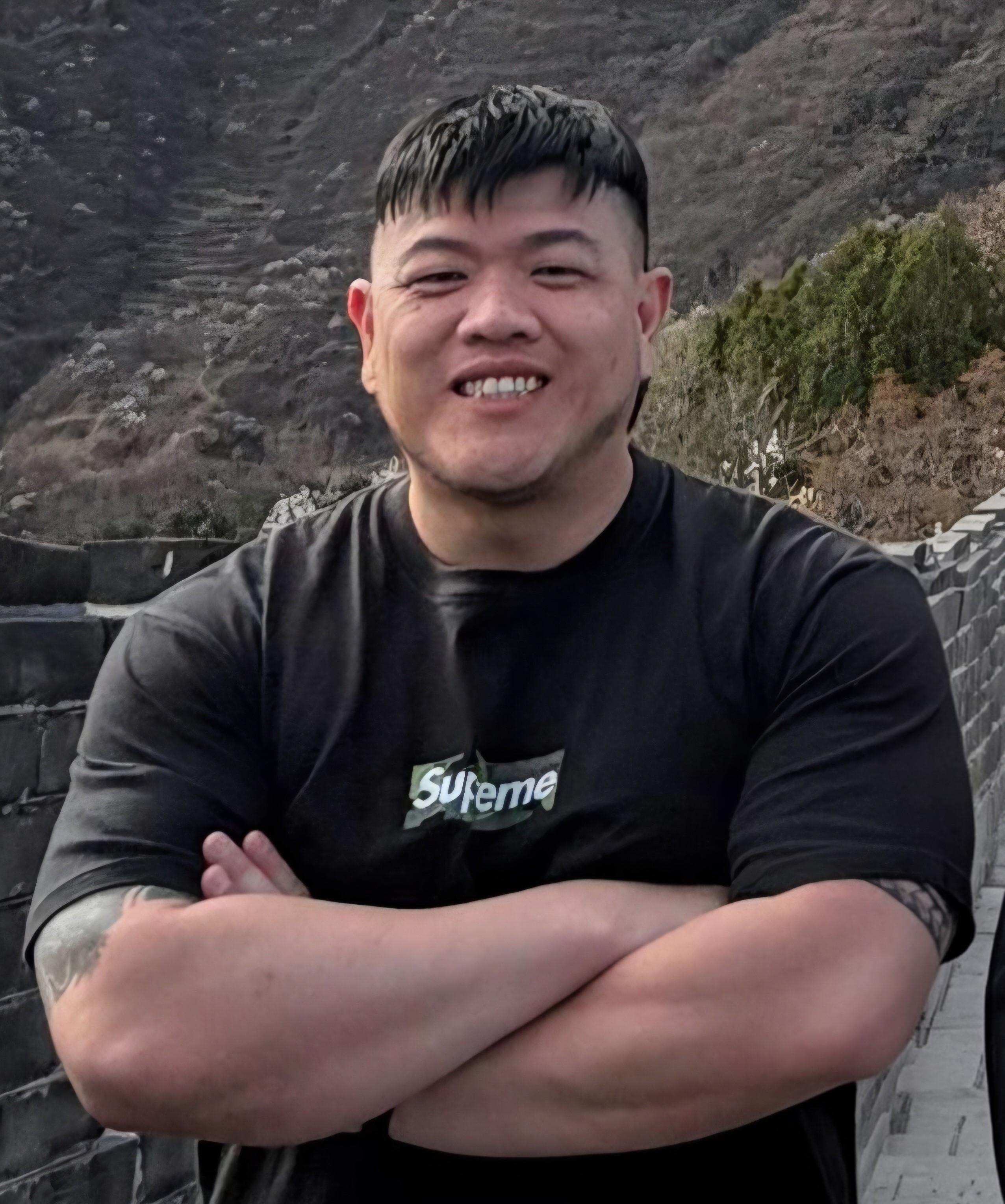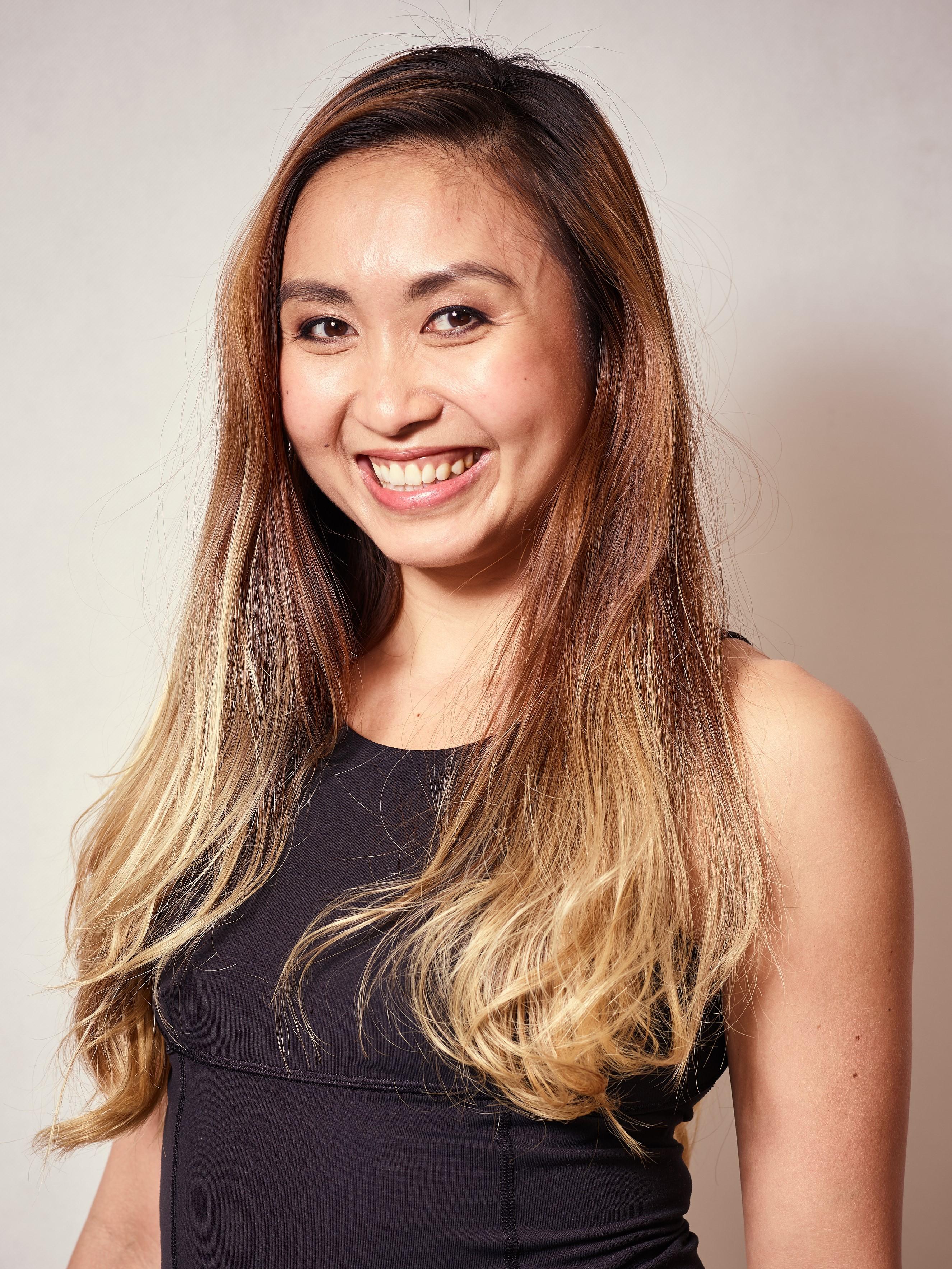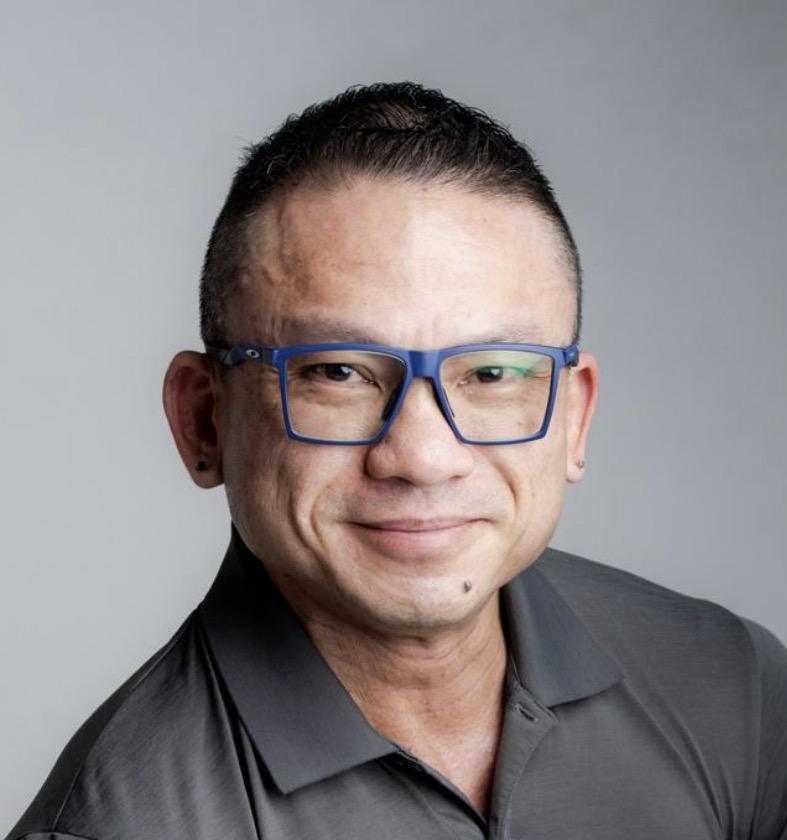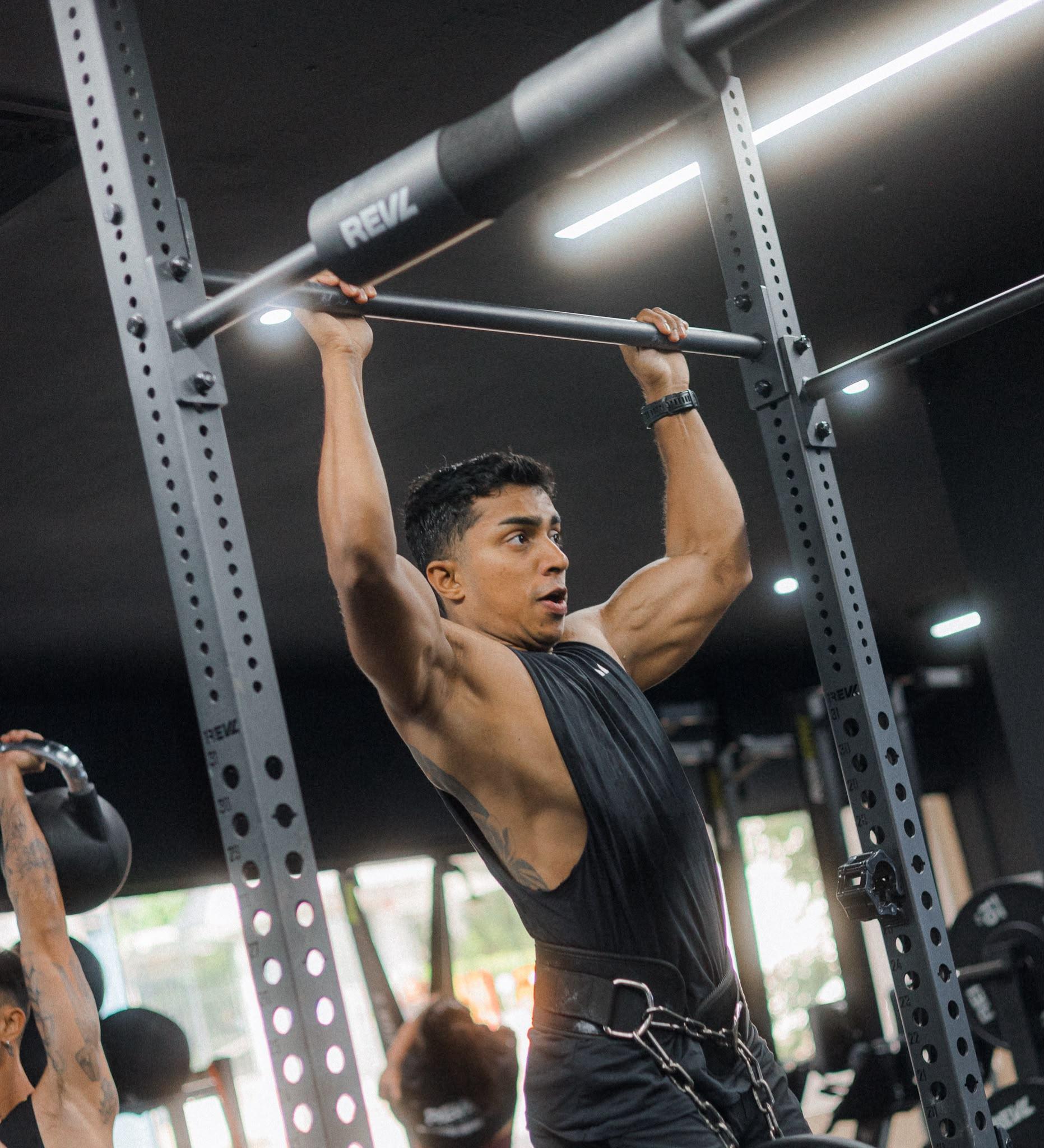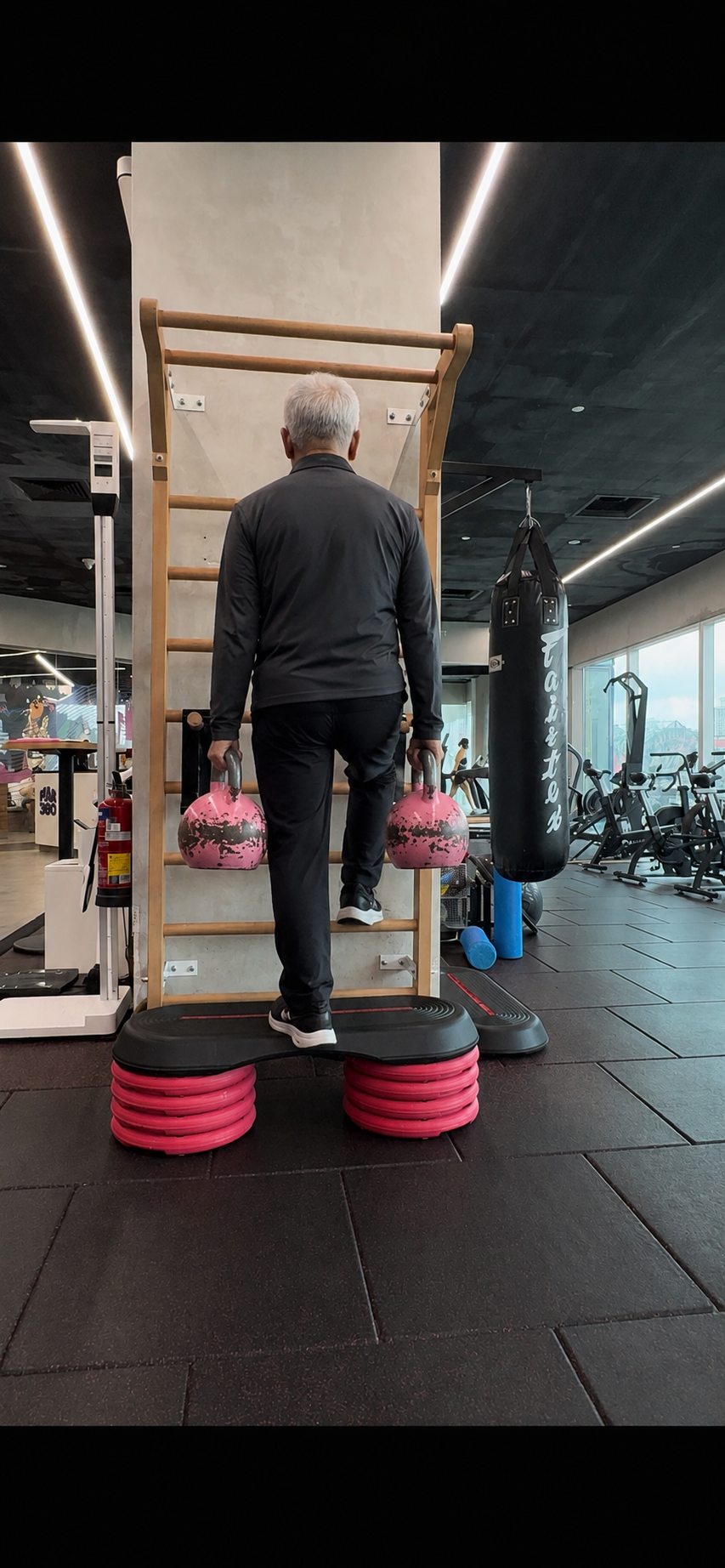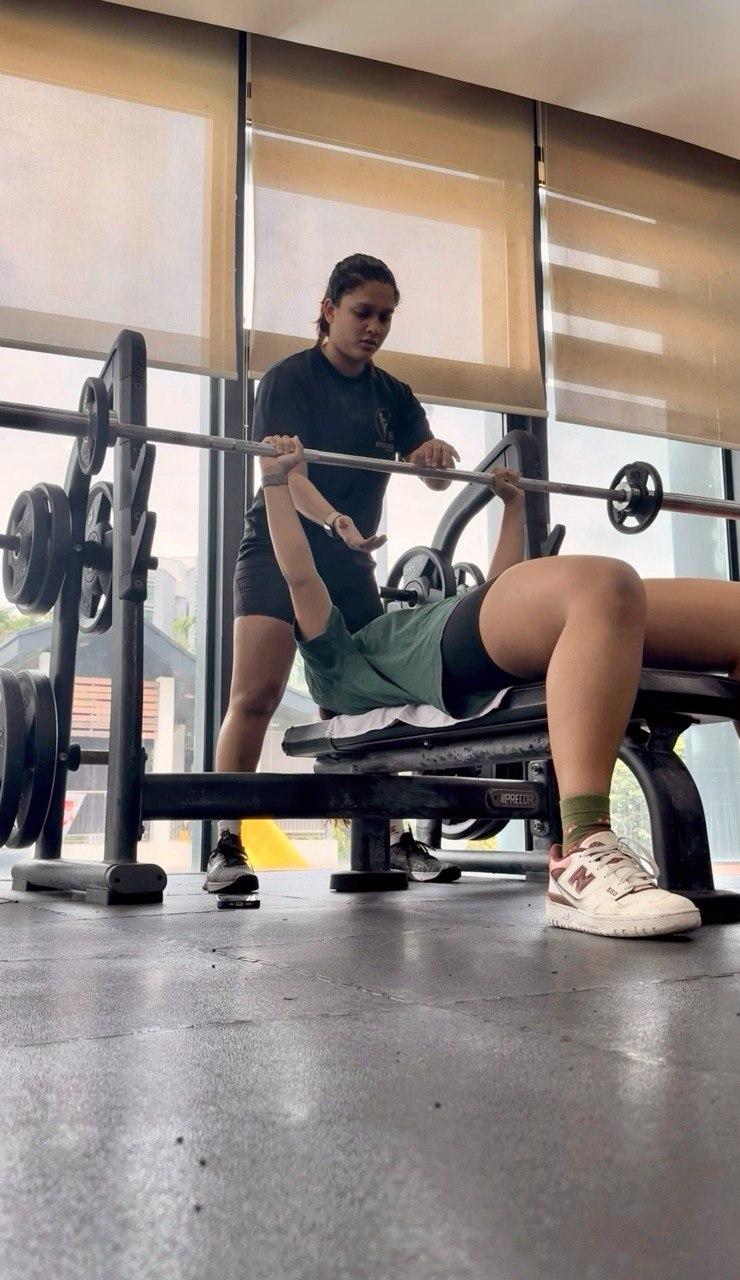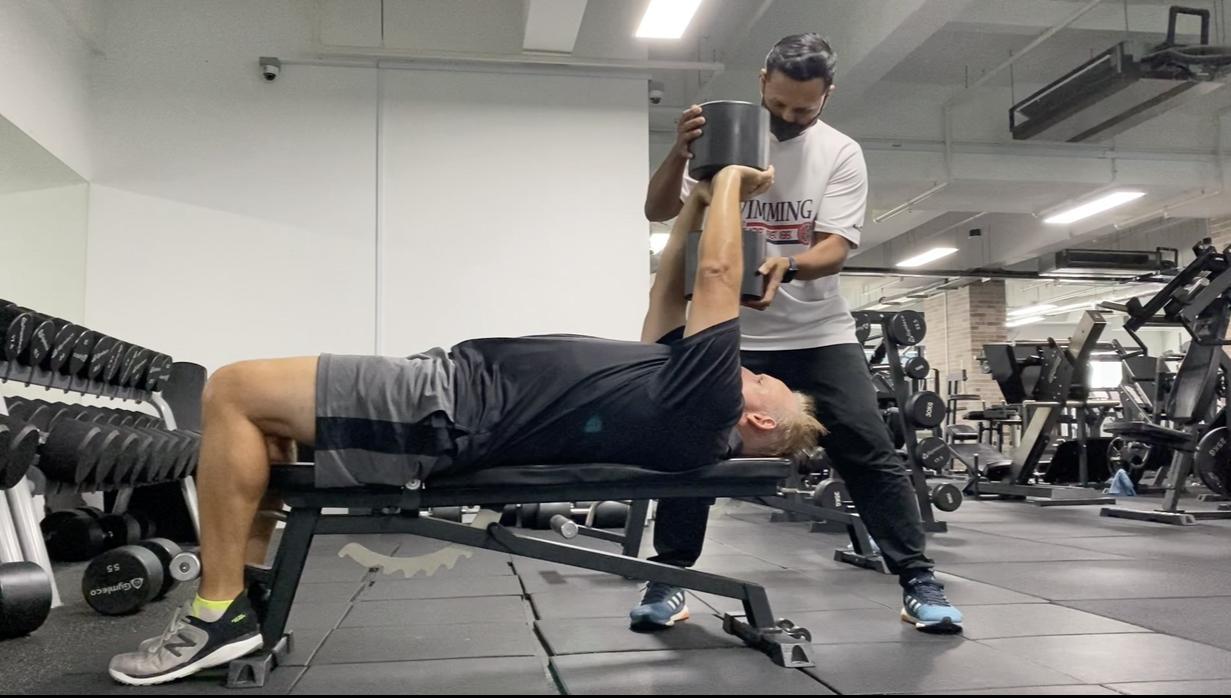
 Photo: Salam with a client
What is sarcopenia, and how common is it in Singapore?
Sarcopenia is an age-associated, progressive loss of skeletal muscle mass together with low muscle strength or reduced physical performance. That is the definition used by Singapore's Clinical Practice Guideline on Sarcopenia, published by the Chapter of Geriatricians, College of Physicians, Singapore on 20 October 2022, which also links it to falls, functional decline, hospitalisation, frailty and higher mortality.
It is common here. The guideline puts the local prevalence in older persons at 27% to 32%, which it describes as having a male predominance. The Yishun Study, which assessed 542 community-dwelling Singaporeans aged 21 to 90 with DXA scans, grip strength and walking speed, found 32.2% of those aged 60 and above met the Asian Working Group for Sarcopenia (AWGS) 2019 criteria (33.7% of men and 30.9% of women), and 13.6% across adults of all ages after adjusting to the population. Estimates vary with the criteria used, but every local figure says the same thing: by 60, this is a likely problem rather than a rare one.
How is sarcopenia diagnosed?
By a doctor, in steps. The guideline recommends case-finding rather than screening everyone, from age 60, especially for people with conditions such as diabetes, chronic heart, lung, kidney or liver disease, stroke, Parkinson's disease, knee osteoarthritis or osteoporosis, a history of falls, or poor nutrition. The first check is a questionnaire (SARC-F), a calf measurement, or the two combined (SARC-CalF). A positive result leads to a grip-strength test or a five-time sit-to-stand test, and a DXA scan when muscle mass needs confirming.
| What is measured | Men | Women |
|---|---|---|
| Handgrip strength (low) | Under 28 kg | Under 18 kg |
| Five-time chair stand (low performance) | 12 seconds or more | 12 seconds or more |
| 6-metre usual walking speed (low performance) | Under 1.0 m/s | Under 1.0 m/s |
| Short Physical Performance Battery (low performance) | 9 or below | 9 or below |
| Muscle mass by DXA (low) | Under 7.0 kg/m2 | Under 5.4 kg/m2 |
| Calf circumference (screen positive) | Under 34 cm | Under 33 cm |
AWGS 2019 also defines "possible sarcopenia": low strength or low performance without a muscle-mass test, intended for primary care and community settings so lifestyle changes can start earlier. In practice that is often where a trainer comes in, after a polyclinic or GP has done the checks.
What can a personal trainer measure, and what can they not?
A trainer can track function. A trainer cannot diagnose sarcopenia, read a DXA scan or tell you why you are losing muscle; that is a doctor's job, and the guideline asks doctors to look for reversible causes first. What a coach can do is repeat simple tests every few weeks so you, your family and your doctor can see whether training is working.
| Test | What you need | How it is read |
|---|---|---|
| Five-time chair stand | A firm chair without wheels and a stopwatch | Time to stand up fully five times without using the arms; 12 seconds or more is the AWGS low-performance flag |
| 6-metre walk | 6 metres of corridor or void deck and a stopwatch | Usual pace; taking more than 6 seconds means under 1.0 m/s |
| Grip strength | A hand dynamometer | Only if the coach has one. The guideline specifies Jamar or Smedley dynamometers and the best of at least two tries with the dominant hand |
| Everyday tasks | Nothing | Stairs, getting off the floor, carrying groceries: how hard they feel and how long they take |
Be clear on the dynamometer. We do not assume a coach carries one, and we would rather say so than have a bathroom-scale reading passed off as a grip test. Ask before the first session. If the coach does not have one, the chair-stand and walking tests need only a chair, a stopwatch and a corridor, and those are the two tests most clearly tied to daily life.
When should you see a doctor before starting?
Before a first session if any of these apply: a fall or a fracture in the past year; dizziness, fainting or vertigo; chest pain or breathlessness on exertion; heart, kidney or lung disease; osteoporosis; a joint replacement or recent surgery; unexplained weight loss; or new weakness on one side. Bring what the doctor says to the first session and the coach works inside it.
Stop a session and get medical help for chest pain or pressure, sudden breathlessness, dizziness, or a fall. If you are on blood-pressure, diabetes or blood-thinning medication, tell the coach, because it changes what a normal response to exercise looks like. Nothing on this page is medical advice, and we do not promise outcomes.
What kind of training helps, and how often?
Resistance-based exercise. The Singapore guideline's recommendation that older persons with sarcopenia be encouraged to do resistance-based exercise to improve strength and physical performance is graded a strong recommendation with moderate certainty of evidence, and so is its recommendation of regular physical activity and resistance exercise for prevention. It is the strongest treatment recommendation in the document.
The guideline does not set a dose, and we will not invent one. HealthXchange, from Changi General Hospital and SingHealth Polyclinics, suggests lifting light weights, one-leg stands, squats, heel raises and lunges, and daily sit-to-stand practice. What our coaches do in practice is two coached sessions a week, built on a few principles:
- Train the legs first. Sit-to-stand, step-ups, supported squats and heel raises are the movements that keep someone independent.
- Progress slowly and on purpose. Add a repetition, then a little load, then a harder version, only when the last one looked steady for a full set.
- Effort matters. Muscle responds to sets that feel hard by the last few repetitions, not to waving a light band. A good coach finds that level safely, with support nearby.
- Balance alongside strength. Many people with sarcopenia also fall; see the fall-prevention guide below.
- Homework between sessions. A short daily sit-to-stand set, as HealthXchange suggests, is the cheapest progress available.
Trials give a range, and it is separate from the guideline. A 2015 meta-analysis of 25 randomised trials in healthy adults with a mean age of 65 or over, by Borde, Hortobagyi and Granacher in Sports Medicine, found the largest strength gains with two sessions a week, two to three sets of seven to nine repetitions per exercise, loads of 70% to 79% of the most the person could lift once, and programmes lasting 50 to 53 weeks; for muscle size, three sessions a week did best. The authors rated the trials' quality as poor, and the participants were healthy rather than diagnosed with sarcopenia, so read it as the range a coach works towards after medical clearance, not a prescription. Most beginners start well below those loads.
| Day | What | About |
|---|---|---|
| Monday | Coached session: sit-to-stand, step-ups, band rows, wall push-ups, heel raises, supported balance | 45-60 minutes |
| Tuesday to Wednesday | Daily sit-to-stand practice and a walk | 10 minutes plus the walk |
| Thursday | Coached session: same patterns, slightly harder versions where the last week went well | 45-60 minutes |
| Friday to Sunday | Daily sit-to-stand, a walk, household and outdoor activity | As able |
How much protein does the guideline recommend?
At least 1.0 g of protein per kg of body weight a day for older adults, to prevent sarcopenia; the guideline grades this a conditional recommendation with low certainty of evidence. For someone weighing 60 kg that is at least 60 g a day. For people already diagnosed, it advises a quality diet with adequate calories and protein, says doctors should consider protein supplements, and recommends combining nutrition with exercise rather than either alone. It suggests vitamin D supplements only for people found to be low in vitamin D, and it does not recommend any drug for sarcopenia.
A coach is not a dietitian. If you have kidney disease, diabetes or a poor appetite, ask your doctor or a dietitian before raising protein or adding supplements. HealthXchange's own suggestions for protein-rich food are chicken, fish, tofu, beans, nuts and eggs, all of which are easy to find at a hawker centre.
Can sarcopenia training be done at home in an HDB flat?
Yes, and for many older adults home is the best place, because nobody has to travel and the exercises match the furniture they use every day. A full session needs about 2 metres by 2 metres of clear floor, a sturdy chair without wheels, a wall or kitchen counter to hold, and a few pieces of light kit.
- A firm chair: for sit-to-stand, the single most useful exercise here and the one that is also a test.
- Resistance bands: for rows, presses and hip work; cheap, light and easy to progress.
- Light dumbbells: a pair or two from 1 kg to 5 kg covers the first months for most beginners.
- The corridor or void deck: for the 6-metre walk test and for walking practice when the weather is cooler.
What a coach carries varies, so we confirm it before the first session. Condo gyms work too. An ActiveSG gym costs seniors aged 55 and above S$1.50 a visit if you want machines on your own days, though ActiveSG's rules require its written approval for any personal training there, and most people starting out do not need machines. For a room-by-room view of training in a flat, see the HDB living room workout.
Which coaches work with older adults, and what does it cost?
These coaches record seniors-specific qualifications or experience on their own profiles. Rates are each coach's published 1-to-1 rate per 60-minute session on 2 October 2026; every coach sets their own and we confirm it before you book. A qualification shows what a coach has studied; how they work with your parent is what the first session shows.
| Coach | 1-to-1 rate | What their profile records |
|---|---|---|
| Stom | S$60 | Elderly Exercise Specialist (International Sport Academy), NCSF; trained clients aged 60 to 85 at Fit Kaki, a seniors-only studio; coaches in English, Mandarin, Hokkien, Cantonese and Malay |
| Peter | S$95 | NCSF; 8 years with special populations including seniors, Parkinson's and post-surgery clients |
| Kim Choon | S$100 | ACE; the profile bio lists Senior Fitness Specialist and senior-friendly training |
| Lazarus | S$130 | ACE Senior Fitness Specialist; teaches anatomy and physiology at the Singapore Institute of Technology; has trained clients after hip replacement |
| Salam | S$160-S$180 | ACSM; 23 years, including clients with diabetes, Parkinson's and after surgery |
| Daniel | S$200 | ACSM, BSc Sport Science; has worked alongside physiotherapists |
A month at two sessions a week is 8 sessions: S$480 with a coach charging S$60, S$600 at S$75, S$1,040 at S$130. Packs of 10, 15 or 20 sessions take 5%, 10% or 15% off, and the first session is a paid trial at 10% off the coach's rate. If two older relatives train together, a buddy rate brings the per-person cost down, and three or more can use a small-group rate.
How is this different from our seniors and fall-prevention guides?
This page is about muscle: what sarcopenia is, how it is measured and how strength training treats it. If you are arranging a coach for a parent, the seniors and elderly parents guide covers how to brief a coach, what the first home session looks like and how to pay. If the main worry is falling, fall prevention exercises for seniors covers balance, getting up from the floor and a 20-minute home routine. If you are in your 50s and want to get ahead of all this, start with strength training after 50, and anyone losing weight fast on a GLP-1 medication should read training on a GLP-1.
What should you not expect from training?
- A diagnosis or a cure from a coach. A coach improves strength and function; a doctor decides whether sarcopenia is present and what else is going on.
- Fast change. Most people feel stairs and chairs get easier before anything shows on a scan, and a few weeks of missed sessions takes some of it back.
- Protection from every fall. Stronger legs and better balance lower risk; they do not remove it.
- A one-size dose. The local guideline sets no exercise dose, and trial ranges come from healthy older adults, so anyone quoting you an exact prescription is going beyond the evidence.