

Type 2 diabetes7 min read · Updated
Personal Trainer for Diabetes in Singapore
The short answer
A trainer can help an adult with type 2 diabetes reach the guideline targets: 150 to 300 minutes of exercise a week with at least 2 days of muscle strengthening, by HealthHub.
- The American Diabetes Association recommends supervised training over unsupervised programmes.
- Your doctor's plan comes first.
- If you use insulin or a sulphonylurea, check your blood sugar before a session, keep 15g of fast-acting sugar on hand and delay exercise below 4.0 mmol/L.
- Stop and get medical help for chest pain.
From S$50 a session. First session 10% off.
Written by the Fit Titans coaching team. Edited by Theon. How we write guides
A personal trainer for diabetes plans and supervises your exercise around the plan your doctor has set.
The coach does not diagnose, treat or touch your medication.
On this page (10)
- 1. Should you hire a personal trainer if you have diabetes?
- 2. What can a diabetes personal trainer do, and not do?
- 3. What should you clear with your doctor before the first session?
- 4. How much exercise for type 2 diabetes do the guidelines advise?
- 5. How do you stay safe from low blood sugar on insulin or sulphonylureas?
- 6. When should you stop and get medical help?
- 7. How do you look after your feet when you train?
- 8. What do the first sessions look like?
- 9. How much does a personal trainer for diabetes cost in Singapore?
- 10. How do you choose a trainer, and how does matching work?
Key facts
- HealthHub says to check your feet for wounds before and after exercising
- A coach never adjusts medication. HealthHub says to ask your doctor for a medication review when your exercise routine changes
Should you hire a personal trainer if you have diabetes?
It can help, once your doctor agrees to the plan. The American Diabetes Association position statement says supervised training is recommended over nonsupervised programmes, at least for adults with type 2 diabetes. A trainer is one way to get that supervision.
- 01Good fitYour doctor is happy for you to exercise and you want each session planned and watched.
- 02Doctor firstYou use insulin or a sulphonylurea, have a foot wound, heart disease, eye or nerve complications, or have not exercised for years.
- 03PrediabetesSee exercise for prediabetes for the after-meal walk and a 12-week plan.
What can a diabetes personal trainer do, and not do?
A coach handles the exercise. Your doctor and care team handle the condition. A coach is not a medical professional.
A coach can
- Plan aerobic, strength, balance and stretching work to the limits your doctor has set
- Follow the blood sugar rules your care team gave you
- Keep fast-acting sugar within reach and stop the session when warning signs appear
A coach never
- Diagnoses diabetes or any complication
- Changes medication or tells you to skip or time a dose
- Interprets HbA1c or other test results
- Promises a blood sugar number or that you can stop medication
HealthHub is direct on this point. Take your medications as prescribed, and do not skip them and try to replace them with exercise.
What should you clear with your doctor before the first session?
Ask the questions below. HealthHub says to consult your doctor for a medication review if you are changing your exercise routine. The ADA statement says clearance is generally unnecessary for people without symptoms before activity no harder than brisk walking. The questions matter most when you plan to do more.
- 01MedicationCan any of mine cause low blood sugar during exercise?
- 02ReadingsShould I check before sessions, and what range is right for me?
- 03HeartIs moderate intensity fine, or do I need a fitness assessment first?
- 04FeetAre my feet fit for walking and standing exercise?
- 05EyesThe ADA statement says people with severe nonproliferative or unstable proliferative diabetic retinopathy should avoid jumping, jarring, head-down activities and breath holding. Ask if that applies to you.
High blood pressure as well? Read exercise with high blood pressure. On a GLP-1 medicine such as Ozempic or Mounjaro? See training on a GLP-1.
How much exercise for type 2 diabetes do the guidelines advise?
Aim for 150 to 300 minutes a week with at least 2 days of muscle strengthening, says HealthHub's Diabetes Hub.
| Part | HealthHub (Ministry of Health) | ADA position statement, 2016 |
|---|---|---|
| Weekly total | 150 to 300 minutes of exercise | 150 minutes or more of moderate to vigorous activity |
| How often | 3 to 7 days a week | No more than 2 days in a row without activity |
| Intensity | Moderate, where you can talk but cannot sing | Moderate to vigorous |
| Strength | At least 2 days a week, on alternate days | 2 to 3 sessions a week on nonconsecutive days |
| Balance and stretching | Stretching can be daily. Progress to balance work | 2 to 3 times a week for older adults |
If weight is part of the goal, HealthHub says to do more. See our weight loss programme.
How do you stay safe from low blood sugar on insulin or sulphonylureas?
Check your blood sugar before the session and keep 15g of fast-acting sugar on standby. HealthHub says blood sugar may fall faster on insulin, sulphonylureas such as gliclazide, glimepiride, glipizide and tolbutamide, or meglitinides such as repaglinide. Start easy and avoid prolonged exercise, it says.
| Reading before exercise | What HealthHub says |
|---|---|
| Below 4.0 mmol/L | Hypoglycaemia. Delay exercise and follow the 15-15 rule |
| 4.0 to 5.5 mmol/L | Have a light snack of 15 to 30g of long-acting sugars and wait 15 minutes |
| 5.6 to 15 mmol/L | Go ahead, and watch for signs and symptoms throughout |
| Above 15 mmol/L | If you feel well and have taken your usual medication, exercise with caution |
- 01The 15-15 ruleTake 15g of fast-acting sugar, such as half a glass of sweetened drink or 3 soft sweets, then check again after 15 minutes (HealthHub).
- 02Do not trainIf you feel unwell, or had a low in the last 24 hours that needed someone's help.
- 03Frequent lowsHealthHub says to check with your doctor, as your medication may need adjusting.
When should you stop and get medical help?
Stop at the first warning sign. A coach does not judge symptoms. These lists come from HealthHub's physical activity, hypoglycaemia, foot care and coronary heart disease pages.
Stop, rest and check your blood sugar
- Hunger, hand tremors or a fast heartbeat
- Fatigue, dizziness or a headache
- Anxiety or irritability
- Difficulty breathing
- Still low after two rounds of the 15-15 rule: seek medical advice
Get medical help immediately
- Chest pain, with or without discomfort spreading to the left shoulder or arm
- Lightheadedness or profuse sweating if you have heart disease, as HealthHub advises
- Confusion, slurred speech, blurred vision or a seizure, which HealthHub lists as severe hypoglycaemia. If the person is conscious, give 15g of fast-acting sugar and get medical help
- Loss of consciousness: call an ambulance immediately
- A foot wound with redness, swelling, pus, a smell or fever
How do you look after your feet when you train?
Check your feet for wounds before and after every session, and wear well-fitted shoes with adequate support. Both points are HealthHub's. Its foot care page says uncontrolled blood sugar damages nerves over time and reduces feeling in the foot.
- 01Daily checkLook for blisters, wounds, corns, redness, swelling or warmth.
- 02ShoesCovered, well-fitted and worn with socks.
- 03A small woundSeek medical help if it has not improved after two days.
- 04A foot ulcerThe ADA statement says to avoid weight-bearing activity with an unhealed ulcer. HealthHub lists seated options such as arm cycling, seated marching and band rows.
What do the first sessions look like?
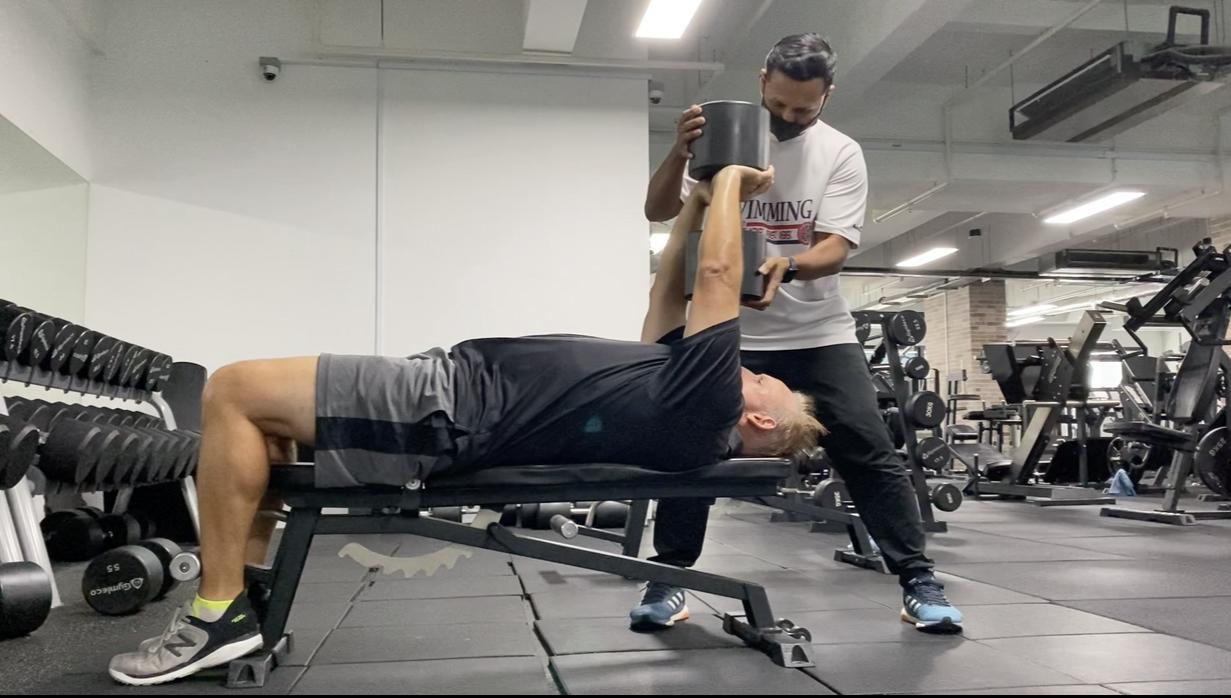
Easy, and built on what your doctor said. Each session is 60 minutes and 1-to-1 unless you book as a pair. The outline below is coaching practice, not a medical prescription.
- 01Before session oneYou share your doctor's advice and any limits on feet, eyes or heart.
- 02Arrival checkYou take your own reading if your care team asked you to. Sugar and water stay within reach.
- 03Warm-up and walkEasy movement at a pace where you can still talk.
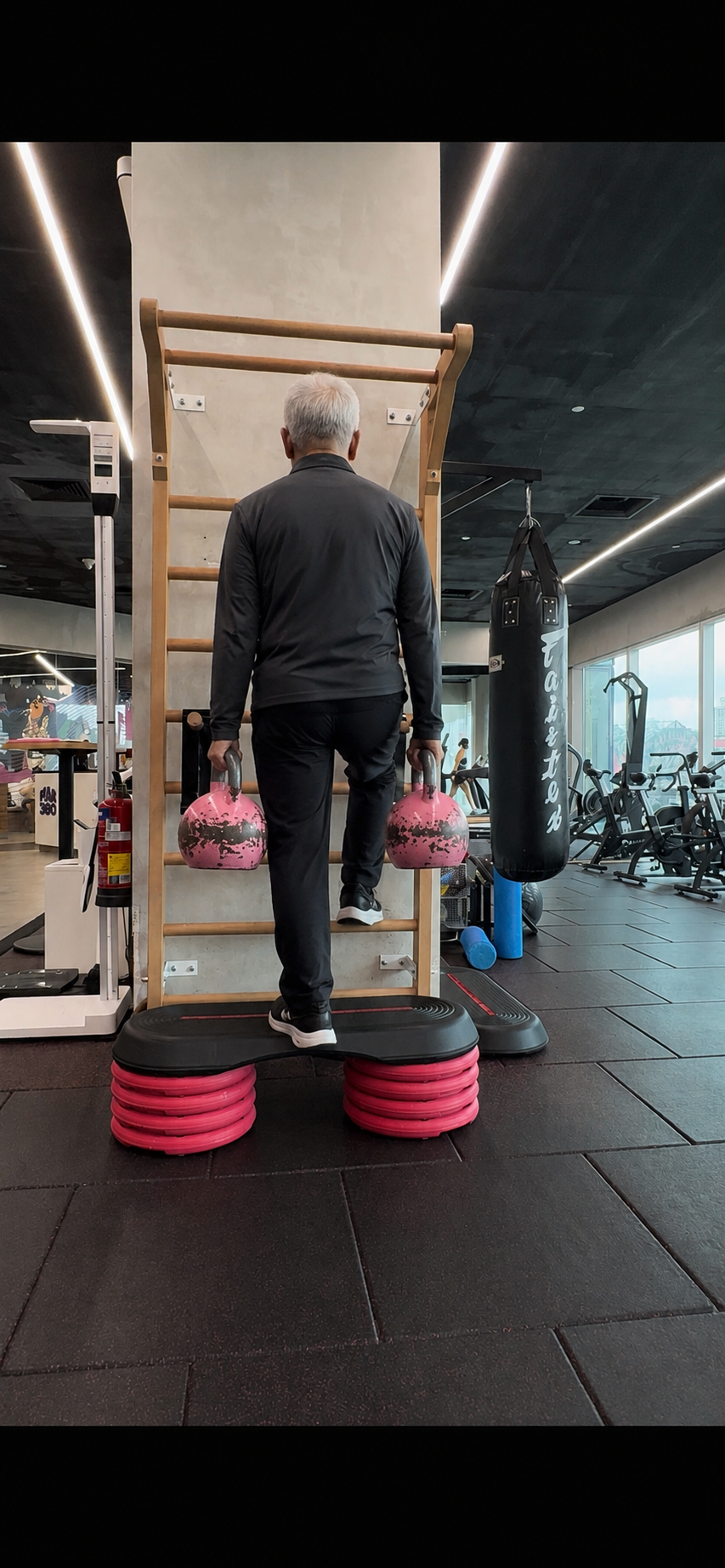
- 04StrengthSit-to-stands, rows, presses and carries with light loads, breathing steadily throughout.
- 05Cool-down and notesA slow finish, a foot check and a short log for your next clinic visit.
HealthHub advises exercising at a cooler time, such as mornings or evenings. Booking for a parent? See personal trainer for elderly parents.
How much does a personal trainer for diabetes cost in Singapore?
Sessions start from S$50 for 60 minutes, and most coaches charge S$80 to S$130 (measured October 2026). Each coach sets their own rate.
- 01First sessionA paid trial at 10% off the coach's rate.
- 02After the trialPacks of 5 sessions at the coach's full rate, or 10, 15 or 20 at 5%, 10% or 15% off, paid by PayNow.
- 03WhereYour home, condo gym, a park or a gym that allows outside trainers. Some coach live over video.
See personal trainer cost in Singapore and live rates on pricing.
How do you choose a trainer, and how does matching work?
Tell us your goal, your area, your times and what your doctor has said, and we suggest coaches who fit. We review each coach's application and check at least one of their listed fitness qualifications. Each coach lists their own certifications and specialties on their profile.
- 01Ask about experienceHave they trained clients with long-term conditions?
- 02Listen for limitsA good answer includes "that is for your doctor".
- 03Walk awayFrom anyone who offers to change your medication or promises to reverse diabetes.
More checks are in how to choose a personal trainer. Tell us on WhatsApp if the coach is not right. We review it and help you move to another coach where one is free for your area, goals and times. Your unused sessions move with you.
Read next
If you fast, exercise during Ramadan lists who should check with a doctor first.
Questions about diabetes
What is the best exercise for diabetes?
There is no single best one. HealthHub advises a combination of aerobic, resistance and flexibility exercise, and the ADA position statement also asks for both aerobic and resistance work each week. Choose a mix your doctor has cleared.
Can a personal trainer work with type 1 diabetes?
Only after your diabetes team has given you an exercise plan. HealthHub says to speak to your care team about a treatment plan personalised to your needs. NUH says to consult your healthcare team on adjusting insulin safely around exercise, and that the risk of low blood sugar may persist up to 24 hours afterwards. A coach follows that plan and never advises on insulin.
How do I find a personal trainer for diabetics near me?
Send us your area, preferred times and what your doctor has advised. Coaches travel to your home, condo gym or a nearby park, so you do not need a gym close by.
Can exercise replace my diabetes medication?
No. HealthHub says to take your medications as prescribed and not to skip them and try to replace them with exercise. Any change is your doctor's decision.

About this guide
Published
Sources (9)
Sources
- Physical activity, Diabetes Hub (checked 12 Nov 2026) · HealthHub, Ministry of Health Singapore
- Monitoring blood sugar for exercise, Diabetes Hub (checked 12 Nov 2026) · HealthHub, Ministry of Health Singapore
- Hypoglycaemia, Diabetes Hub (checked 12 Nov 2026) · HealthHub, Ministry of Health Singapore
- Foot care, Diabetes Hub (checked 12 Nov 2026) · HealthHub, Ministry of Health Singapore
- If you have foot ulcers or lower limb pain, Diabetes Hub (checked 12 Nov 2026) · HealthHub, Ministry of Health Singapore
- If you have coronary heart disease, Diabetes Hub (checked 12 Nov 2026) · HealthHub, Ministry of Health Singapore
- Tips for those with Type 1 diabetes, Diabetes Hub (checked 12 Nov 2026) · HealthHub, Ministry of Health Singapore
- Exercise and Type 1 Diabetes (checked 12 Nov 2026) · National University Hospital
- Colberg et al. Physical Activity/Exercise and Diabetes: A Position Statement of the American Diabetes Association. Diabetes Care 2016, 39(11):2065 (checked 12 Nov 2026) · PubMed Central, National Library of Medicine
General information, not medical advice.