








IPPT11 min read · Updated
2.4km Run Training Plan
- Trial 10% off
- No membership
- WhatsApp reply, usually within the hour
The short answer
Run a timed 2.4km, set a target 30 to 60 seconds faster, then train three times a week for eight weeks: one interval session, one tempo or goal-pace session and one easy run.
- Week 4 is a lighter deload with a check run, and week 8 is the test week.
- For a 12:00 target, goal pace is 2:00 a lap and 5:00 per km, 400m repeats are 1:55 (about 4% quicker) and tempo is 5:36 per km (about 12% slower).
Written by the Fit Titans coaching team. Edited by Theon. How we write guides
On this page (10)
- 1. What is a good 2.4km time?
- 2. What pace should each session be for your target time?
- 3. What does the 8-week 2.4km plan look like?
- 4. How does a training week fit together?
- 5. What if you cannot run 2.4km without stopping yet?
- 6. Why does the plan have a deload week?
- 7. What should the test week look like?
- 8. How do you avoid injury on a 2.4km plan?
- 9. How do you adjust the plan if life gets in the way?
- 10. Can a Fit Titans coach run this plan with you?
Key facts
- Eight weeks, three runs a week: intervals, tempo or goal pace, and one easy run. Short strength sessions alongside: two a week in weeks 2, 3, 5 and 6, one in weeks 1, 4 and 7, none in the test week
- Every pace comes from your target time: 400m repeats about 4% quicker than goal pace, 800m and 1200m repeats at goal pace, tempo about 12% slower, easy 30% to 45% slower
- For a 12:00 target: goal pace 5:00 per km or 2:00 a lap, 400m repeats in 1:55, tempo 5:36 per km
- Week 4 is a deload: about a third less running and a 2.4km check run to reset the target
What is a good 2.4km time?
Under 22, a 12:20 earns 31 of the run's 50 points, a 9:40 earns 43 and 8:30 earns full marks, on MINDEF's 2.4km score table. Older age groups get more points for the same time, so a good time depends on your age and the test.
| Benchmark | Under 22 | 25 to 27 | 40 to 42 |
|---|---|---|---|
| 31 run points, a balanced 61 | 12:20 | 12:40 | 13:40 |
| 43 run points, a balanced Gold | 9:40 | 10:00 | 11:00 |
| 50 run points, full marks | 8:30 | 8:50 | 9:50 |
For NAPFA: an A on the 2.4km is under 10:21 for boys aged 17 and 18 and under 14:01 for girls aged 16 to 18, on the MOE secondary standards Dunman Secondary School publishes. Every age from 12 is in the NAPFA 2.4km table.
Against your own week-1 time, a good target for this plan is 30 to 60 seconds faster, set as below. Points for every time in all 14 age groups: the IPPT 2.4km points table.
How do you choose your target time?
Take 30 to 60 seconds off a timed baseline, round it to the pace table, and let the week 4 check run correct it.
- 01Run a baselineA timed 2.4km in week 1, after a 10-minute warm-up, on a 400m track (six laps) or a flat measured route. Hard but even.
- 02Subtract 30 to 60 seconds30 if you already run regularly, 60 if you are new to structured training. A 13:10 baseline makes a 12:10 to 12:40 target.
- 03Round to the pace tableThe nearest target below, or work the paces out from the percentages.
- 04Reset in week 4Faster than expected, lower the target by 15 seconds. Slower, keep the paces and add a week.
- 05Know the score you needFor IPPT, check your age group on IPPT score by age and that the target closes the gap.
The 30 to 60 second range sits inside what training studies report. New Zealand officer trainees cut their 2.4km time by about 45 to 60 seconds on average over a 6-week course (Edgar et al., 2021), and by 36 to 92 seconds across groups in a second 6-week course (Edgar et al., 2023).
Police recruits improved by about 20 seconds on average between weeks 5 and 17 of academy training (Campbell et al., 2024).
Those groups trained full time, and none of the figures come from our own clients. We cannot promise a set gain for any one runner, so treat the range as a planning number.
What pace should each session be for your target time?
Every pace comes from your target time. Goal pace is the target over six even laps, 400m repeats are about 4% quicker, 800m and 1200m repeats are at goal pace, tempo is about 12% slower and easy runs are 30% to 45% slower.
For a 12:00 target, 720 seconds over six laps is 120 seconds: 2:00 a lap, or 5:00 per km (720 divided by 2.4 is 300 seconds). A 400m repeat is 120 x 0.96 = 115 seconds, or 1:55. Tempo is 300 x 1.12 = 336 seconds, or 5:36 per km. Easy is 300 x 1.30 to 300 x 1.45, 390 to 435 seconds, or 6:30 to 7:15 per km.
2.4km target 12:00
- Goal pace per km
- 5:00
- Goal pace per 400m lap
- 2:00
- 400m repeat
- 1:55
- 800m repeat
- 4:00
- 1200m repeat
- 6:00
- Tempo per km
- 5:36
- Easy per km
- 6:30 to 7:15
| 2.4km target | Goal pace per km | Goal pace per 400m lap | 400m repeat | 800m repeat | 1200m repeat | Tempo per km | Easy per km |
|---|---|---|---|---|---|---|---|
| 9:30 | 3:58 | 1:35 | 1:31 | 3:10 | 4:45 | 4:26 | 5:09 to 5:44 |
| 9:40 | 4:02 | 1:37 | 1:33 | 3:13 | 4:50 | 4:31 | 5:14 to 5:50 |
| 10:00 | 4:10 | 1:40 | 1:36 | 3:20 | 5:00 | 4:40 | 5:25 to 6:03 |
| 11:00 | 4:35 | 1:50 | 1:46 | 3:40 | 5:30 | 5:08 | 5:58 to 6:39 |
| 12:00 | 5:00 | 2:00 | 1:55 | 4:00 | 6:00 | 5:36 | 6:30 to 7:15 |
| 13:00 | 5:25 | 2:10 | 2:05 | 4:20 | 6:30 | 6:04 | 7:03 to 7:51 |
| 14:00 | 5:50 | 2:20 | 2:14 | 4:40 | 7:00 | 6:32 | 7:35 to 8:28 |
| 15:00 | 6:15 | 2:30 | 2:24 | 5:00 | 7:30 | 7:00 | 8:08 to 9:04 |
| 16:00 | 6:40 | 2:40 | 2:34 | 5:20 | 8:00 | 7:28 | 8:40 to 9:40 |
The ratios are our coaching rules of thumb, not a published standard, for flat ground in the cooler part of the day. Easy should feel too slow, with full sentences possible. If the talk test and the number disagree, the talk test wins, especially in Singapore humidity. Easy runs build the aerobic base the hard sessions need, and running them hard steals from Tuesday and Thursday.
What does the 8-week 2.4km plan look like?
Three runs a week on non-consecutive days, with a 10-minute easy warm-up and a 5-minute cool-down walk around every quality session. Take every pace from your own row of the pace table above. The table below shows the 12:00 row.
Recoveries between repeats are an easy jog or a walk. The easy run grows a little each week, the week 4 deload lets the body absorb weeks 1 to 3, and weeks 5 to 7 shift from speed towards holding goal pace for longer.
Week 1, baseline
- Run 1
- Baseline test: a timed 2.4km after a 10-minute warm-up. Set your target
- Run 2
- Easy 20 min
- Run 3
- Easy 25 min
- Strength
- 1 session
| Week | Run 1 | Run 2 | Run 3 | Strength |
|---|---|---|---|---|
| 1, baseline | Baseline test: a timed 2.4km after a 10-minute warm-up. Set your target | Easy 20 min | Easy 25 min | 1 session |
| 2, build | Speed: 6 x 400m in 1:55, 90 sec recovery | Easy 20 min plus 4 x 20 sec strides | Easy 30 min | 2 sessions |
| 3, build | Speed: 8 x 400m in 1:55, 90 sec recovery | Tempo: 12 min at 5:36 per km | Easy 30 to 35 min | 2 sessions |
| 4, deload | Speed: 4 x 400m in 1:55, 2 min recovery | Easy 20 min | Check run: a timed 2.4km. Reset the target | 1 light session |
| 5, goal pace | Speed: 4 x 800m in 4:00, 2 min recovery | Tempo: 15 min at 5:36 per km | Easy 35 min | 2 sessions |
| 6, goal pace | Speed: 5 x 800m in 4:00, 2 min recovery | Tempo: 18 min at 5:36 per km | Easy 35 to 40 min | 2 sessions |
| 7, sharpen | Speed: 2 x 1200m in 6:00, 3 min recovery | Goal pace: 6 x 400m in 2:00, 90 sec recovery | Easy 30 min | 1 light session |
| 8, test | Early in the week: 4 x 400m in 2:00, full recovery | Two days later: easy 15 to 20 min with 4 strides | Test day. Rest or walk the two days before | Rest |
For another target, keep the sessions and swap in your row of the pace table. Week 7's two 1200m repeats at 6:00 each are half the race at goal pace twice, the closest rehearsal of test day in the whole plan.
How does a training week fit together?
Hard runs on Tuesday and Thursday, the easy run at the weekend, strength on Monday and Friday, and Wednesday off. Never put two hard runs on consecutive days.
- MonStrength, 20 to 30 minutes
- TueRun 1: speed, on a track or flat measured park connector
- WedRest, or a walk
- ThuRun 2: tempo or goal pace
- FriStrength, 20 to 30 minutes, not in weeks 1, 4 and 7
- Sat or SunRun 3: easy, anywhere you enjoy
- Other weekend dayRest
Shift the days to fit work, camp or school, keeping one full rest day and the easy run easy. Strength is squats, split squats, calf raises, a hip hinge, push-ups and a plank, plus push-up and sit-up sets for IPPT. Run before 8am or after 7pm where you can, as midday heat makes the paces meaningless. A bad week: repeat it, do not skip ahead.
What if you cannot run 2.4km without stopping yet?
Spend two or three weeks on a run-walk lead-in before week 1, three sessions a week of 20 to 30 minutes.
- FirstRun 1, walk 11 minute each, ten times.
- NextRun 2, walk 12 minutes running.
- ThenRun 4, walk 14 minutes running.
- ReadyStart week 1When you can run 20 minutes without stopping.
It follows HealthHub's advice for anyone finding their way back to exercise: start slow, and increase intensity and duration as fitness improves.
Why does the plan have a deload week?
Fitness is built in the recovery after training, and three weeks of rising load leaves fatigue that hides it. Week 4 cuts the running by about a third and keeps a little speed so the legs stay sharp.
You arrive at the check run at the end of the week fresher than at any point since week 1, so it is a fair reading, and it tells you whether your target was right.
It is also the week most likely to save you from the niggle that turns into an injury. Do not skip it to fit in more work.
What should the test week look like?
Less running, a little speed and nothing new: two short runs, then rest.
- Early in the week4 x 400m at goal paceReminds the legs of the lap time.
- Two days laterShort easy run with strides
- Three nights beforeSleep wellFamiliar breakfast, shoes you have trained in.
- Test dayEven lapsFirst lap at goal pace or a second slower. Save any extra for the last 400m.
Your goal pace per lap: the pace table above. For IPPT, push-ups and sit-ups come first, so rehearse that order once in week 7.
How do you avoid injury on a 2.4km plan?
- 01Add running graduallyThe easy run in this plan grows by five minutes a week at most. Do not add extra runs on top.
- 02Respect shins, Achilles and kneesPain that makes you limp, changes how you run or is worse each morning is a reason to stop and see a doctor or physiotherapist, not to run through.
- 03Keep the strength sessionsCalf raises, split squats and hip work are the cheapest protection in the plan.
- 04Mind the heatDrink before you start, run in the cooler hours, and stop for dizziness, nausea or chest discomfort.
- 05Get checked first if it appliesA heart or lung condition, high blood pressure, or a recent illness or injury means a doctor's view before a maximal 2.4km. The screening questions and stop signs are on our IPPT and NAPFA coaching page.
This plan is general training guidance for healthy people. It is not medical advice, and it does not replace a doctor's advice for anyone with a condition or an injury.
How do you adjust the plan if life gets in the way?
Change the order of the weeks, never the rules inside them. Keep the hard runs on separate days, keep the week 4 deload and the test week, and repeat a week rather than skip one. A missed session costs far less than a doubled one. These five cases cover most weeks that go wrong.
- 01Missed one sessionDrop it and carry on. Do not double up the next day.
- 02Missed a whole weekRepeat the last week you completed, then continue.
- 03Test in six weeksSkip weeks 2 and 6. Keep the deload and the test week.
- 04Rain or hazeRun the session on a treadmill at 1% incline, then check the pace outdoors on the next dry day, since treadmills can feel easier.
- 05Only two runs a weekKeep Run 1 and Run 2, and add 10 minutes of easy running to the end of Run 2.
Can a Fit Titans coach run this plan with you?
Yes. Our coaches train NS-bound teens, NSmen and adults at home, in condo gyms, in a Gym Pod or on a park connector near you.
- 01Times your baseline
- 02Sets the pacesFrom your target.
- 03Runs the speed sessionsWith you.
- 04Keeps the easy days easy
- 05Adds push-ups and sit-upsIf the run is for IPPT.
With a coach, eight weeks can be one session a week on the speed day, the other two runs on your own. Each coach lists a per-session rate on our pricing page, from S$50. Need the whole test, not just the run: the 8-week IPPT pass plan or IPPT and NAPFA coaching.
Our coaches at work
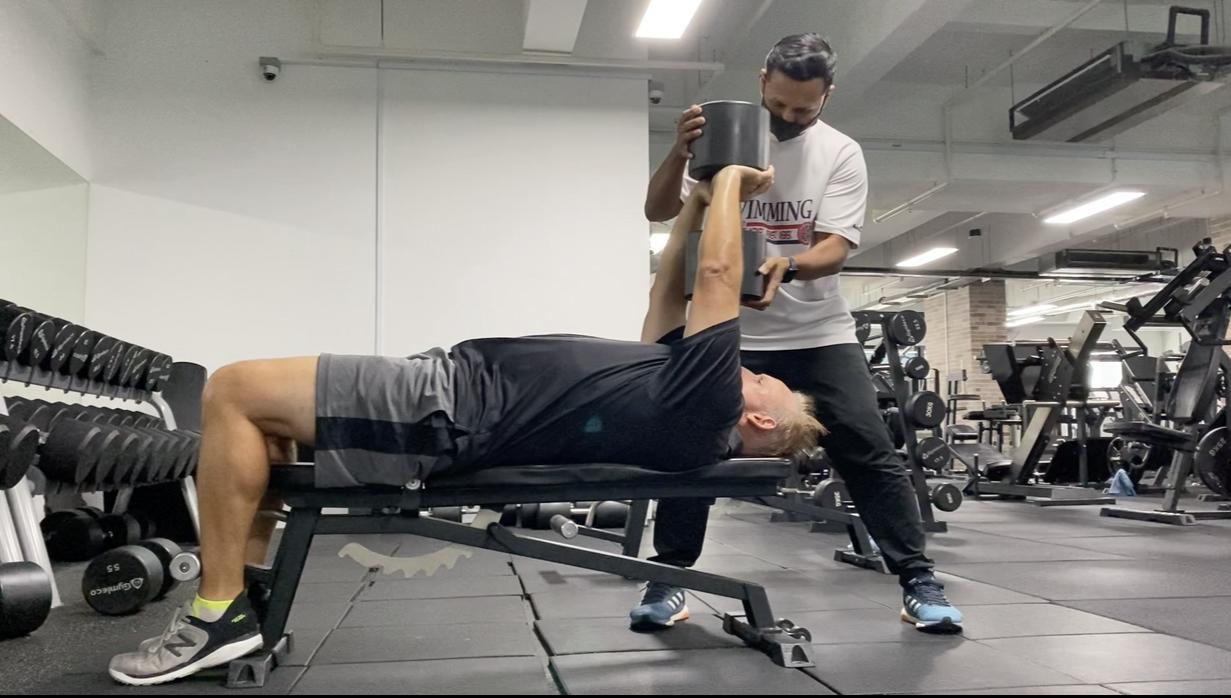
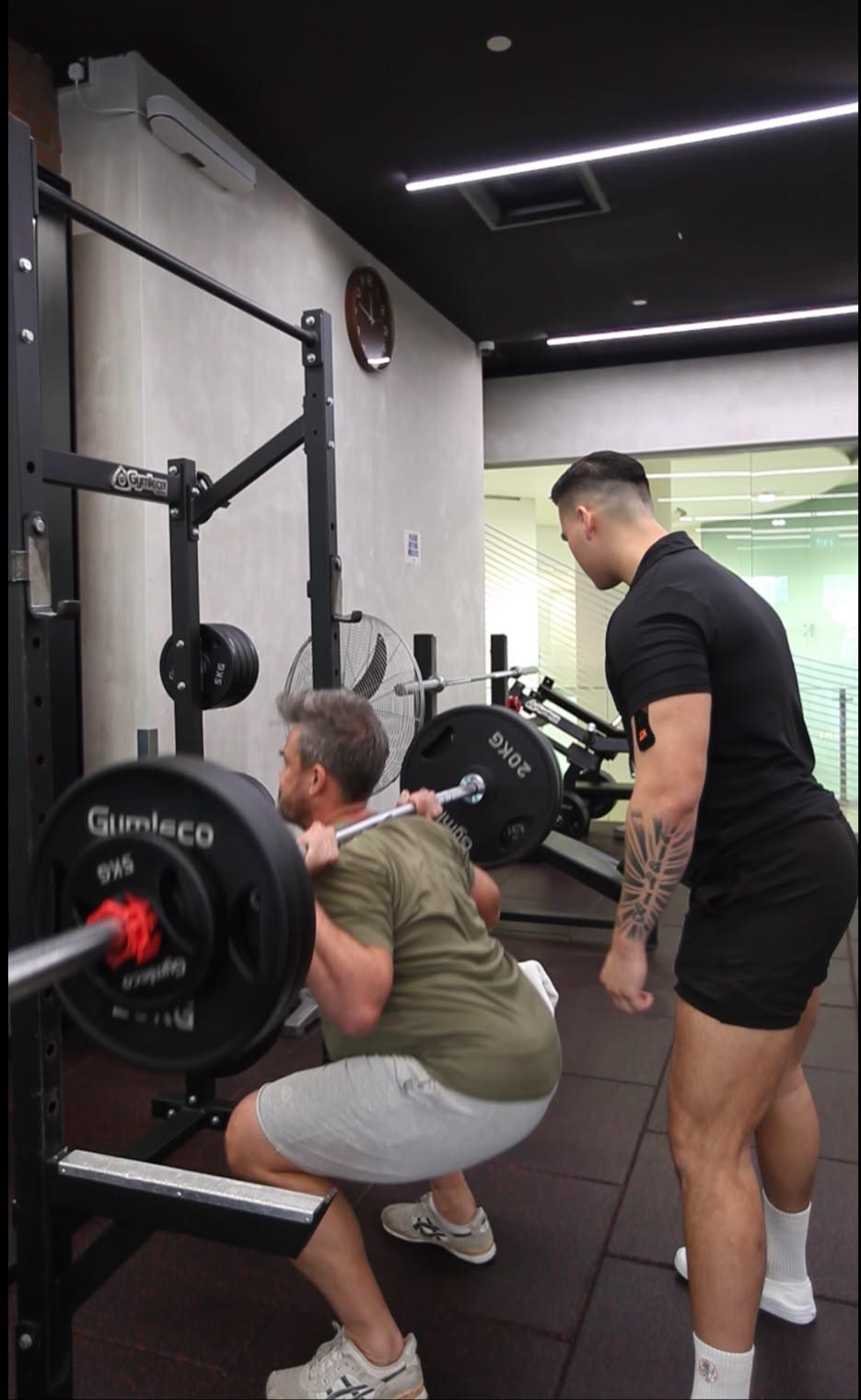
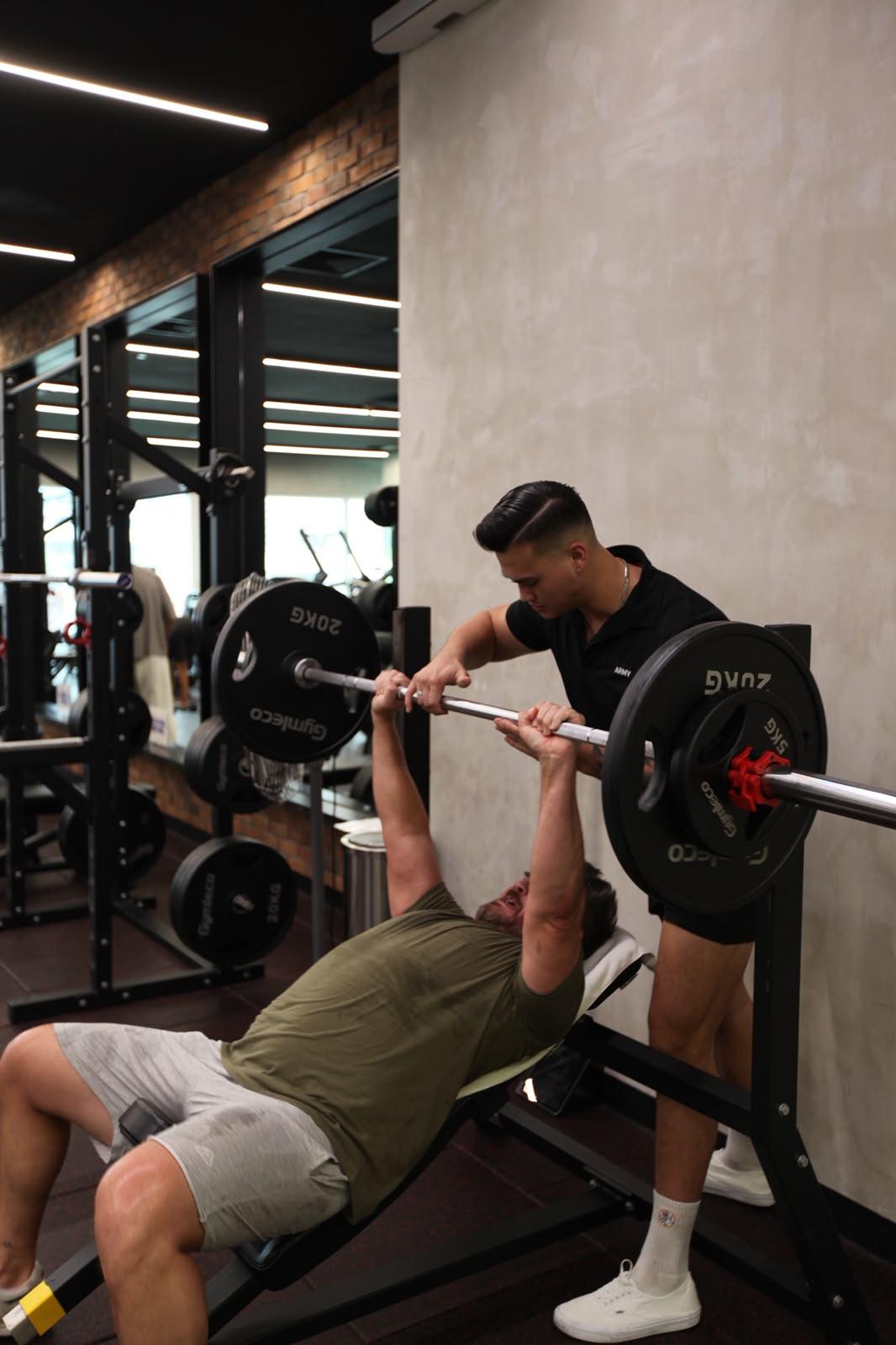
Real sessions from our coaches' own galleries. Swipe for more.




2.4km training plan questions.
How do I train for a 2.4km run?
Three runs a week for eight weeks: one interval session such as 400m or 800m repeats, one tempo or goal-pace session, and one easy run, with one or two short strength sessions a week. Set your paces from a target time 30 to 60 seconds faster than a week-1 baseline, take a lighter week in week 4, and taper in week 8.
What is the NAPFA 2.4km timing for an A?
On the MOE secondary standards, an A is under 10:21 for a boy aged 17 or 18, under 10:31 at 16 and under 11:31 at 13. For girls aged 16, 17 and 18 it is under 14:01. Your school issues the table for your cohort, so check it against that sheet.
How fast should my 400m repeats be?
About 4% quicker than your goal lap time. For a 12:00 target the goal lap is 2:00, so 400m repeats are about 1:55. For an 11:00 target they are about 1:46, and for 13:00 about 2:05. Recover with 90 seconds of easy jogging or walking, and stop the set if the times fade badly.
Can I improve my 2.4km in 4 weeks?
A little, mostly from pacing and from being less tired than before. Run weeks 2, 3, 7 and 8 of this plan and rehearse your goal lap time. The bigger gains need the full eight weeks or longer, because aerobic fitness takes time to build.
Should I run every day to get a faster 2.4km?
No. Three good runs a week, with rest between the hard ones, beats daily running for most people. Running every day leaves no recovery for the speed sessions, and it is the quickest way to shin or knee pain. Use the other days for strength work, a walk or rest.
Is this plan the same as the IPPT pass plan?
No. This plan trains the 2.4km only, with paces worked out from your target time. The 8-week IPPT pass plan is for NSmen who need 51 points across all three stations and adds daily push-up and sit-up sets. If the run is your only weak station, use this one.

About this guide
Published
Terms used
- IPPT:
- Individual Physical Proficiency Test.
- NAPFA:
- National Physical Fitness Award, the school fitness test run by MOE and Sport Singapore.
- Park connector:
- The network of paths linking Singapore's parks, managed by NParks.
Sources
- IPPT Stations and Scoring System: the 2.4km run is worth 50 of 100 points · NS Portal / MINDEF
- 2.4km Score Table for Servicemen: under-22 points (checked 30 October 2026) · NS Portal / MINDEF
- NAPFA Standards (Secondary): 2.4km run-walk grades for boys and girls (checked 30 October 2026) · Dunman Secondary School (MOE NAPFA standards)
- Finding Your Way Back to Exercise Safely: start slow, then increase intensity and duration (checked 30 October 2026) · HealthHub / Health Promotion Board
- Edgar et al. (2021), Sleep duration and physical performance during a 6-week military training course, J Sleep Res · PubMed
- Edgar et al. (2023), Operation early-bird: altered light exposure in military barracks on sleep and performance, J Sleep Res · PubMed
- Campbell et al. (2024), Changes in law enforcement recruit aerobic fitness using the 2.4-km run and 20-m MSFT, J Strength Cond Res · PubMed
General information, not medical advice.