

Fat loss15 min read · Updated
Why Am I Not Losing Weight?
- Trial 10% off
- No membership
- WhatsApp reply, usually within the hour
The short answer
Most stalls come from eating more than you think, not from a broken metabolism: in a New England Journal of Medicine study, people who could not lose weight on a reported 1,200 kcal a day had normal metabolisms and were under-reporting their food by 47%.
- In Singapore the gap is often in drinks: HPB's SG FoodID database lists a regular kopi at 193 kcal and a Milo dinosaur at 501 kcal.
- The scale also swings with water, salt, carbohydrate and your cycle, so judge a two-to-four-week trend against HPB's ceiling of 0.5 to 1 kg a week, and see a doctor if the stall comes with tiredness, feeling cold or period changes.
Written by the Fit Titans coaching team. Edited by Theon. How we write guides
On this page (12)
- 1. Why am I not losing weight when I am eating less?
- 2. How many calories are in kopi, teh and bubble tea?
- 3. Do weekends undo a week of dieting?
- 4. Why does my weight go up and down every day?
- 5. Am I moving less without noticing?
- 6. Can poor sleep stop fat loss?
- 7. Could I be gaining muscle while losing fat?
- 8. How fast should I be losing weight?
- 9. Is a weight-loss plateau real?
- 10. Which medical causes should I rule out with a doctor?
- 11. How do I run a 2-week weight-loss audit?
- 12. When does a coach help?
Key facts
- Dieters reporting under 1,200 kcal a day under-reported their food by an average of 47% and over-reported their exercise by 51% (Lichtman, NEJM 1992)
- In the OPEN study, 24-hour food recalls under-counted energy intake by 12-14% in men and 16-20% in women, checked against doubly labelled water
- HPB's SG FoodID database lists a regular 250 ml kopi at 193 kcal and a kopi O kosong at 33 kcal
- The HPB-MOH obesity guidelines aim for 5-10% weight loss over six months, at no more than 0.5 to 1 kg a week
Why am I not losing weight when I am eating less?
Because, most of the time, you are eating more than you think. That is not a character flaw. It is how memory works. In a 1992 study in the New England Journal of Medicine, people who said they could not lose weight on under 1,200 kcal a day had their energy use and intake measured directly.
Their metabolism was normal, within 5% of what their body composition predicted. What they had done was under-report their food by an average of 47% and over-report their exercise by 51%.
That group was chosen for "diet resistance", so the gap was large. In ordinary adults it is smaller but still there. The OPEN study checked 484 people's 24-hour food recalls against doubly labelled water, an unbiased biomarker of energy use, and found men under-counted by 12-14% and women by 16-20%.
On an 1,800 kcal day, 15% is 270 kcal. That is close to half the 600 kcal daily cut the NHS suggests for steady weight loss, gone without anyone noticing.
The missing calories are rarely the plate of chicken rice. They are the drinks, the sauces, the second helping at a family dinner and the snacks that never felt like eating. The fix is measurement, not willpower: for one week, log everything, including drinks. The audit at the end of this page sets it out.
How many calories are in kopi, teh and bubble tea?
More than most people count. HealthHub puts a regular kopi at about 4 teaspoons of sugar and a teh at about 5, while kopi O kosong has none, and says asking for siu dai saves about one and a half teaspoons (HealthHub).
For calories, HPB's Singapore Food Insights Database (SG FoodID), which replaced its old food composition database, gives 193 kcal for a 250 ml cup of kopi and 33 kcal for kopi O kosong.
Two kopi a day is 386 kcal. Switch both to kopi O kosong and it is 66 kcal, a saving of 320 kcal a day without changing a single meal. Cup size matters as much as the order: the same kopi iced, in HPB's standard 400 ml cup, is 240 kcal.
Drinks also fail to fill you up. In a crossover trial, 15 people given about 450 kcal a day as soda for four weeks did not eat any less food to make up for it, and their weight went up. When the same calories came as jelly beans, they ate less at meals and their weight did not rise significantly.
Liquid calories land on top of everything else. HPB's guide caps an average man at about 2,200 kcal a day and an average woman at 1,800 (HealthHub), so one Milo dinosaur at 501 kcal is more than a quarter of a woman's day.
| Drink or snack | HPB serving | Energy (kcal) | Sugar (g) |
|---|---|---|---|
| Kopi (condensed and evaporated milk) | 250 ml cup | 193 | 19 |
| Kopi C kosong (evaporated milk, no sugar) | 250 ml cup | 93 | 4 |
| Kopi O kosong (black, no sugar) | 250 ml cup | 33 | 0 |
| Teh (condensed and evaporated milk) | 250 ml cup | 150 | 23 |
| Teh siu dai (less sugar) | 250 ml cup | 98 | 16 |
| Teh O kosong (black, no sugar) | 250 ml cup | 5 | 1 |
| Iced kopi | 400 ml cup | 240 | 24 |
| Iced Milo | 400 ml cup | 288 | 35 |
| Milo dinosaur | 550 ml cup | 501 | 62 |
| Pearl milk tea | 500 ml medium cup | 375 | 37 |
| Fresh sugarcane juice | 550 ml medium cup | 303 | 73 |
| Beer | 330 ml can | 135 | 0 |
| Kaya and butter toast | 1 serving, 94 g | 376 | 18 |
| Curry puff (potato) | 1 piece, 94 g | 299 | 3 |
| Goreng pisang | 1 piece, 100 g | 235 | 16 |
Read the snack rows the same way. A serving of kaya and butter toast at 376 kcal, or a potato curry puff at 299 kcal, is a small meal, not a snack. None of this means banning them. It means counting them, and the hawker eating guide for fat loss shows how to keep the foods you like while trimming the portions.
Do weekends undo a week of dieting?
They can. A year-long trial weighed 48 adults on seven consecutive mornings for hundreds of weeks in total. Before the diet started, they gained weight on weekends, from eating more on Saturdays and moving less on Sundays. Once they were cutting calories, they lost weight on weekdays and stopped losing it on weekends, which the authors said helped explain why weight loss was slower than expected.
A separate study of 4,657 daily weigh-ins found the same weekly rhythm: weight peaks on Sunday and Monday and drifts down through the week, and the pattern of weekday catch-up was strongest in the people who lost or kept their weight steady (Orsama, 2014).
Put Singapore numbers on it. A Saturday with a pearl milk tea in the afternoon (375 kcal), three cans of beer with dinner (405 kcal) and a Milo dinosaur at supper (501 kcal) adds 1,281 kcal from drinks alone, on SG FoodID's figures. If your weekday deficit is the NHS's 600 kcal, five weekdays bank 3,000 kcal. Two days like that Saturday spend most of it.
For alcohol, HPB's guide for people who drink is no more than two drinks for men and one for women in a session, and it adds that no amount is free of health effects (HealthHub).



Why does my weight go up and down every day?
Because the scale weighs everything: water, food in your gut, stored carbohydrate and fat. HealthHub lists water retention, constipation and recent exercise as everyday reasons for the number to move, and suggests weighing once a week rather than after every meal (HealthHub). The main swings:
- 01CarbohydrateMuscle stores carbohydrate as glycogen, with at least 3 g of water for every gram, a ratio confirmed in muscle biopsies (Fernandez-Elias, 2015). A rice-heavy weekend refills those stores and the water comes with it. The reverse is why the first week of a low-carb diet looks so dramatic.
- 02SaltThe effect is real, but less simple than people say. In a metabolic-ward study of nine men, moving from a low-salt to an ordinary salt intake added about 2 litres of fluid outside the cells, while a further jump to very high salt did not add more. The swing is biggest going from little salt to a normal amount, which is what a careful week followed by a hawker dinner looks like. Singapore residents average about 3,620 mg of sodium a day, almost twice the 2,000 mg limit (HealthHub).
- 03Your cycleIn a year of daily diaries from 62 women, self-reported fluid retention was lowest in the middle of the follicular phase and peaked on the first day of the period (White, 2011). Compare your weight with the same point in last month's cycle, not with last week.
- 04Gut contentsConstipation, a late dinner or a big lunch all sit on the scale until they pass.
None of this is fat. Weigh at the same time, under the same conditions, and judge the trend over two to four weeks. One heavy morning tells you nothing.
Am I moving less without noticing?
Quite possibly, if you have been dieting for a while. NEAT, short for non-exercise activity thermogenesis, is the energy you spend on everything that is not sleeping, eating or exercise: walking to the MRT, standing, fidgeting, chores.
It varies a lot between people. When 16 volunteers were overfed by 1,000 kcal a day for eight weeks, two-thirds of the extra energy they burned came from NEAT, and differences in NEAT explained a tenfold difference in how much fat they stored (Levine, Science 1999).
It runs the other way too. A review by the same researcher notes that NEAT rises with overfeeding and falls with underfeeding.
In the CALERIE trial, overweight adults on a 25% calorie cut burned about 454 kcal a day less after three months, and physical activity in the calorie-cutting groups fell without anyone asking them to move less. The group that cut calories by half as much and made up the rest with structured exercise showed no such drop (Redman, 2009).
So count steps, not just workouts. Your phone already does. If your daily average has fallen since you started dieting, bring it back up before you cut more food. Ways to do that from an HDB flat or around the estate are in losing weight without a gym.
Can poor sleep stop fat loss?
It can change what you lose. In a randomised crossover study, 10 overweight adults ate the same reduced-calorie diet for two weeks, twice: once with 8.5 hours in bed each night and once with 5.5. On short sleep, the fat they lost fell from 1.4 kg to 0.6 kg, a 55% drop, and the loss of fat-free mass rose from 1.5 kg to 2.4 kg. They were hungrier, too.
It was a small, short study, and the authors say so. But it fits HPB's advice that adults aim for about 7 hours, and its note that with enough sleep we are less likely to overeat and crave junk (HealthHub). If you sleep five or six hours on weeknights and catch up at weekends, treat sleep as part of the diet.

Could I be gaining muscle while losing fat?
If you are new to strength training, yes, and the scale cannot tell the difference. In the STRRIDE AT/RT trial, 119 sedentary, overweight adults trained for eight months.
The aerobic and combined groups lost more weight and fat than the weights-only group, while the weights-only and combined groups gained more lean mass than the aerobic group. Someone in the combined group was losing fat and adding muscle at once, so their scale moved less than their fat did.
HealthHub puts it plainly: weighing scales are not an accurate representation of how much body fat you have (HealthHub). Measure your waist as well. Use a tape close to the skin, midway between your lowest rib and the top of your hip bone, and read it as you breathe out (HealthHub).
A waist going down while the scale sits still is fat loss. The body recomposition guide covers who this happens to and how to plan for it, and how to lose belly fat explains the waist cut-offs.
How fast should I be losing weight?
Slower than most people expect. Singapore's HPB-MOH clinical practice guidelines on obesity aim for an initial 5-10% weight loss over six months, at a rate that should preferably not exceed 0.5 to 1 kg a week (HPB-MOH, 2016). HealthHub gives the same ceiling (HealthHub), and the NHS says to aim for 0.5 to 1 kg a week.
Notice that 0.5 to 1 kg is a ceiling, not a target. For someone at 80 kg, 5-10% over six months is 4 to 8 kg, which averages roughly 0.15 to 0.3 kg a week. Losing 0.3 kg in a week is a good week. And because water, salt and your cycle move the scale as well, a single week rarely shows it clearly.
Is a weight-loss plateau real?
Yes, and it is expected. Across 80 weight-loss trials with at least a year of follow-up, people on reduced-calorie diets lost an average of 5 to 8.5 kg (5-9%) in the first six months, and then their weight levelled off at about six months (Franz, 2007).
Two things drive it. First, as you lose weight you burn less: in CALERIE, total daily energy use on a 25% calorie cut fell by 454 kcal at three months. Second, part of that fall is more than body size explains. Adjusted for body composition, energy use in the calorie-restriction groups was still 431 kcal lower at three months and 240 kcal lower at six (Redman, 2009).
Researchers call this adaptive thermogenesis, and a review in the International Journal of Obesity describes the body as actively defending its fat stores after weight loss. Adaptation slows loss. It did not stop it. The calorie-restriction group still lost about 10% of their body weight in six months.
What to do: re-run the audit below first, because under-counting creeps back. Then check steps and sleep. If all three are honest and the trend has been flat for four weeks, either trim a little more or spend a few weeks eating at maintenance while you build strength, then push again. A flat scale with a shrinking waist is not a plateau.
Which medical causes should I rule out with a doctor?
Most stalls are not medical, but some are, and those need a doctor, not a stricter diet. This page is general information, not a diagnosis. See your GP or polyclinic doctor if any of these apply:
- 01Signs of an underactive thyroidFeeling extremely tired, feeling cold more than usual, putting on weight, constipation, low mood, dry skin or hair, or irregular or heavy periods. The NHS notes these come on slowly and can have other causes, so they are worth checking with a doctor (NHS).
- 02Signs of PCOSIrregular periods or long gaps between them, excess hair growth or hair loss, and weight gain or difficulty losing weight. The NHS now calls the condition PMOS, polyendocrine metabolic ovarian syndrome (NHS). Training with it is covered in exercise with PCOS.
- 03A medicine started around the time the stall beganThe NHS names some steroids, antidepressants and beta blockers as medicines that can make weight harder to manage, and Cushing's syndrome as a condition that causes weight gain (NHS). Never stop a prescribed medicine on your own. Ask the doctor who prescribed it.
- 04Your 40s and 50sWeight gain around perimenopause has its own causes and its own guide: perimenopause weight gain and training.
- 05A swollen tummy rather than a soft oneThe NHS treats a swelling or lump in the tummy, or bloating with stomach ache, as a reason for an urgent appointment (NHS). That is not a diet problem.
Bring your two-week log to the appointment. A doctor can do far more with a written record of what you ate and how much you moved than with a general sense that you eat very little.
How do I run a 2-week weight-loss audit?
Change nothing in the first week except what you record. The point is to see what is actually happening before you try to fix it.
- Weigh in the same conditions. Same time each morning, after the toilet, before food or drink. Weigh daily and compare weekly averages, or weigh once a week as HealthHub suggests. Never compare single days.
- Log everything you eat and drink. Every kopi, sauce, bite and weekend meal. Look items up in HPB's SG FoodID database or on the packet's nutrition label.
- Total your drinks on their own line. Seeing what the kopi, bubble tea and beer cost in a week is often enough to change them.
- Mark the weekend. Compare your Saturday and Sunday totals with your weekday average.
- Record daily steps. If your average is lower than it was before you started dieting, that is NEAT dropping.
- Record sleep. Flag every night under 7 hours.
- Measure your waist on day 1 and day 14, midway between your lowest rib and the top of your hip bone, breathing out.
- Take photos on day 1 and day 14: same spot, same light, same clothes.
- Note your cycle day and any medicines, plus any new tiredness, feeling cold or change in your periods.
Then read the log in order. If intake is higher than you planned, fix food first, starting with drinks. If steps or sleep have fallen, fix those before you cut more.
If your waist is shrinking, keep going whatever the scale says. And if the log is honest, the habits are in place and nothing has moved in four weeks, or you have any of the symptoms above, take the log to a doctor.
When does a coach help?
When the audit says the plan is right but it is not happening: the strength sessions get skipped, the steps fade by week three, or you are not sure the training is the right kind. Fit Titans matches you with a verified freelance coach who trains you at home, in your condo gym, at a park or at a Gym Pod, with no membership.
Each coach sets their own rate, and most charge S$80-S$130 per 60-minute 1-to-1 session, the median is S$90 and the full range is S$50-S$210 (measured October 2026). The first session is a paid trial at 10% off, and sessions bought after it do not expire. A coach is not a doctor or a dietitian, so medical causes stay with your GP. How the training side works is on weight-loss coaching.
Our coaches at work
Real sessions from our coaches' own galleries. Swipe for more.

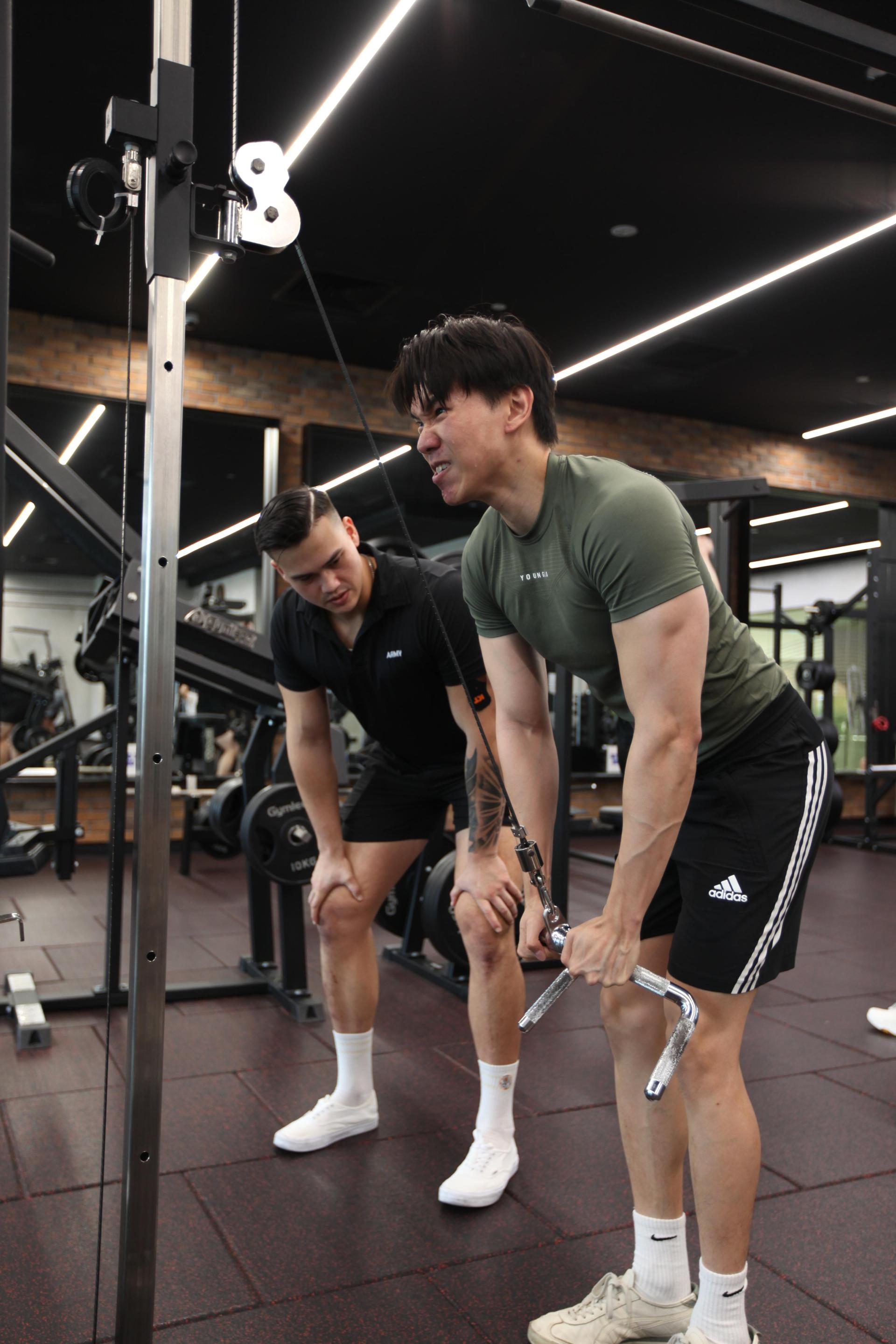





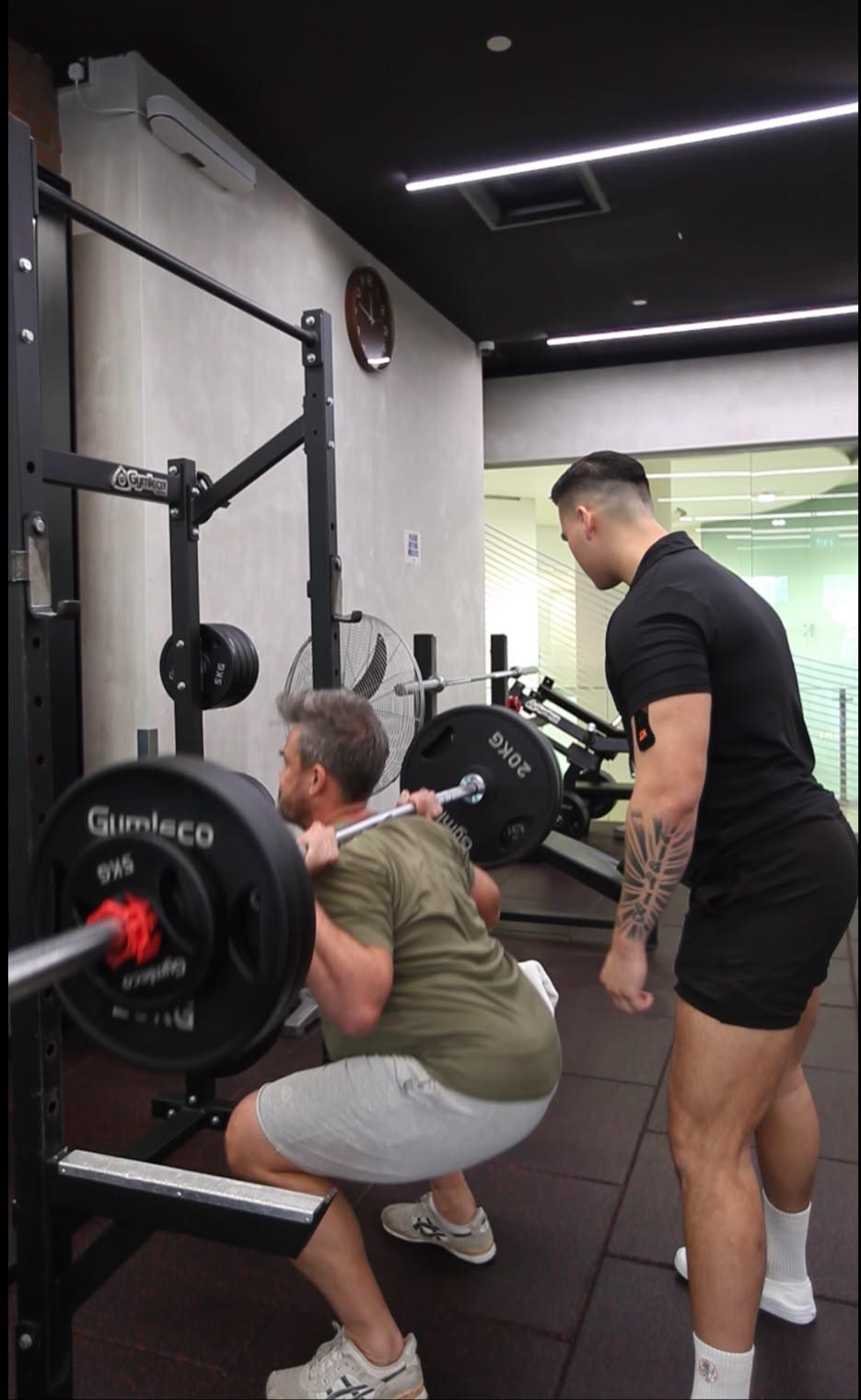


Questions.
Why am I gaining weight even though I work out?
Two common reasons are water stored alongside carbohydrate, at least 3 g for every gram of glycogen, and, for beginners lifting weights, new muscle. In the STRRIDE AT/RT trial, the weights-only group gained lean mass and lost less weight than the aerobic group. The third is eating back the calories you burned, so check your food log and your waist before changing the plan.
Is starvation mode stopping my weight loss?
Not in the way the phrase suggests. Metabolic adaptation is real: in the CALERIE trial, energy use adjusted for body composition fell by 240 to 431 kcal a day on a 25% calorie cut. But that group still lost about 10% of their body weight in six months. Adaptation slows loss, and in the 1992 NEJM study the people who said they could not lose weight had normal metabolisms.
Should I weigh myself every day?
Either daily or weekly works if you read it properly. HealthHub suggests once a week, at the same time and in the same conditions. If you prefer daily, compare weekly averages, because studies of daily weigh-ins find weight runs higher on Sunday and Monday and lower later in the week.
How many calories should I cut to lose weight?
The NHS suggests reducing your intake by around 600 kcal a day, and Singapore's HPB-MOH guidelines say loss should preferably not exceed 0.5 to 1 kg a week. Start with liquid calories: switching two daily kopi to kopi O kosong saves about 320 kcal on HPB's figures.
Can thyroid problems or PCOS stop weight loss?
They can make it harder. The NHS lists weight gain among the symptoms of an underactive thyroid, and weight gain or difficulty losing weight among the main symptoms of PCOS, which it now calls PMOS. If you have symptoms of either, see a doctor before you push the diet harder.
How long does a weight-loss plateau last?
There is no fixed length. In trials, average weight loss levels off at about six months. Before calling it a plateau, give it four weeks of honest logging, because under-counted food, fewer steps and short sleep look exactly like one.

About this guide
Published
Terms used
- HPB:
- Health Promotion Board, the government agency behind Singapore's public health guidance, including physical activity recommendations and the national effort on diabetes.
Sources
- Discrepancy between self-reported and actual caloric intake and exercise in obese subjects, NEJM 1992 (read 26 Oct 2026) · PubMed / New England Journal of Medicine
- Using intake biomarkers to evaluate the extent of dietary misreporting: the OPEN study, 2003 (read 26 Oct 2026) · PubMed / American Journal of Epidemiology
- Reduce sugar content in drinks: say siu dai instead (read 26 Oct 2026) · HealthHub / Health Promotion Board
- Singapore Food Insights Database (SG FoodID): kopi, teh, Milo, bubble tea, sugarcane juice, beer, kaya toast, curry puff, goreng pisang entries (read 26 Oct 2026) · Health Promotion Board
- About the Singapore Food Insights Database (read 26 Oct 2026) · Health Promotion Board
- Liquid versus solid carbohydrate: effects on food intake and body weight, 2000 (read 26 Oct 2026) · PubMed / International Journal of Obesity
- How to order healthier drinks: 2,200 and 1,800 Calories a day (read 26 Oct 2026) · HealthHub / Health Promotion Board
- Reduce your salt and sugar intake: 3,620 mg sodium a day (read 26 Oct 2026) · HealthHub
- Influence of weekend lifestyle patterns on body weight, 2008 (read 26 Oct 2026) · PubMed / Obesity
- Weight rhythms: weight increases during weekends and decreases during weekdays, 2014 (read 26 Oct 2026) · PubMed / Obesity Facts
- Responsible drinking: know your alcohol limit (read 26 Oct 2026) · HealthHub / Health Promotion Board
- Why can't I manage my weight? (read 26 Oct 2026) · HealthHub / Health Promotion Board
- Relationship between muscle water and glycogen recovery after prolonged exercise in the heat, 2015 (read 26 Oct 2026) · PubMed / European Journal of Applied Physiology
- Increasing sodium intake from a previous low or high intake affects water balance differently, 2009 (read 26 Oct 2026) · PubMed / British Journal of Nutrition
- Fluid retention over the menstrual cycle: 1-year data from the Prospective Ovulation Cohort, 2011 (read 26 Oct 2026) · PubMed / Obstetrics and Gynecology International
- Role of nonexercise activity thermogenesis in resistance to fat gain in humans, 1999 (read 26 Oct 2026) · PubMed / Science
- Non-exercise activity thermogenesis (NEAT), 2002 (read 26 Oct 2026) · PubMed / Best Practice and Research Clinical Endocrinology and Metabolism
- Metabolic and behavioral compensations in response to caloric restriction, CALERIE 2009 (read 26 Oct 2026) · PubMed / PLoS One
- Insufficient sleep undermines dietary efforts to reduce adiposity, 2010 (read 26 Oct 2026) · PubMed / Annals of Internal Medicine
- The importance of sleep: about 7 hours for adults (read 26 Oct 2026) · HealthHub / Health Promotion Board
- Effects of aerobic and/or resistance training on body mass and fat mass in overweight or obese adults, STRRIDE AT/RT 2012 (read 26 Oct 2026) · PubMed / Journal of Applied Physiology
- Do you know all there is to know about your belly fat? How to measure your waist (read 26 Oct 2026) · HealthHub / Health Promotion Board
- Health Promotion Board-Ministry of Health Clinical Practice Guidelines: Obesity, Singapore Medical Journal 2016 (read 26 Oct 2026) · Health Promotion Board and Ministry of Health, via PubMed Central
- How to manage weight the healthy way (read 26 Oct 2026) · HealthHub / Health Promotion Board
- Overweight and obesity in adults (read 26 Oct 2026) · NHS
- Calories and weight loss: reduce intake by around 600 calories a day (read 26 Oct 2026) · NHS Better Health
- Weight-loss outcomes: a systematic review and meta-analysis of weight-loss clinical trials with a minimum 1-year follow-up, 2007 (read 26 Oct 2026) · PubMed / Journal of the American Dietetic Association
- Adaptive thermogenesis in humans, 2010 (read 26 Oct 2026) · PubMed / International Journal of Obesity
- Underactive thyroid: symptoms (read 26 Oct 2026) · NHS
- Polyendocrine metabolic ovarian syndrome (PMOS), previously PCOS (read 26 Oct 2026) · NHS
- Bloating: when to see a GP (read 26 Oct 2026) · NHS
General information, not medical advice.