
NAPFA13 min read · Updated
NAPFA Test for Primary School
- Trial 10% off
- No membership
- WhatsApp reply, usually within the hour
The short answer
Primary pupils take NAPFA in Primary 4 and Primary 6, on six stations: sit-ups, standing broad jump, sit and reach, inclined pull-ups, a 4 x 10m shuttle run and a 1.6km run-walk.
- Gold needs at least a C on all six and 21 or more points.
- Six C grades make only 18, so a child also needs three spare points, such as three B grades or an A and a B.
- On the 1.6km run-walk, a C at age 12 ends at 10:40 for boys and 12:00 for girls.
Written by the Fit Titans coaching team. Edited by Theon. How we write guides
On this page (8)
- 1. What is in the primary school NAPFA test?
- 2. Which age row is my child graded on?
- 3. What 1.6km time does each NAPFA grade need?
- 4. How does a primary school pupil get NAPFA Gold?
- 5. How do the primary NAPFA standards differ for boys and girls?
- 6. How should a child pace the 1.6km run-walk?
- 7. What can a parent do at home in the six weeks before NAPFA?
- 8. Can a Fit Titans coach help a primary school pupil?
Key facts
- Primary pupils take NAPFA in Primary 4 and Primary 6. The six stations are sit-ups, standing broad jump, sit and reach, inclined pull-ups, the 4 x 10m shuttle run and a 1.6km run-walk
- St Andrew's School (Junior) says all six stations are attempted on the same day, with 2 to 5 minutes of rest allowed between stations. The school sets the order and the date
- A Primary 5 child is tested next in Primary 6. Train to the row for the age your child will be on that test day, which the PE teacher can confirm
- Each station is graded A to E for 5 to 1 points. Below E is an F, which scores nothing and rules out every award
What is in the primary school NAPFA test?
Six stations: sit-ups in one minute, the standing broad jump, sit and reach, inclined pull-ups in 30 seconds, the 4 x 10m shuttle run and a 1.6km run-walk. Princess Elizabeth Primary School's PE site describes its tables as the standard for the P4 and P6 NAPFA test, so most children take it twice in primary school.
St Andrew's School (Junior) states that the five stations and the 1.6km should be attempted on the same day, with 2 to 5 minutes of rest allowed between stations. The order and the date are the school's to set, so the PE teacher or the school calendar is the place to check them.
Every primary pupil does inclined pull-ups, boys and girls alike: the body hangs at an angle under a low bar with the feet on the ground, and the reps are counted for 30 seconds.
Full pull-ups only arrive for boys at 15. The 1.6km is four laps of a 400m track. How the six stations work in general, and how NAPFA differs from IPPT, is in the main NAPFA test guide.
Which age row is my child graded on?
The primary tables are set by age and sex, not by school level. St. Hilda's Primary School groups them as a P4 template covering ages 9 to 11 and a P6 template covering ages 11 to 13, which is why age 11 appears on both. A P4 child is usually on the 9, 10 or 11 row and a P6 child on the 11, 12 or 13 row.
Schools can work out a pupil's age differently, so ask the PE teacher which row your child will be read against before you set a target. Reading the wrong row by one year can move a run target by as much as 40 seconds. For a Primary 5 child, that means planning now for the row they will be on in Primary 6.
The tables on this page are St. Hilda's Primary School's published P4 and P6 NAPFA templates, checked 30 October 2026 (details in Sources), so if your child's school hands out a different sheet, train to that.
What 1.6km time does each NAPFA grade need?
To see your child's 1.6km grades, pick their age in the Gold floor table under the next question, which shows these grades with the C and A bands, or tap See the full 1.6km table below for every age, boys first and then girls.
C is the grade Gold needs at every station. The table's last two columns divide the slowest B and C times into four even laps of a 400m track, rounded down to the second, so four even laps finish inside the band.
See the full 1.6km table
| Pupil, age | A (5) | B (4) | C (3), the Gold floor | D (2) | E (1) | Even lap for a B | Even lap for a C |
|---|---|---|---|---|---|---|---|
| Boy, 9 | under 9:40 | 9:40 to 10:40 | 10:41 to 11:40 | 11:41 to 12:40 | 12:41 to 13:50 | 2:40 | 2:55 |
| Boy, 10 | under 9:30 | 9:30 to 10:30 | 10:31 to 11:40 | 11:41 to 12:40 | 12:41 to 13:40 | 2:37 | 2:55 |
| Boy, 11 | under 8:50 | 8:50 to 10:00 | 10:01 to 11:10 | 11:11 to 12:20 | 12:21 to 13:30 | 2:30 | 2:47 |
| Boy, 12 | under 8:40 | 8:40 to 9:40 | 9:41 to 10:40 | 10:41 to 11:40 | 11:41 to 12:30 | 2:25 | 2:40 |
| Boy, 13 | under 8:10 | 8:10 to 9:10 | 9:11 to 10:10 | 10:11 to 11:00 | 11:01 to 12:00 | 2:17 | 2:32 |
| Girl, 9 | under 10:40 | 10:40 to 11:40 | 11:41 to 12:50 | 12:51 to 13:50 | 13:51 to 15:00 | 2:55 | 3:12 |
| Girl, 10 | under 10:30 | 10:30 to 11:25 | 11:26 to 12:30 | 12:31 to 13:25 | 13:26 to 14:30 | 2:51 | 3:07 |
| Girl, 11 | under 10:20 | 10:20 to 11:10 | 11:11 to 12:10 | 12:11 to 13:00 | 13:01 to 14:00 | 2:47 | 3:02 |
| Girl, 12 | under 10:10 | 10:10 to 11:00 | 11:01 to 12:00 | 12:01 to 12:50 | 12:51 to 13:50 | 2:45 | 3:00 |
| Girl, 13 | under 10:00 | 10:00 to 10:50 | 10:51 to 11:50 | 11:51 to 12:40 | 12:41 to 13:40 | 2:42 | 2:57 |
Two things stand out. The bands get faster almost every year, so a child who ran a C at 10 needs to be quicker to hold it at 12, simply because the table expects more as children grow.
And the gap between a boy's and a girl's A band is a minute at 9 and a minute and a half by 12. Both are reasons to read your own child's row rather than a classmate's.
How does a primary school pupil get NAPFA Gold?
Gold needs two things at once: at least a C on every one of the six stations, and 21 or more points in total, as St. Hilda's awards slide sets out. Silver is at least a D everywhere and 15 points, and Bronze at least an E everywhere and 6 points. One grade below E, an F, rules out every award.
| Award | Lowest grade allowed at any station | Total points needed |
|---|---|---|
| Gold | C | 21 or more |
| Silver | D | 15 or more |
| Bronze | E | 6 or more |
A child with five A grades and one D gets 27 points and Silver, not Gold, because the D breaks the C floor. Fix the weakest station first, then pick up the three spare points where they come cheapest.
Pupil, age Boy, 12
- Sit-ups in 1 min
- 32 to 35
- Standing broad jump (cm)
- 176 to 188
- Sit and reach (cm)
- 32 to 35
- Inclined pull-ups in 30 sec
- 16 to 20
- 4 x 10m shuttle run (sec)
- 11.0 to 11.3
- 1.6km run-walk (min:sec)
- 9:41 to 10:40
1.6km run-walk, every grade
- A (5)
- under 8:40
- B (4)
- 8:40 to 9:40
- C (3), the Gold floor
- 9:41 to 10:40
- D (2)
- 10:41 to 11:40
- E (1)
- 11:41 to 12:30
- Even lap for a B
- 2:25
- Even lap for a C
- 2:40
Grade A, for the spare points
- Sit-ups in 1 min
- over 41
- Standing broad jump (cm)
- over 202
- Sit and reach (cm)
- over 39
- Inclined pull-ups in 30 sec
- over 24
- 4 x 10m shuttle run (sec)
- under 10.4
- 1.6km run-walk (min:sec)
- under 8:40
| Pupil, age | Sit-ups in 1 min | Standing broad jump (cm) | Sit and reach (cm) | Inclined pull-ups in 30 sec | 4 x 10m shuttle run (sec) | 1.6km run-walk (min:sec) |
|---|---|---|---|---|---|---|
| Boy, 9 | 25 to 29 | 149 to 158 | 26 to 29 | 13 to 17 | 11.9 to 12.2 | 10:41 to 11:40 |
| Boy, 10 | 26 to 30 | 156 to 164 | 28 to 31 | 14 to 18 | 11.7 to 12.0 | 10:31 to 11:40 |
| Boy, 11 | 30 to 33 | 166 to 176 | 30 to 33 | 15 to 19 | 11.3 to 11.6 | 10:01 to 11:10 |
| Boy, 12 | 32 to 35 | 176 to 188 | 32 to 35 | 16 to 20 | 11.0 to 11.3 | 9:41 to 10:40 |
| Boy, 13 | 34 to 37 | 189 to 201 | 34 to 37 | 17 to 21 | 10.8 to 11.1 | 9:11 to 10:10 |
| Girl, 9 | 18 to 21 | 139 to 147 | 28 to 30 | 9 to 11 | 12.4 to 12.8 | 11:41 to 12:50 |
| Girl, 10 | 19 to 22 | 143 to 151 | 30 to 32 | 9 to 11 | 12.3 to 12.7 | 11:26 to 12:30 |
| Girl, 11 | 20 to 23 | 147 to 155 | 32 to 34 | 10 to 12 | 12.2 to 12.5 | 11:11 to 12:10 |
| Girl, 12 | 21 to 24 | 150 to 158 | 34 to 36 | 10 to 12 | 12.0 to 12.3 | 11:01 to 12:00 |
| Girl, 13 | 22 to 25 | 153 to 161 | 36 to 38 | 10 to 12 | 11.8 to 12.2 | 10:51 to 11:50 |
For the spare points, the table below gives the A band at all six stations. A child near the top of a C band on two or three stations is often closer to a B there than a parent expects, and a B on three stations is the whole difference between Silver and Gold.
See the full Grade A table
| Pupil, age | Sit-ups in 1 min | Standing broad jump (cm) | Sit and reach (cm) | Inclined pull-ups in 30 sec | 4 x 10m shuttle run (sec) | 1.6km run-walk (min:sec) |
|---|---|---|---|---|---|---|
| Boy, 9 | over 35 | over 168 | over 33 | over 21 | under 11.3 | under 9:40 |
| Boy, 10 | over 36 | over 174 | over 35 | over 22 | under 11.1 | under 9:30 |
| Boy, 11 | over 39 | over 188 | over 37 | over 23 | under 10.7 | under 8:50 |
| Boy, 12 | over 41 | over 202 | over 39 | over 24 | under 10.4 | under 8:40 |
| Boy, 13 | over 42 | over 214 | over 41 | over 25 | under 10.3 | under 8:10 |
| Girl, 9 | over 26 | over 158 | over 33 | over 14 | under 11.8 | under 10:40 |
| Girl, 10 | over 27 | over 161 | over 35 | over 14 | under 11.7 | under 10:30 |
| Girl, 11 | over 28 | over 164 | over 37 | over 15 | under 11.6 | under 10:20 |
| Girl, 12 | over 29 | over 167 | over 39 | over 15 | under 11.5 | under 10:10 |
| Girl, 13 | over 30 | over 170 | over 41 | over 16 | under 11.3 | under 10:00 |
How do the primary NAPFA standards differ for boys and girls?
Every station is banded separately for boys and girls, and the gap widens with age, as the A table above shows. The bands sit closest on sit and reach, the one station where a boy and a girl of the same age share the same A at every age, from over 33cm at 9 to over 41cm at 13.
There the girls' C band even starts a little higher than the boys'. It needs no equipment and a few minutes a day, which makes it a good place for any child to look for a spare point.
How should a child pace the 1.6km run-walk?
The usual mistake is a first lap run far too fast, then a long walk in the third. Even laps are faster overall and feel easier. The 1.6km is four laps of a 400m track, so divide the time you want by four.
A boy of 12 holding a C needs 10:40 or faster, which is four laps of 2:40. The even lap for a B or a C at every age is in the last two columns of the 1.6km table above.
- 01Practise the lap, not the distanceOn a track, call out the time at the end of each lap so the child learns what the target pace feels like.
- 02Walking is part of the test's nameIt is a run-walk. A child who cannot yet run all four laps can still make a C by running steadily and walking short, planned stretches, rather than sprinting and stopping.
- 03Off a trackA park connector with distance markers, or a loop measured once with a phone app, works for practice. The test-day surface may differ, so do one practice on a track if you can.
- 04The last lap is the one to pushIf there is anything left after three even laps, that is when to use it.
What can a parent do at home in the six weeks before NAPFA?
Three short sessions a week of 20 to 30 minutes, kept playful, done on non-consecutive days. The plan below needs a playground or fitness-corner bar at chest height for the inclined pull-ups, a floor mat, a tape measure and somewhere to run. Swap a session for a game of catching or a swim whenever the child needs a break. Consistency over six weeks matters more than any single session.
| Week | Run-walk | Stations | Check |
|---|---|---|---|
| 1 | One relaxed 1.6km, walking as needed, timed but not pushed | Try every station once. Write each result next to its grade on your child's row | Mark the weakest station. That one comes first |
| 2 | Run 1 minute, walk 1 minute, eight times | Inclined pull-ups: 3 sets of 5 slow reps. Sit and reach: a 5-minute stretch most evenings | Time one 400m lap and compare it with the even lap for a C on your child's row |
| 3 | Run 2 minutes, walk 1 minute, six times | Shuttle run: practise the turn, 6 runs with full rest. Broad jump: swing the arms, 3 sets of 3 jumps for distance | Retest the weakest station |
| 4 | Two laps at the even lap time from the table, rest 3 minutes, repeat | Sit-ups: 3 sets of 20 seconds at a steady count. Inclined pull-ups: 3 sets of 6 to 8 | Retest sit-ups and inclined pull-ups against the C band on your child's row |
| 5 | A timed 1.6km at even pace, aiming for the target lap times | All six stations in test order with 2 to 5 minutes of rest | Total the points. Is it 21 with no grade below C? |
| 6 | One easy run early in the week, then rest | Light practice of technique only, two days off before the test | Sleep, breakfast, PE kit and the running shoes your child trained in, never new ones |
Each station has a full technique page, written for secondary students but with the same moves a child uses: the shuttle run turn, the broad jump arm swing and landing, a sit and reach stretching routine and inclined pull-up and sit-up progressions. Use the primary numbers on this page as the targets.
Keep it in proportion. The Health Promotion Board's guideline for ages 7 to 18 is 60 minutes or more of moderate to vigorous activity every day, with muscle and bone strengthening at least three times a week. A child who already plays sport, swims or runs around at recess every day is doing most of the preparation already. The sessions above add the station practice that play does not cover.
Can a Fit Titans coach help a primary school pupil?
For a P6 pupil who has turned 12, yes. Our coaches train children from about 12 years old, with a parent's consent and a parent or another adult at home for every session. That age floor is our own policy. For younger children, play and the parent-led plan above do the job better than a paid coach.
For a 12-year-old, the coach to ask for is Rita, whose profile lists a Youth Fitness certification, the one youth credential on our roster. She covers the Woodlands area (Admiralty) at S$90 a session. If you live elsewhere, ask anyway, and we check which coach will travel to you before you book.
A coach tests all six stations in the first session, reads them against your child's row, and spends the time where the Gold points are, at home, in your condo gym or at a park near you.
Rates start from S$50 a session, each coach publishes their own on our pricing page, and the first session is a paid trial at 10% off. Two siblings or classmates can share a session at the buddy rate. For older children, see personal training for teens and our IPPT and NAPFA coaching.
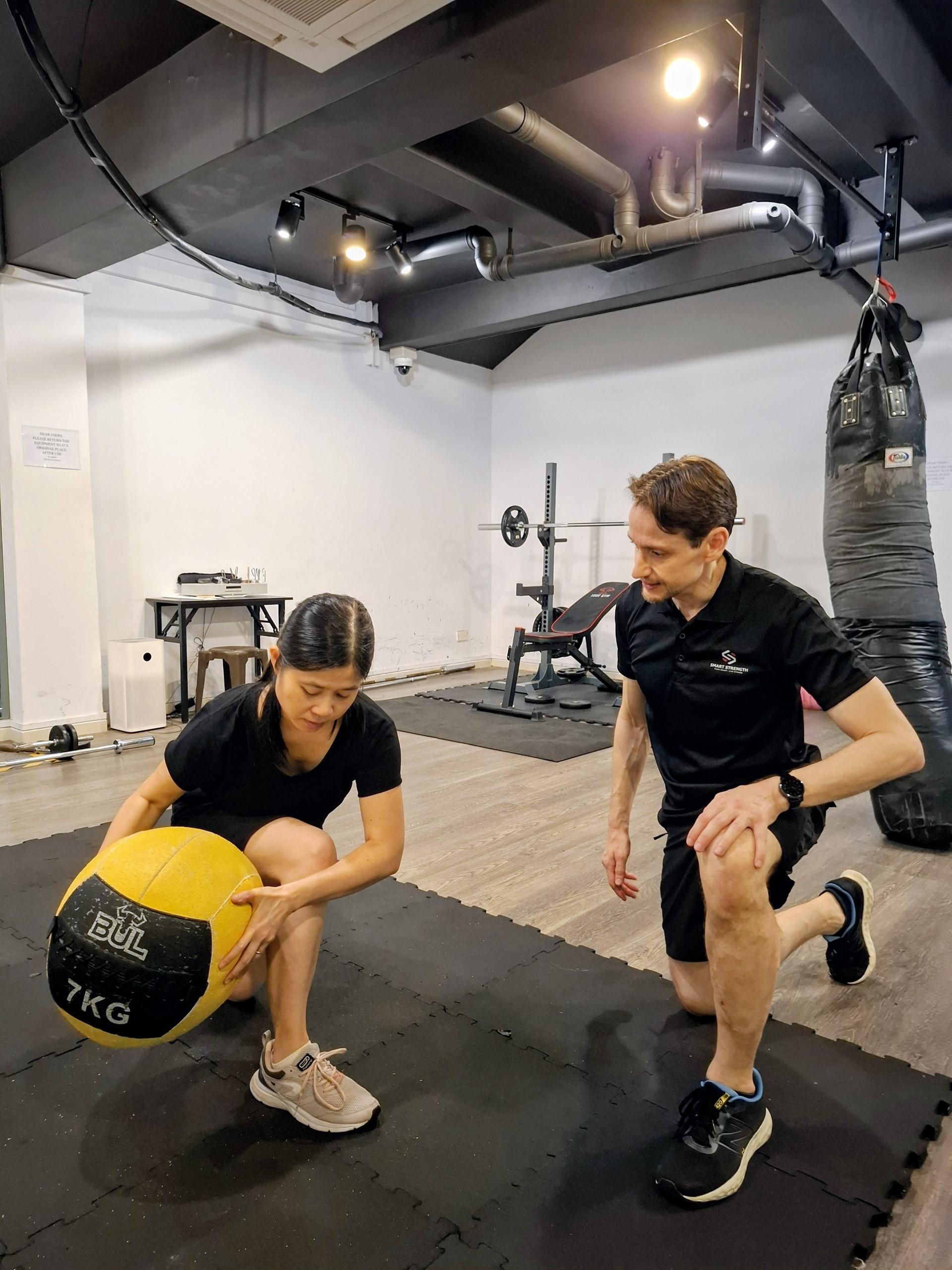
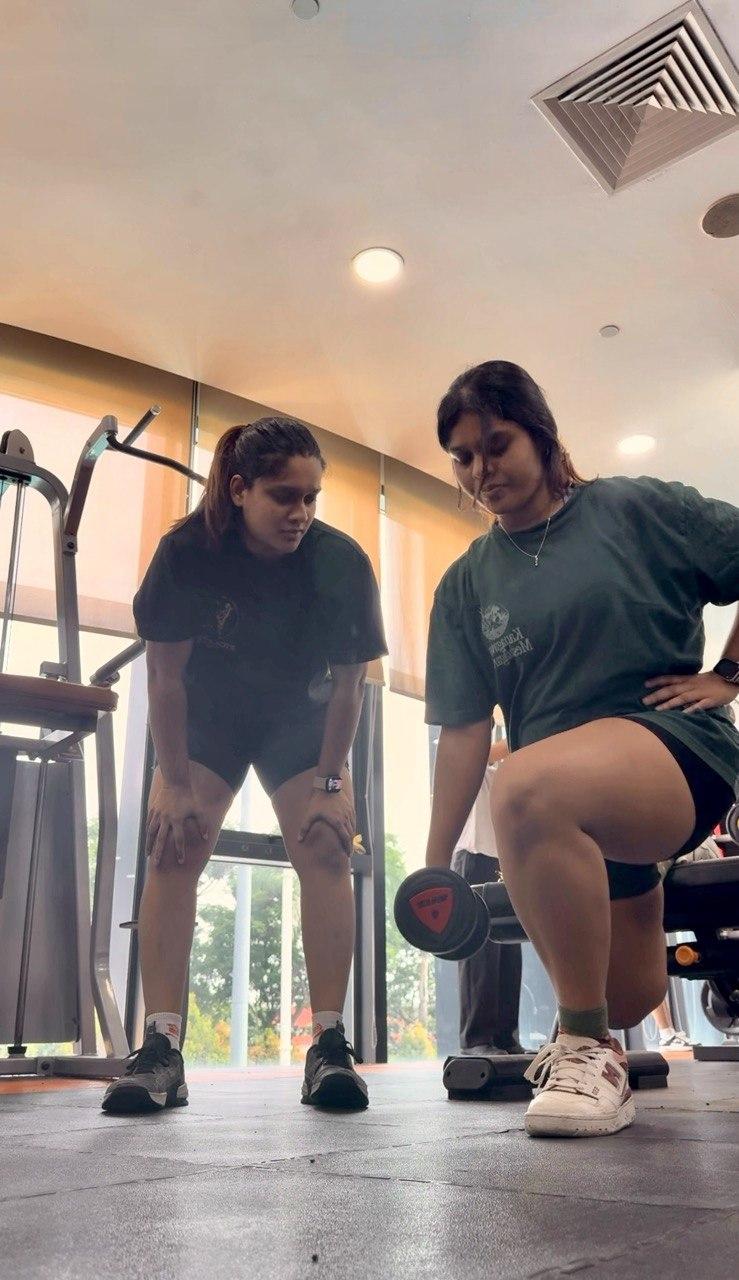
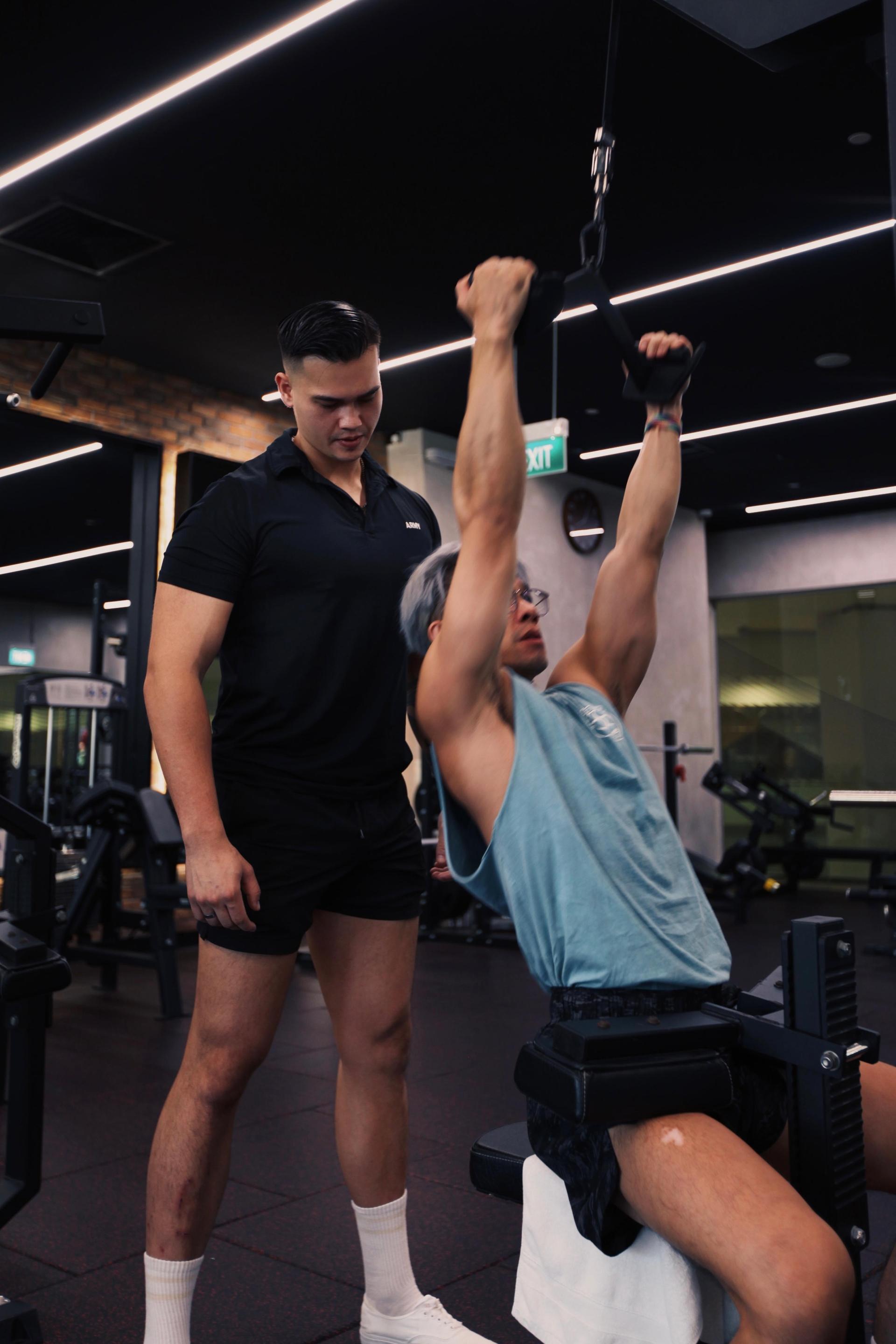
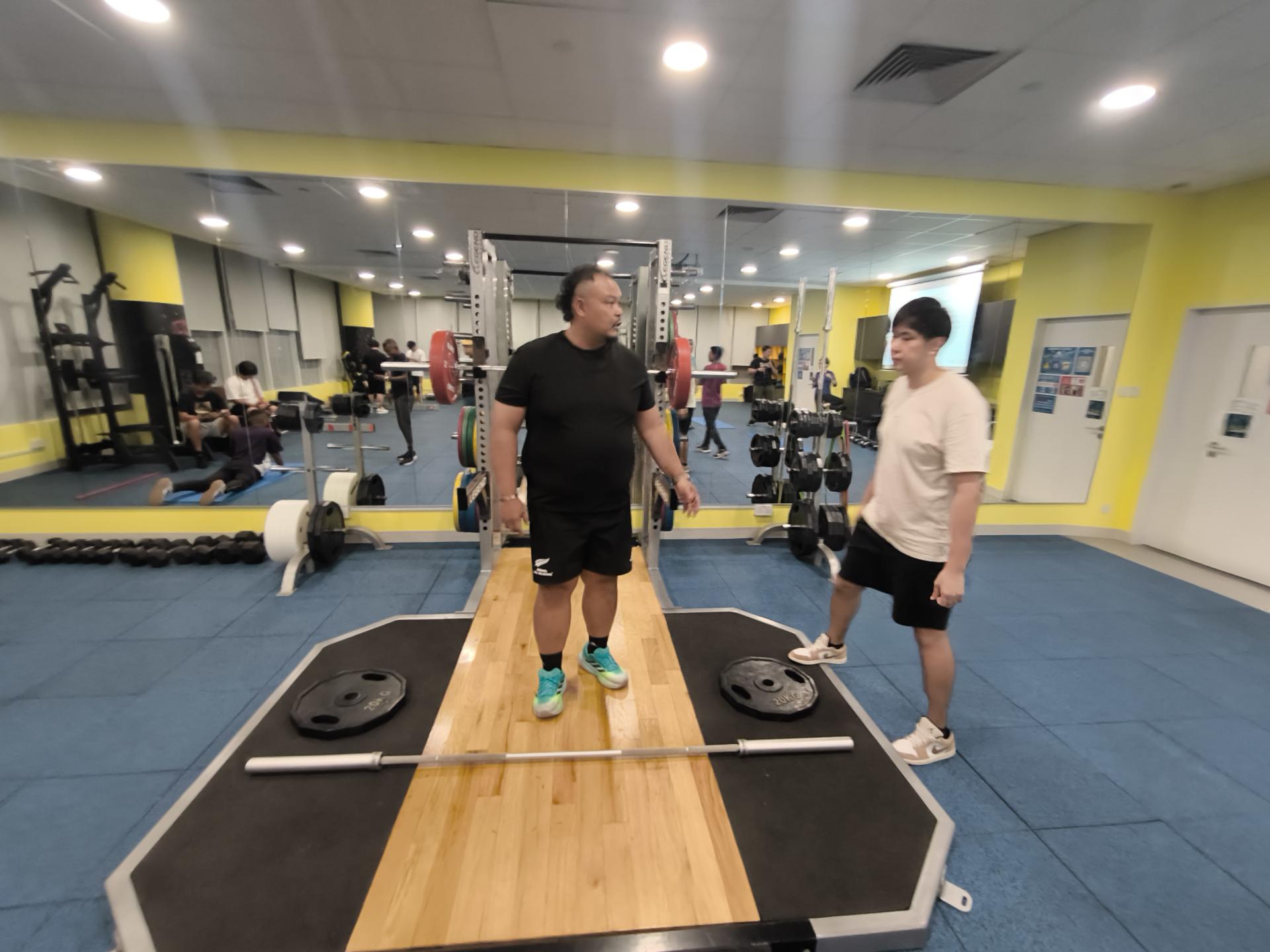
Our coaches at work
Real sessions from our coaches' own galleries. Swipe for more.
Primary NAPFA questions.
What do you need for NAPFA Gold in primary school?
At least a C grade on all six stations and 21 or more points in total. Each A is worth 5 points down to 1 for an E, so six C grades make 18 points and a child also needs three spare points, such as three B grades or an A and a B. One grade below E rules out every award.
What is the NAPFA 1.6km timing for primary school?
It depends on age and sex. On St. Hilda's Primary School's tables, checked 30 October 2026, a C at age 10 is 10:31 to 11:40 for boys and 11:26 to 12:30 for girls, and an A is under 9:30 and under 10:30. At 12 a C is 9:41 to 10:40 for boys and 11:01 to 12:00 for girls.
Which primary levels take the NAPFA test?
Primary 4 and Primary 6 at most schools. The P4 tables cover ages 9 to 11 and the P6 tables ages 11 to 13. The school sets the date and the station order, and the PE teacher can tell you the month, whether the 1.6km is run on the school field, a nearby stadium or a park, and which age row your child is graded on.
What if my child is unwell or injured on NAPFA test day?
Tell the form teacher or PE teacher before the test, with a medical certificate if your doctor writes one. How a missed station is made up is for the school to decide, so ask. A child should not run a timed 1.6km with a fever, a fresh injury or pain that changes how they walk.
My child has asthma or another condition. Should they still train for NAPFA?
Ask your child's doctor whether they can train and run the 1.6km at full effort, follow what the doctor says about medication, and tell the PE teacher before the test. Stop any practice session for chest pain, dizziness, wheezing that does not settle with rest, or breathlessness far beyond what the effort explains, and seek medical advice.
Is it safe for a child to train for the 1.6km in the afternoon heat?
Early morning or after about 6pm is better for the run practice. Afternoon heat makes the same pace feel much harder, so the lap times stop meaning anything and the child learns to dread the run. Bring water, take shade breaks, and stop if your child feels dizzy, sick or unusually tired.
What changes in NAPFA after Primary 6?
The run. In secondary school NAPFA uses a 2.4km run-walk, which is six laps instead of four. The other five stations carry on with the same bands at ages 12 and 13, then get harder each year, and boys move to full pull-ups at 15. The NAPFA test guide covers the secondary years.
Do primary school boys do full pull-ups in NAPFA?
No. Every primary pupil does inclined pull-ups in 30 seconds, under a low bar with the feet on the ground. Boys move to full pull-ups at 15, in secondary school. At 12, an A in inclined pull-ups is over 24 for boys and over 15 for girls.
How long should a primary pupil train for NAPFA?
Six weeks of three short sessions a week is a sensible block. The stations a child has never practised, such as sit and reach, the shuttle run turn and the broad jump arm swing, usually move first because the gain is technique. The 1.6km and inclined pull-ups take longer, so start those first.
Does a P4 child need a personal trainer for NAPFA?
Usually not, and our coaches only take children from about 12 years old. A parent can run the six-week plan on this page at a playground and a park. Daily play, PE and sport supply most of the fitness the test measures. A coach becomes useful for a P6 pupil aged 12 chasing Gold.

About this guide
Published
Terms used
- NAPFA:
- National Physical Fitness Award, the school fitness test run by MOE and Sport Singapore.
- Inclined pull-ups:
- The NAPFA upper-body station for girls and younger boys: pull-ups performed on a low bar with heels on the ground, which reduces the load.
- Shuttle run:
- The NAPFA agility station: 4 by 10 metres, picking up and placing a block at each end.
- Standing broad jump:
- The NAPFA power station.
Sources
- NAPFA Standards: P4 and P6 NAPFA training templates for boys and girls, "NAPFA STANDARDS (PRIMARY)" (page updated 15 Aug 2026, checked 30 October 2026). MOE does not post the primary tables on moe.gov.sg, so there is no MOE copy to compare, and schools may hand out their own sheet · St. Hilda's Primary School, an MOE school
- NAPFA Standards (Primary), P4 boys, ages 9 to 11 (table image, checked 30 October 2026) · St. Hilda's Primary School, an MOE school
- NAPFA Standards (Primary), P4 girls, ages 9 to 11 (table image, checked 30 October 2026) · St. Hilda's Primary School, an MOE school
- NAPFA Standards (Primary), P6 boys, ages 11 to 13 (table image, checked 30 October 2026) · St. Hilda's Primary School, an MOE school
- NAPFA Standards (Primary), P6 girls, ages 11 to 13 (table image, checked 30 October 2026) · St. Hilda's Primary School, an MOE school
- NAPFA awards: Gold, Silver and Bronze criteria, grades A to F (checked 30 October 2026) · St. Hilda's Primary School, an MOE school
- NAPFA Standards: six test items, same-day testing, 2 to 5 minutes rest, award requirements (checked 30 October 2026) · St Andrew's School (Junior), an MOE school
- NAPFA: the standard for the P4 and P6 NAPFA test, stations including the 1.6km run/walk (checked 30 October 2026) · Princess Elizabeth Primary School PE department, an MOE school
- NAPFA Standards (Secondary), males and females: every field-station band at ages 12 and 13 matches St. Hilda's primary tables (checked 30 October 2026) · Dunman Secondary School (MOE NAPFA standards)
- 60 minutes of physical activity a day for ages 7 to 18, 31 Dec 2012 (checked 30 October 2026) · Health Promotion Board Singapore
General information, not medical advice.