Free chapter
Five things to watch at home
Before you book anything, spend a quiet weekend afternoon watching how your parent moves. You are looking for clues, not scores.
Stay beside your parent the whole time, keep a chair or wall within reach, and stop at any dizziness or pain. Note what you see on your phone: it becomes the brief for the doctor and the coach.
Standing up from a chair
Leg strength
Ask: Stand up from a dining chair, arms crossed if they can.
Watch: Do the hands push off the thighs or the table? Do they rock forward several times first?
One step up and down
Single-leg strength
Ask: Step onto a low, sturdy step at home, a hand on the wall.
Watch: Do they always lead with the same leg? Do they push off the wall to get up?
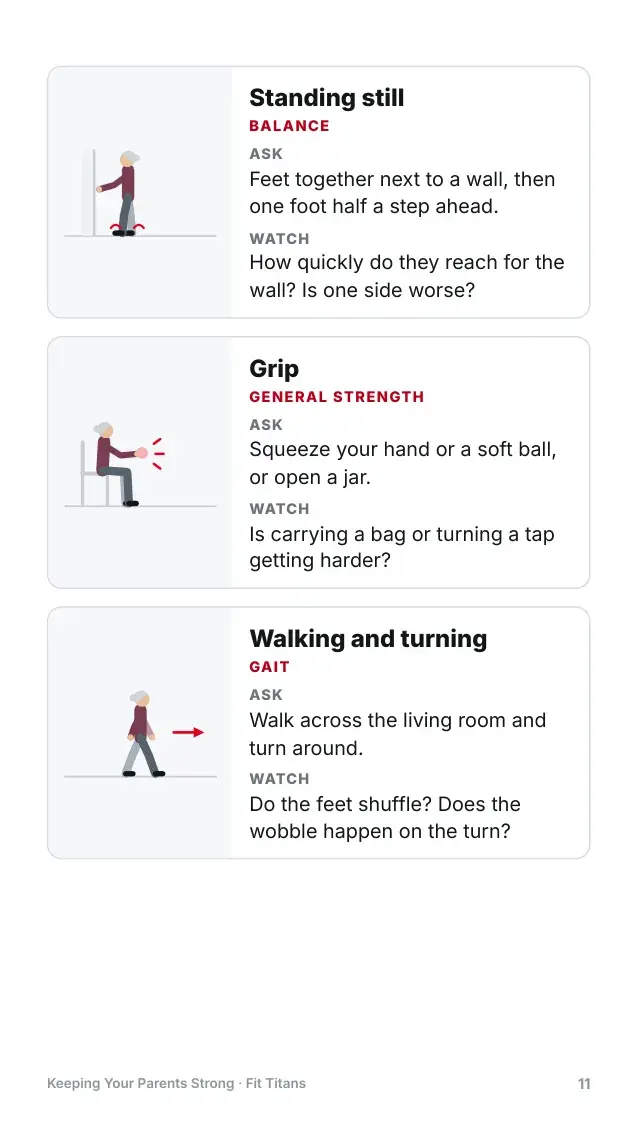
Standing still
Balance
Ask: Feet together next to a wall, then one foot half a step ahead.
Watch: How quickly do they reach for the wall? Is one side worse?
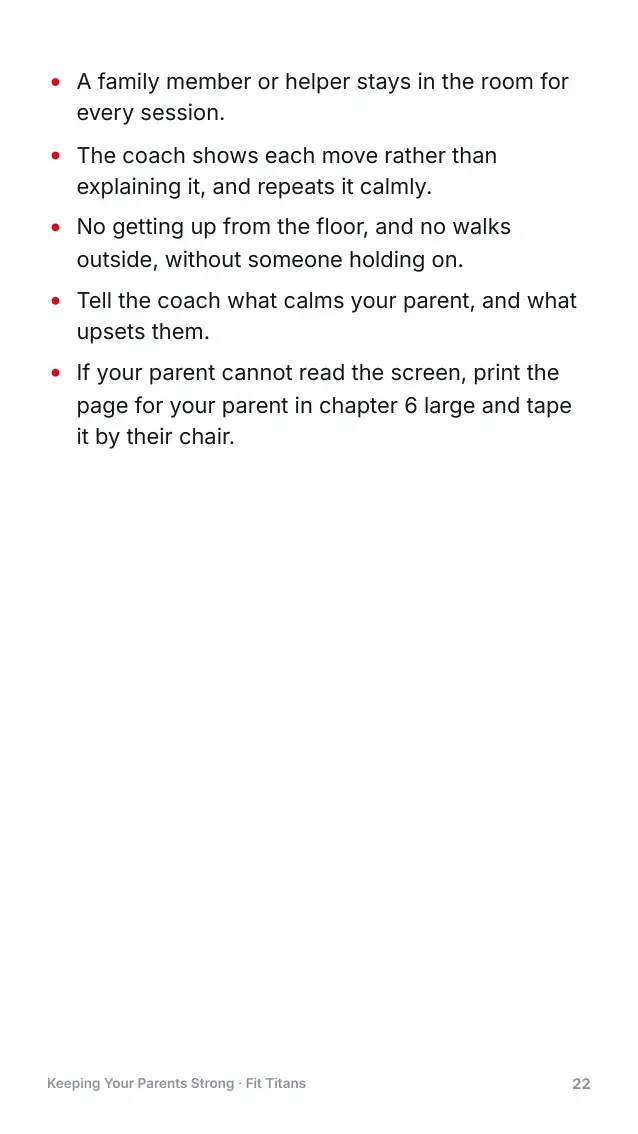
Grip
General strength
Ask: Squeeze your hand or a soft ball, or open a jar.
Watch: Is carrying a bag or turning a tap getting harder?
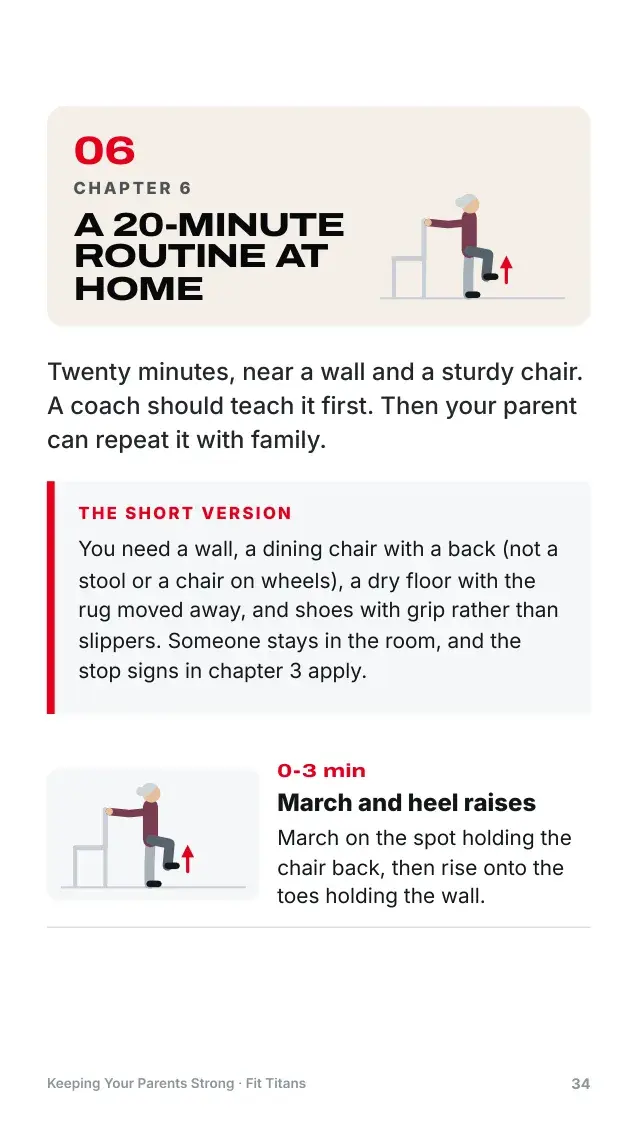
Walking and turning
Gait
Ask: Walk across the living room and turn around.
Watch: Do the feet shuffle? Does the wobble happen on the turn?
If your parent uses a walking stick, has fallen recently or has sore knees, do only the chair, grip and walking checks, with you on their weaker side. Leave the step and the feet-together checks to a coach or physio.
Why these five
Standing up from a chair uses the big muscles of the thighs and hips, the same ones that stand your parent up from the toilet and catch a stumble. Stepping up asks one leg at a time to lift the whole body, as stairs and kerbs do. Feet together tests balance on a narrow base, the position people are in when they turn or reach. Grip reflects general strength. Walking and turning shows the pattern many falls start from: a short shuffle, then a wobble on the turn.
What it may mean
- SteadyStands up without hands, steps up easily, stays steady with feet together, walks and turns smoothly. A group class or a home routine may be enough. Check again in three months.
- Worth working onUses hands or rocks to stand, leads with the same leg, wobbles in the half-step stance, or shuffles on turns. Mention it to the GP at the next visit, and start strength and balance work.
- See the doctor firstA fall in the last year, cannot stand up without help, nearly fell during a check, or felt dizzy. Book the GP or polyclinic this week, before any training.
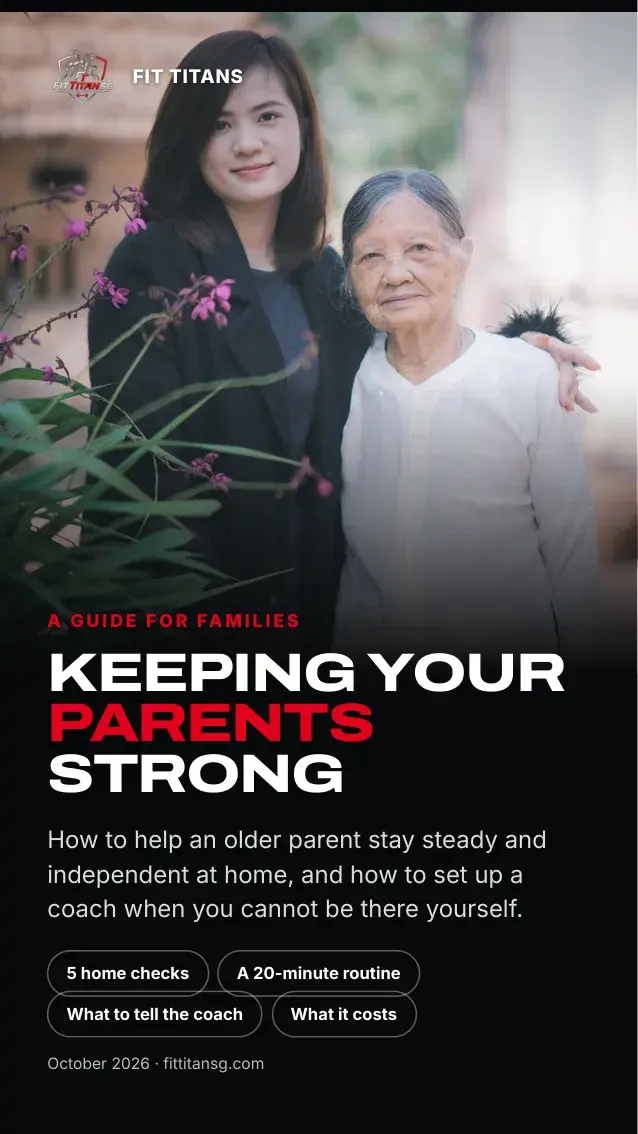
The rest of the book covers what to do next: doctor's clearance, what to do when a parent falls, a 20-minute routine with drawings, what to say when your parent says no, and how to arrange a coach.
General information, not medical advice. Get your parent cleared by their GP or polyclinic doctor before they start exercising.